
Do you need a soakaway or SuDS for your Berkshire build?
A soakaway is not automatically compulsory, but infiltration is the first route we look at where the site can support it. Sustainable Drainage Systems, usually shortened to SuDS, may also be required or expected depending on the project, the planning position and what evidence Building Control needs.
A build often reaches this point late. The extension is drawn, the roof line is agreed, then someone asks where the rainwater goes. That question can come from a Building Control body, a planning officer, a buyer’s solicitor or an insurer, and a vague answer about “using the existing drain” rarely carries enough weight.
Approved Document H, which supports the Building Regulations 2010, says Requirement H3 covers rainwater from roofs and relevant paved areas around the building. In plain terms, your surface water drainage for an extension or new build has to be adequate, and the chosen route has to make sense for the site.
SuDS are a drainage approach, not a single product. A SuDS design might use infiltration, storage, reuse, permeable surfaces or controlled discharge, depending on what the plot allows. For Berkshire drainage compliance, the safer question is not “do I need a soakaway?” The better question is whether you can prove the surface water route follows the proper order and suits the ground.
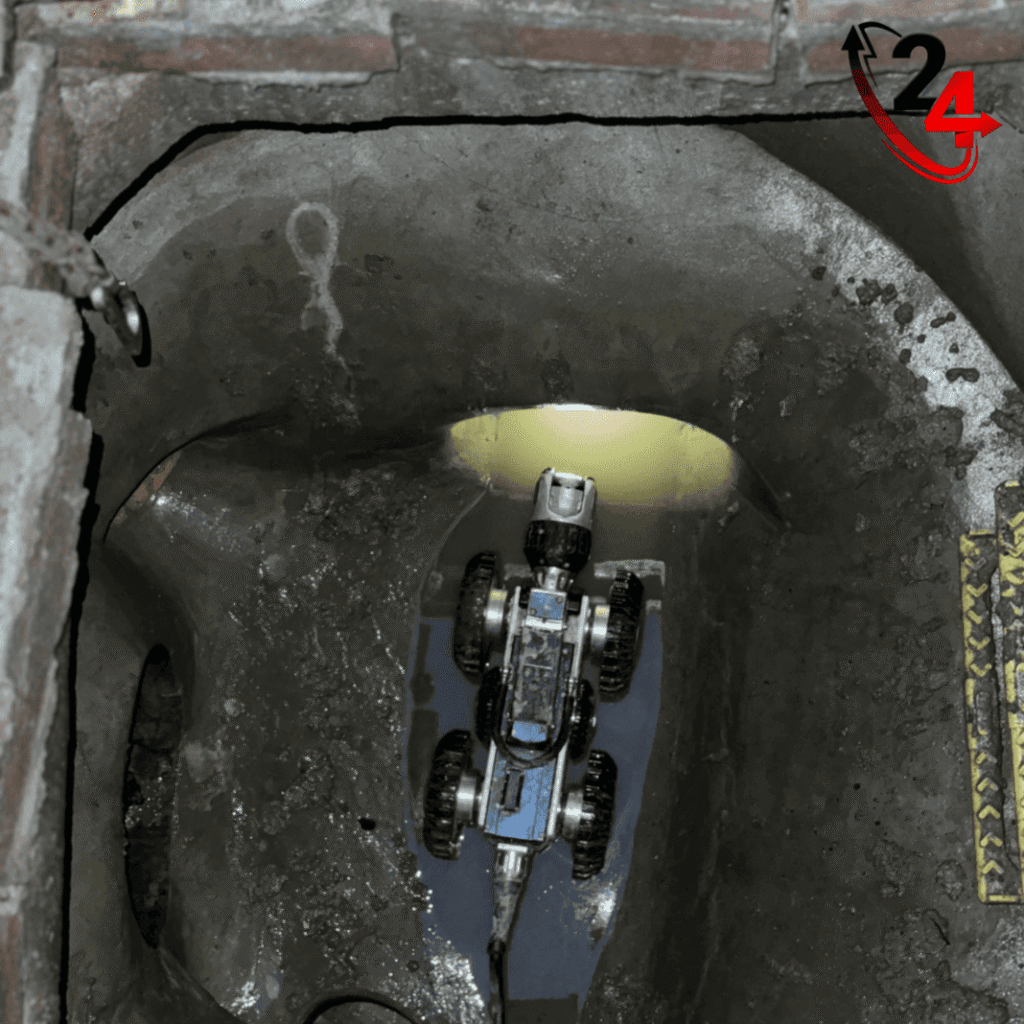
Building Regulations are not planning permission
Building Regulations and planning policy can both affect surface water, but they test different things. Building Regulations focus on adequate rainwater drainage from the building and paved areas, while planning and SuDS policy look at runoff, flood risk, site conditions and the wider effect of the development.
| Building Regulations | Planning and SuDS |
|---|---|
| They ask whether the building has adequate rainwater drainage under Requirement H3. | They ask whether the development manages surface water acceptably for the site and local area. |
| They matter for small extensions as well as larger works. | They can apply through planning conditions, local policy or SuDS expectations. |
| They look at the route for roof water and relevant paved areas. | They look at runoff destination, runoff rate, flood risk and long-term management. |
| A Building Control body may ask for drainage evidence before completion. | A Local Planning Authority or Lead Local Flood Authority may ask for evidence before approval or condition discharge. |
Reading gives a useful local example. Reading Borough Council policy EN18 says all major developments must incorporate SuDS as appropriate and in line with government technical standards, while smaller schemes are encouraged to incorporate SuDS where possible. The same plan defines major development as 10 or more dwellings or equivalent non-residential or mixed development.
Berkshire does not work under one single county-wide drainage rule. Different unitary authorities deal with planning and Lead Local Flood Authority input, so a site in Reading, another Berkshire authority or the wider Thames Valley can face different local checks even where the Building Regulations point is the same.
At 24hrs Drainage, we often see delays where the drainage route appears on a drawing, but the evidence behind it has not caught up. The plan says “soakaway” or “connect to existing”, but the file does not yet show why that answer is acceptable.
Honest advice and free quotes across Reading, Berkshire and surrounding areas.
Get a Free QuoteThe discharge hierarchy beats convenience
The nearest pipe is not automatically the right outlet. Surface water routing has an order, and we treat that order as the starting point because Building Control, planners and drainage professionals will expect earlier options to be considered before lower-priority routes are used.
Approved Document H places infiltration first where practicable. The current national standards for sustainable drainage systems also use a runoff destination hierarchy, with non-potable use and infiltration high in the order, and combined sewer discharge at the bottom.
- Use or infiltrate water first where the site supports it. Non-potable use and infiltration keep rainwater closer to where it falls, but the ground and site layout have to support that choice.
- A watercourse or above-ground surface water body may come next where infiltration is not reasonably practicable.
- A surface water sewer or other piped surface water drainage system sits lower in the order and needs a reasoned justification.
- Combined sewer discharge is a last-position option in the SuDS hierarchy, and surface water runoff from development must not discharge to a foul drainage system.
For an extension, that means an existing drain connection needs more than convenience behind it. The drain might be public, shared, combined, surface water only or foul only, and the distinction matters because Requirement H5 deals with separate foul and rainwater drainage where separate public sewers are provided by the sewerage undertaker.
New build surface water rules place the same pressure on the decision, just with more scrutiny. A sewer connection can be acceptable only when the higher-priority routes have been ruled out properly, so the evidence has to explain the route, not simply show where the pipe runs.
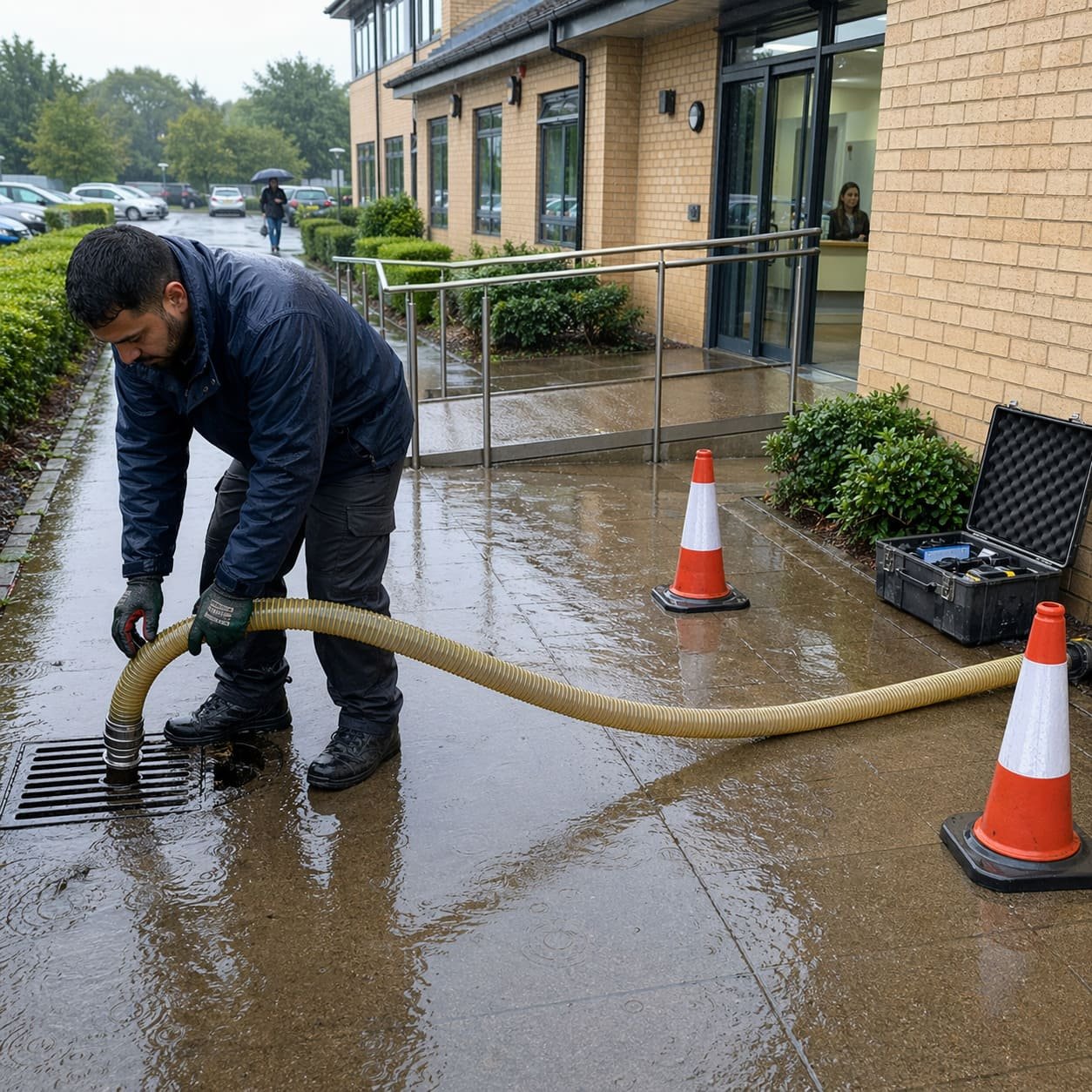
If a site depends on infiltration, keep the evidence together in one file. A clear drainage layout, suitability evidence and any survey findings are easier to use than separate documents sent at different times.
A soakaway can be the wrong answer
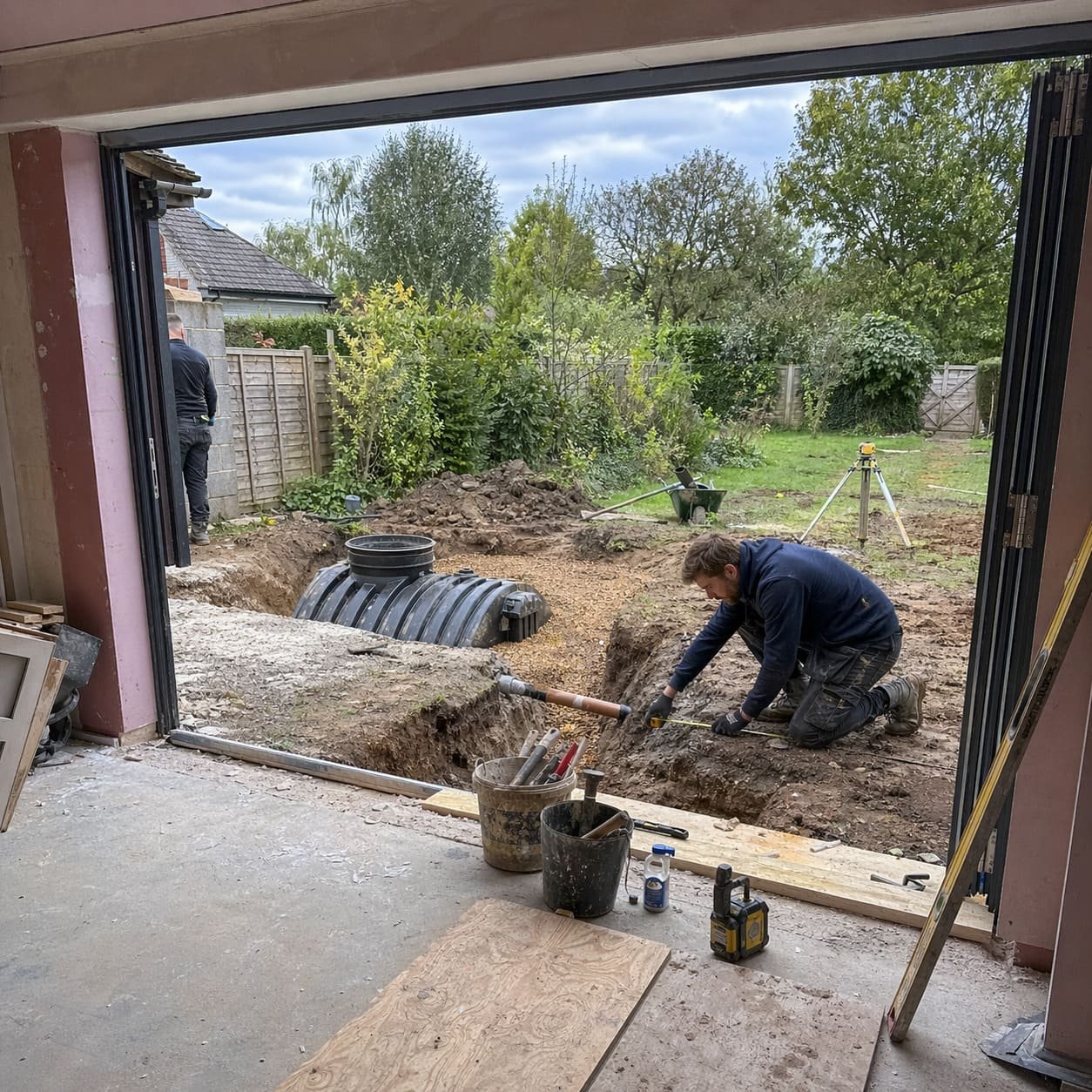
If the plot is tight or the ground is unsuitable, a soakaway can move from preferred option to poor evidence very quickly. Infiltration is high in the hierarchy, but it still has to work on that specific site.
Distance alone is not proof
Approved Document H says infiltration devices should not be built within 5m of a building or road. That figure matters, especially on dense Reading plots where an extension, patio and boundary can leave very little spare ground.
Distance does not finish the assessment. Soil capacity, groundwater and the amount of roof or paved area draining into the system all matter, which is why percolation tests are used to assess whether the soil can take the water. A small garden may fit a line on a drawing, but the ground still has to drain at a rate the design can rely on.
Ground conditions can rule out infiltration
Unstable land and high groundwater can make infiltration inappropriate. Approved Document H also says an infiltration device should not be used where the water table reaches the bottom of the device at any time of year.
Percolation testing belongs in the evidence pack, not in a DIY experiment. For larger areas, design references such as BS EN 752-4 and BRE Digest 365 may come into the professional design work, but your practical concern is simpler: can the chosen route be justified to the people signing off the project?
Contamination changes the answer
Brownfield plots and former commercial land need care because infiltration can carry pollution into groundwater. Reading Borough Council’s Local Plan says soakaways in contaminated land will not be appropriate, and infiltration SuDS should only dispose of clean roof water into clean, uncontaminated ground.
That point matters on refurbishment, infill and backland development as much as on larger schemes. Ruling out infiltration properly is not a setback if the site cannot support it. It gives Building Control or planners a defensible reason to accept another route.
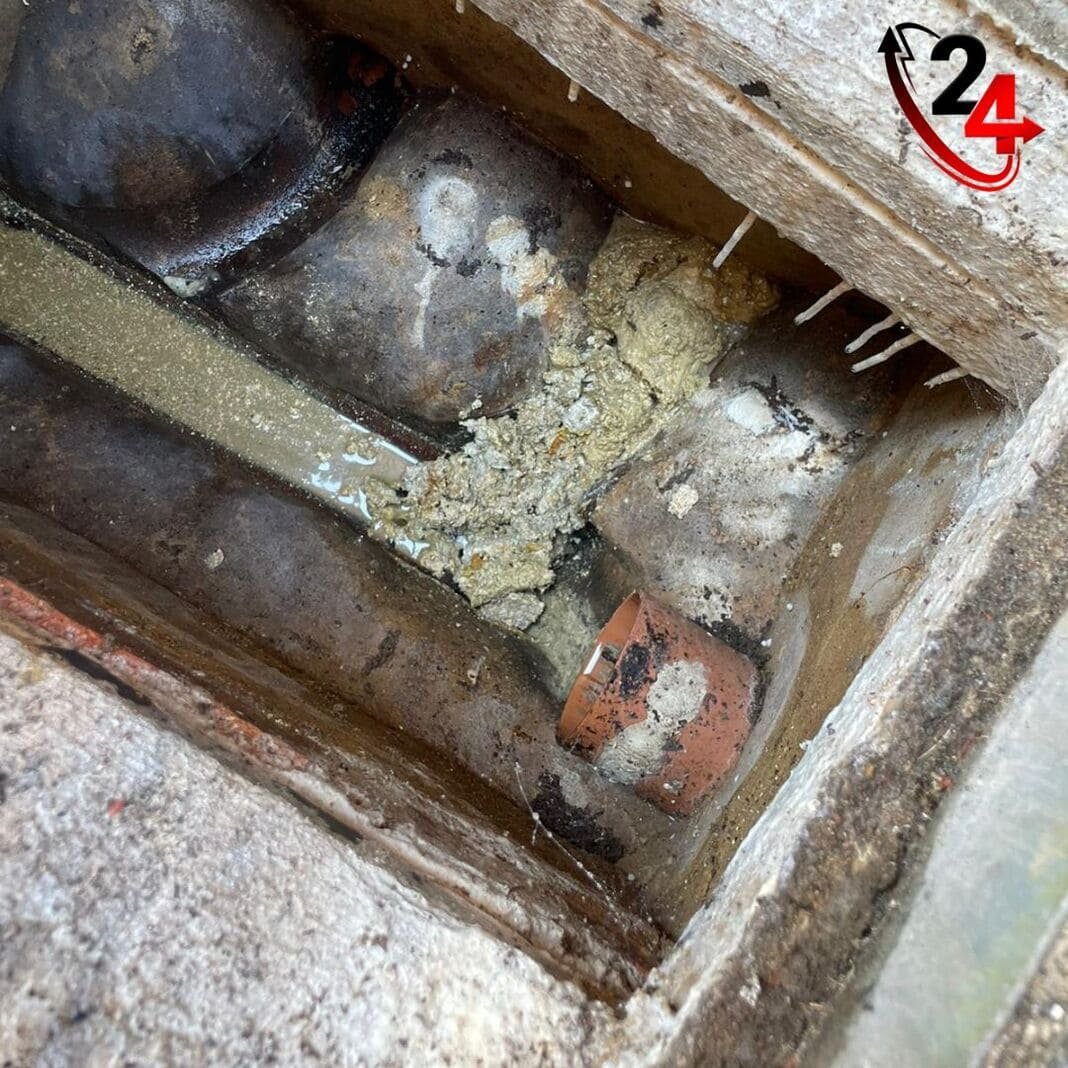
Where existing drainage is part of the proposal, confirm whether the pipe is foul, surface water or combined before the design is finalised. That distinction can change whether the route is acceptable under the national SuDS standards and Building Regulations.
Evidence and maintenance carry the approval
The final test is simple: can the drainage route be proved and maintained? A neat label such as “soakaway” or “SuDS” will not settle a planning condition, completion certificate query, sale issue or post-build defect dispute if the supporting evidence is thin.
For a practical file, we look for the things that decision-makers can rely on: survey findings where existing drainage is involved, a clear drainage layout, suitability evidence for infiltration, and a maintenance position that will still make sense after handover. A CCTV drain survey can be part of that evidence where the route depends on existing pipework, shared drainage or a connection whose condition is being questioned.
Maintenance deserves early attention. Under the national SuDS standards, where SuDS features serve a single property, maintenance remains the responsibility of the property owner unless another appropriate body adopts them. For drainage systems serving more than one property, an appropriate body needs to adopt and maintain the SuDS features.
At 24hrs Drainage, we treat those ownership and evidence points as part of the drainage risk, because they decide whether a solution stays acceptable after the build is finished. A managing agent, landlord, developer or property owner needs more than a working outlet on day one; they need a route that a solicitor, insurer or authority can understand later.
The one priority is proof before preference. A surface water route that is evidenced, suitable for the site and clear to maintain will carry a project further than any preferred product name.
Whatever the problem — blocked, cracked, slow or smelly — we'll diagnose it properly.
Book an EngineerQuestions we get asked about surface water drainage
Can rainwater from an extension go into the existing drain?
Rainwater can use an existing drain only where that route is suitable and justified. The existing pipe must not be treated as the default answer simply because it is already on the site.
Do I need a percolation test for a soakaway?
Percolation testing is the normal evidence used to assess whether the soil can take water from a soakaway. Without that evidence, a soakaway shown on a plan may be challenged by Building Control or planning.
Can surface water go into a foul sewer?
Surface water runoff from development must not discharge to a foul drainage system under the national SuDS standards. Where sewers are involved, the distinction between foul, surface water and combined drainage matters.
Who maintains SuDS after a new build is finished?
For SuDS serving one property, the property owner remains responsible unless another appropriate body adopts them. For SuDS serving more than one property, an appropriate body needs to adopt and maintain the features.
Are SuDS only for large developments?
Reading policy requires SuDS for major developments as appropriate and encourages them for smaller schemes where possible. Small extensions still need adequate rainwater drainage under Building Regulations, even where major development policy does not apply.
This is general information, not professional advice.
