
When does a pitch fibre drain become a replacement issue?
A pitch fibre drain becomes a replacement issue when it no longer works reliably, especially if it is deformed, delaminating, leaking, repeatedly blocking, or losing structural support. Age matters less than condition. In Reading and across the Thames Valley, the decision usually turns on risk to use, sale, insurance evidence, or business continuity.
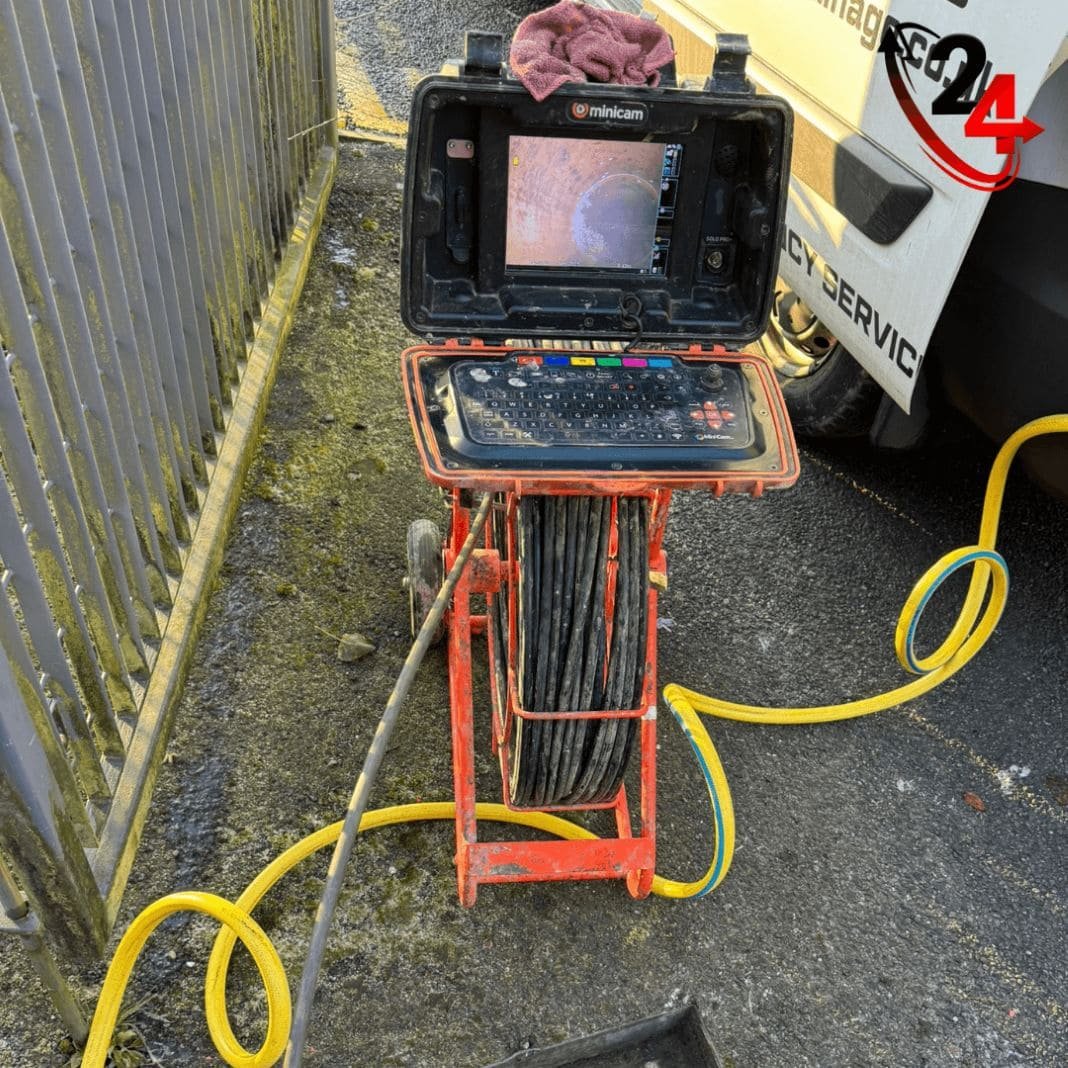
The real issue is whether the pitch fibre drain is still serviceable
A pitch fibre drain can be imperfect and still serviceable. The mistake is treating every pitch fibre finding as the same problem, because a working but ageing pipe calls for a different decision from one that blocks, leaks, or has lost its shape.
Age is a weak test on its own. A pitch fibre pipe is a material type, not a verdict. We care more about whether the pipe still carries waste properly, whether the flow is being restricted, and whether defects are starting to affect the property or the premises relying on it.
Failure is usually structural as well as functional. The Association of British Insurers Drain Repair Book describes pitch fibre as able to deform and delaminate, which can reduce the pipe’s cross-sectional area and restrict flow. In plain terms, the pipe can lose usable space inside, so a pitch fibre drain problem can move from occasional nuisance to unreliable drainage.
Evidence changes the urgency. A CCTV drain survey matters because it gives you a basis for action, not guesswork. If the findings point to repeated blockage, leakage, or serious loss of shape, waiting becomes a decision with consequences for a sale, an insurance claim, a tenancy, or commercial continuity.
The difference between serviceable, unserviceable and structurally unsound pitch fibre drains changes the decision
Useful pitch fibre decisions start with the drain’s condition category. A drain that works despite defects is a different case from one that cannot be trusted to function, and a structurally unsound drain sits in a higher risk category again.
This table sets out the practical difference.
| Condition | What it usually means | Decision pressure |
|---|---|---|
| Serviceable | The drain has defects, but it still carries waste reliably and has no evidence that its function has failed. | Planned monitoring or repair assessment may be enough, depending on the survey findings. |
| Unserviceable | The drain repeatedly blocks, leaks, fails a relevant leakage test, has root-related flow problems, or has defects that stop reliable function. | Prompt repair or replacement assessment is sensible because use and evidence are already affected. |
| Structurally unsound | The pipe has lost support or shape to the point where future collapse or blockage is a real concern. | Replacement becomes much harder to defer because the issue is now structural reliability. |
The ABI condition grading is useful here because it links pipe condition to future risk. For non-rigid pipes such as pitch fibre, the ABI says insufficient support can generally be assumed where deformation exceeds 20 percent of the diameter, and that matters because collapse or blockage becomes more likely.
One warning deserves space: do not judge the whole run from a quick chamber view. Pitch fibre drainage issues need proper survey evidence because the section you can see may not tell you what is happening along the buried pipe run.
Honest advice and free quotes across Reading, Berkshire and surrounding areas.
Get a Free QuoteWhy relining is sometimes sensible and sometimes the wrong answer
Relining can be a good option where the remaining pipe shape and structure support a reliable result. It becomes the wrong answer when the host pipe is too distorted, weak, or unreliable to carry the repair properly.
The case for relining depends on a usable host pipe
CIPP, meaning cured-in-place pipe, is a broad relining method used to form a new lining inside an existing drain. For pitch fibre drain relining, the key question is whether the old pipe still gives that lining a sound enough shape to work with.
The ABI position gives a clear threshold. If a pitch fibre pipe has lost less than 20 percent of its diameter, is uniformly shaped, and is otherwise intact, CIPP lining can be appropriate. Where deformation exceeds 20 percent, relining is described as probably inappropriate.
At 24hrs Drainage, we test whether the repair will stay reliable before we accept that a method fits the day. A repair that looks tidy on paper but leaves the same structural weakness in place can simply move the problem along.
The case for replacement grows when shape and support are lost
Replacement becomes the more credible route when the pipe is in very poor condition, has significant loss of shape, or cannot sensibly support a lining system. Excavation is disruptive, but disruption is not the only measure that matters. Certainty matters when the drain is already failing.
Cheap-looking repair choices can also distort the decision. If relining cannot deal with the actual loss of shape or structural support, the lower initial disruption may come with repeated blockage, fresh survey concern, or another interruption later. The better comparison is between a repair that will hold and a replacement that removes the failing section, not between a neat method and a messy one.
A CCTV drain survey is most useful when the findings are linked to a clear decision on serviceability, relining, or replacement. Without that link, the report can leave the real risk unresolved.

The moments where pitch fibre drain replacement cannot wait
Replacement cannot wait when the drain’s condition is already affecting reliability, evidence, or continuity. Delay is least defensible where the pipe has moved beyond a defect and into a practical risk for the property, claim, sale, or premises.
- Repeated blockage: Regular blockage points to a drain that cannot be trusted to carry waste consistently, especially where deformation or delamination is already known.
- Leakage evidence: Suspected leakage changes the issue from inconvenience to risk, because escaping water can create wider property and evidence concerns.
- Failed CCTV findings during a sale: Buyers, lenders, insurers, or solicitors may need a clear condition record and a credible remedy before the transaction can move cleanly.
- Likely collapse: A pipe that has lost structural support is no longer just a maintenance concern, because future blockage or collapse is part of the decision.
- Commercial interruption: Landlords, facilities managers, and premises managers have to think about tenants, staff areas, public access, inspections, and downtime as well as the pipe itself.
In Reading, Berkshire, and the Thames Valley, we see pitch fibre issues become urgent when timing has already tightened. At 24hrs Drainage, we often become involved once the matter has moved from inconvenience to evidence, access, or continuity pressure, which is exactly when a vague repair recommendation is no longer enough.
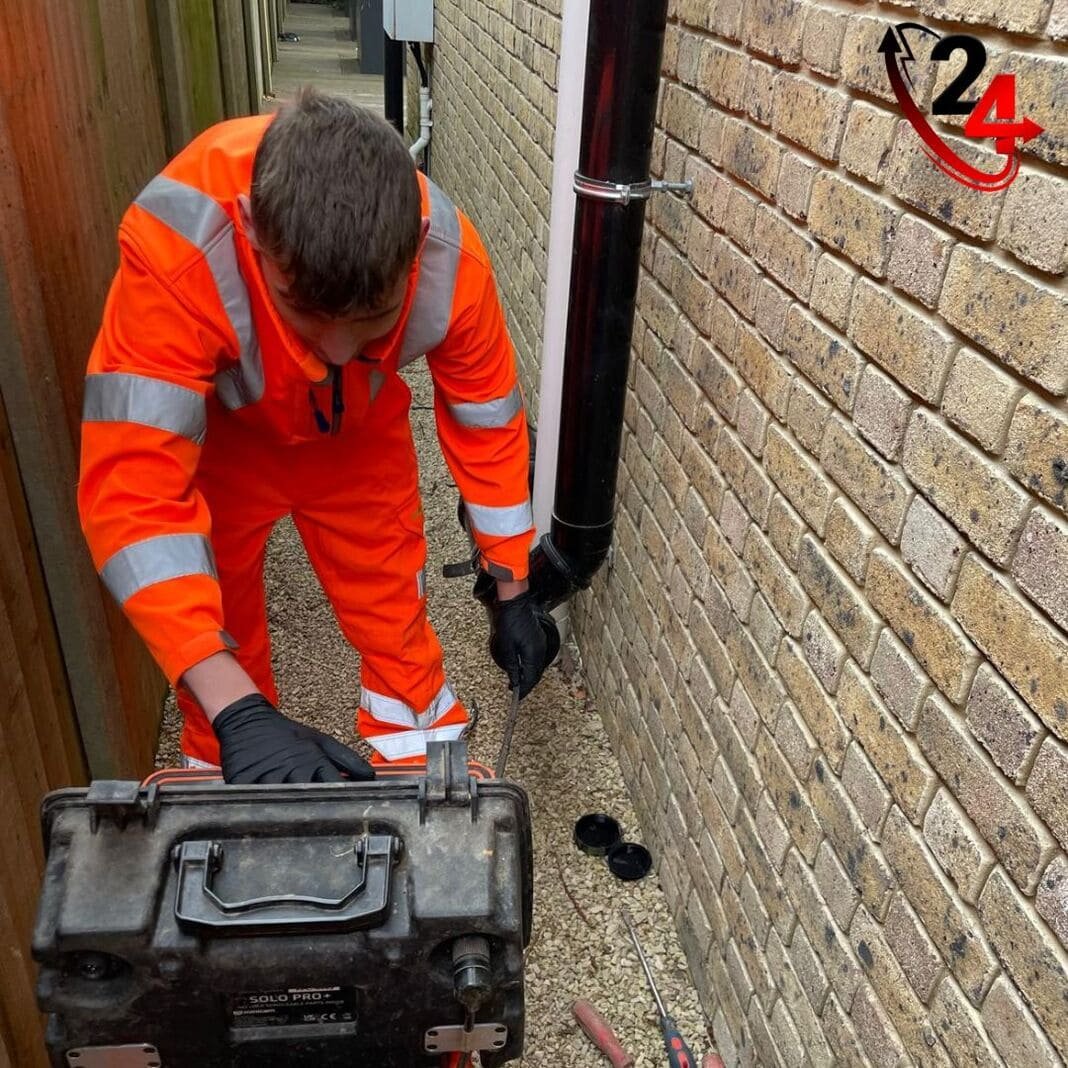
If the issue affects a sale, claim, or occupied premises, treat the condition record as part of the decision itself. Delay often creates more difficulty than the drain defect alone.

Why ownership, compliance and asbestos handling should be treated as handled parts of the replacement decision
Ownership, compliance, and asbestos handling are common reasons people pause, but they are manageable parts of a proper pitch fibre replacement decision. They should be checked early enough to prevent delay, not allowed to turn a clear drainage problem into a stalled decision.
Ownership matters because the affected run may be private, shared, or public. Ofwat says property owners are normally responsible for drains and private sewers carrying household waste up to the point where they connect with public sewers, usually at the property boundary after the private sewer transfer on 1 October 2011. Responsibility for public sewers can sit with the sewerage company, so blanket assumptions about who pays are risky.
Compliance matters because replacement is still drainage work, not just pipe removal. Approved Document H says repairs, reconstruction, and alterations to existing drains and sewers should be carried out to the same standards as new drains and sewers. For planned repair, reconstruction, or alteration, it also points to the 24 hours local authority notice requirement under Section 61 of the Building Act 1984, except in an emergency.
Asbestos handling matters because pitch fibre needs controlled treatment. Pitch fibre pipes should be assumed to contain Amosite, or brown asbestos, unless analysis proves otherwise, and breaking out, handling, and disposal must comply with The Control of Asbestos Regulations 2012. You do not need to manage those details yourself, but you do need the job treated as controlled drainage work rather than ordinary waste removal.
The common misconception is that age decides everything
A pitch fibre finding in a report should start a condition question. Material alone does not settle whether you need monitoring, relining, excavation, or replacement, and a neat-sounding answer is not useful unless it matches the drain’s actual shape, serviceability, and risk.
The common misconception is that an old pitch fibre drain must be replaced simply because it is old. That assumption can waste money on a working drain, and it can also hide the real danger, which is a pipe that has lost shape, leaks, blocks repeatedly, or no longer has the support to remain reliable.
Whatever the problem — blocked, cracked, slow or smelly — we'll diagnose it properly.
Book an EngineerFrequently asked questions
Do pitch fibre drains always need replacing?
Pitch fibre drains do not always need replacing. Replacement becomes more likely where the drain is unserviceable, structurally unsound, badly deformed, leaking, or repeatedly blocking.
Can a house sale proceed with pitch fibre drains?
A house sale can proceed with pitch fibre drains, but survey findings can affect buyer confidence, lender questions, or insurance evidence. A clear CCTV drain survey helps turn the issue into a condition-based decision.
Are pitch fibre drains covered by insurance?
Pitch fibre drains are not automatically covered or excluded by insurance. Insurers normally need evidence of the defect, cause, serviceability, and proposed remedy before a claim position can be assessed.
Who is responsible for a shared pitch fibre drain?
Responsibility depends on whether the affected run is a private drain, shared lateral, or public sewer. The boundary and connection point matter, so a blanket answer is unsafe without checking the actual drainage layout.
Is pitch fibre pipe dangerous because of asbestos?
Pitch fibre pipe should be treated as a controlled material because it should be assumed to contain Amosite unless analysis proves otherwise. The risk is managed through proper handling, storage, transport, and disposal during professional works.
