
What do you actually need: a septic tank, sewage treatment plant or public sewer?
The right answer starts with the discharge route. If a public foul sewer is the proper option, a private tank may be the wrong choice. If off-mains drainage is suitable, a septic tank fits compliant ground discharge through a drainage field, while a sewage treatment plant fits treated discharge needs such as surface water.
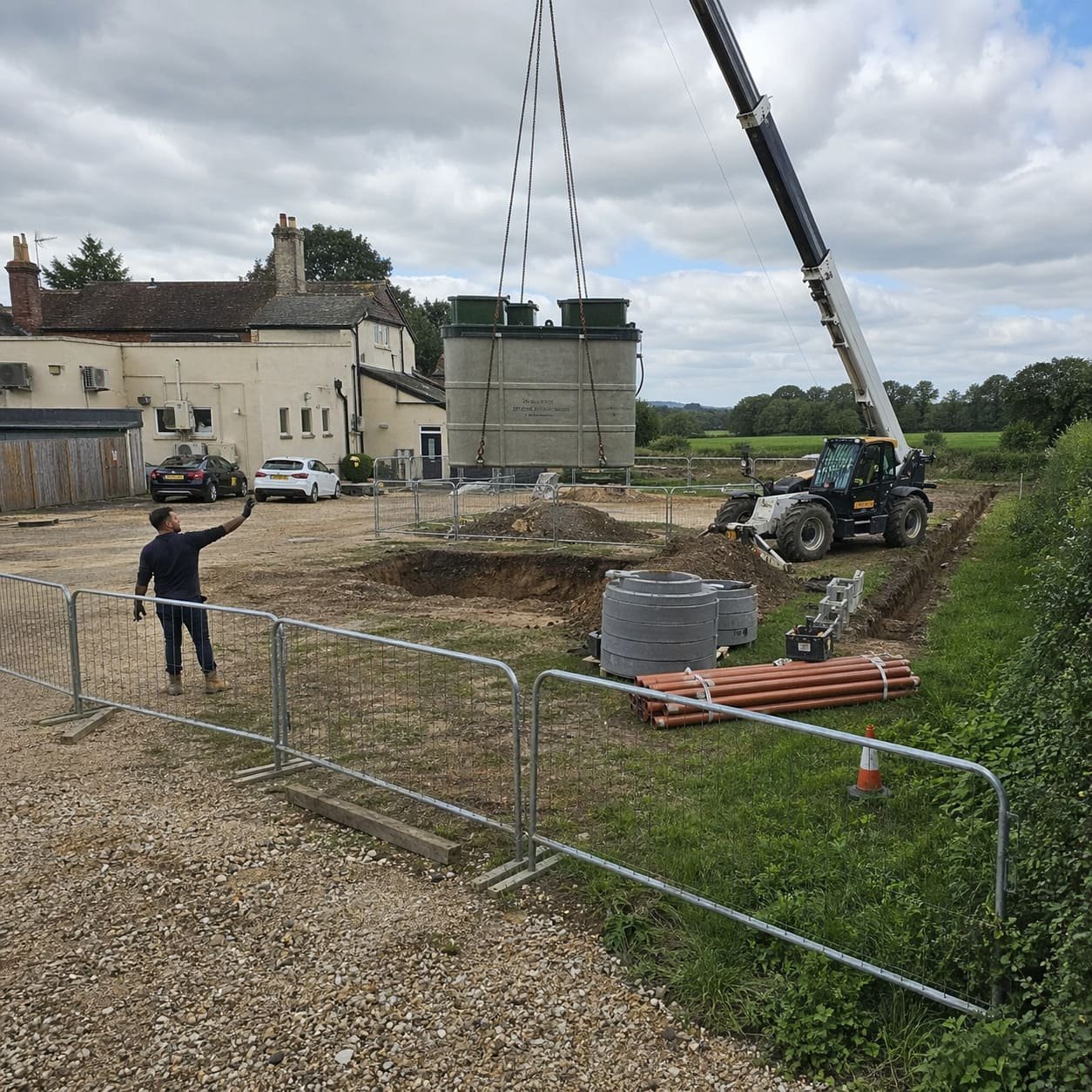
The first decision is sewer availability, then the private system
Many people start by comparing a septic tank or sewage treatment plant as if both are equally available choices. We start earlier. We look at whether connection to a public foul sewer comes first, because mains sewer availability can change the whole decision before tank type is even relevant.
A public foul sewer is the main foul drainage network run by the sewerage undertaker. Where that option is available and reasonable, a new private off-mains drainage system can become hard to justify. The Environment Agency general binding rules on GOV.UK are clear that, for a single domestic property with a discharge started on or after 1 January 2015, the rules cannot be met if a public foul sewer is within 30 metres of any boundary of the premises served by the system.
Once sewer availability is dealt with, the decision moves to the discharge route and the site use. The table below shows the practical direction we use when the first question is “do I need a septic tank” or “do I need a sewage treatment plant”.
| Situation | Likely system direction | Why it matters |
|---|---|---|
| Public foul sewer is the proper route | Connection question comes before tank choice | Private drainage may not be the lawful or saleable answer |
| Off-mains discharge to ground through a compliant drainage field | Septic tank may be suitable | The ground is part of the treatment route |
| Discharge to a ditch, stream, river or similar watercourse | Small sewage treatment plant is the relevant off-mains route | Septic tank effluent must not go straight to a watercourse |
| Sale, lease, claim or inspection needs evidence | Survey and records come before replacement decisions | A quote for a new tank does not prove what the existing system does |
In Reading, Berkshire and the Thames Valley, we see the same mistake often: the paperwork names a tank, but nobody has firm evidence of where the discharge goes. At that point, a simple product comparison stops being useful.
If the system choice affects a sale, inspection or compliance decision, a clear assessment can reduce delay and uncertainty. It helps establish the right next step before the issue becomes more costly.
Enquire nowThe practical difference is what happens after waste leaves the building
A septic tank separates solids from liquid waste and gives partial treatment before the liquid goes into a drainage field, also called an infiltration system. That drainage field is part of the treatment route, so the ground conditions and discharge layout matter as much as the tank itself.
A small sewage treatment plant treats wastewater to a higher standard before discharge, subject to the correct rules and permissions. It is the relevant private sewage system where treated effluent needs to go to surface water, such as a watercourse, provided the wider requirements are met.
The difference between septic tank and sewage treatment plant is treatment level and discharge fit, not age or price. Running costs, servicing and electricity matter, but they do not override the discharge route. A cheaper system that cannot lawfully discharge where the site needs it to discharge is a delay dressed up as a saving.
Standards also matter where a system is new or has been installed within the period covered by the rules. GOV.UK lists British Standard BS EN 12566 for septic tanks and small sewage treatment plants, and British Standard BS 6297:2007 for drainage fields. For newer systems, the operator must also check with the installer that the system meets British Water Flows and Loads sizing requirements, which means the system must be large enough for the sewage it has to treat.
We keep that technical detail in its proper place. The useful question is whether the equipment, capacity and discharge point match the actual property or premises.
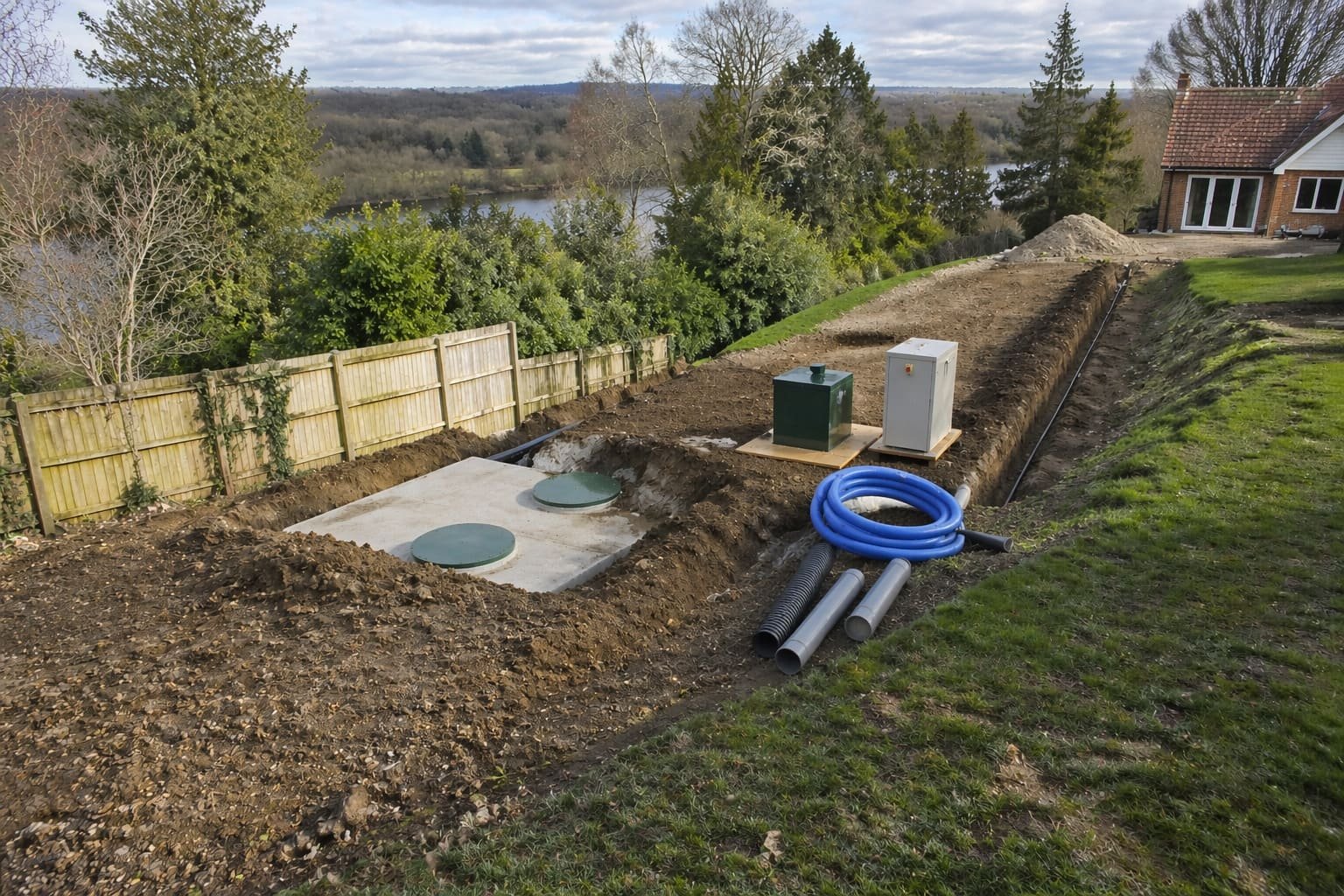
For sales and shared systems, written evidence matters as much as the equipment itself. Records that identify the discharge point, maintenance history and responsibility can prevent avoidable delays.

The discharge route controls the lawful option
Where the wastewater goes often decides the answer before preference enters the conversation. Ground discharge and surface water discharge are separate routes, and treating them as interchangeable creates problems during sales, inspections and compliance checks.
Ground discharge through a drainage field
A septic tank can fit an off-mains drainage system where the effluent goes to ground through a compliant drainage field. The drainage field is not a rainwater soakaway. It is part of the foul drainage system and needs to be treated as such when records, survey evidence or replacement advice are being reviewed.
Site constraints can change the position. Source protection areas, protected sites and boundary issues can affect what is acceptable, and those checks belong with a competent assessment rather than guesswork from an old plan. Groundwater Source Protection Zone 1, Magic Map records, Sites of Special Scientific Interest, Special Areas of Conservation, Special Protection Areas and Ramsar wetland sites can all become relevant depending on where the discharge sits.
Surface water discharge to a watercourse
A septic tank must not discharge effluent directly to a watercourse. If sewage is being discharged to a river, stream, ditch or similar route under the general binding rules, the correct off-mains system is a small sewage treatment plant, not a septic tank.
Permit-sensitive cases need particular care, especially where the receiving watercourse, equipment standard or flow route is unclear. The Environmental Permitting (England and Wales) Regulations 2016 sit behind much of this territory, but you do not need a legal manual to make the right decision. You need evidence of the discharge route and a provider who knows when the permit question has moved from background issue to decision point.
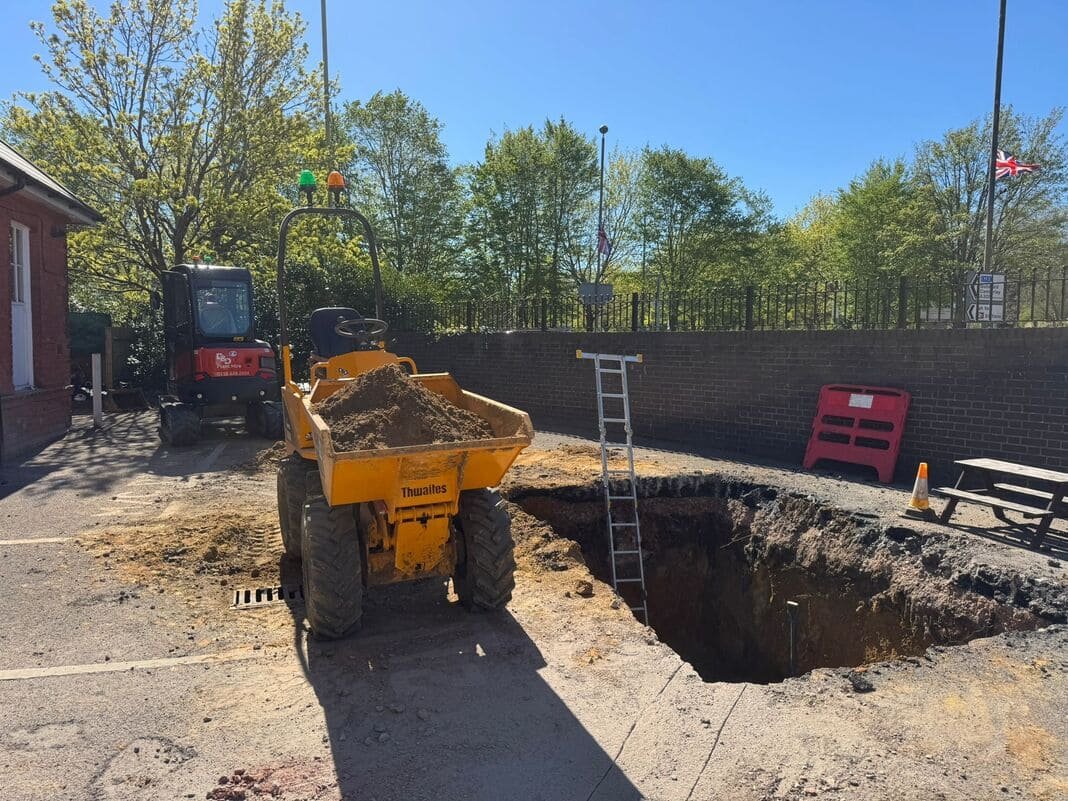
Sales, shared systems and commercial premises turn tank choice into evidence
A sale can stall even when everyone agrees there is a septic tank, because the buyer still needs to know where it discharges and who takes responsibility after completion. The same applies to a lease, a shared system or a commercial site where drainage records are thin.
When selling a property with a septic tank or small sewage treatment plant, the seller must tell the new operator in writing that a sewage discharge is in place. The written information needs enough detail for the buyer to know what they are taking on, and vague wording creates avoidable friction.
For sale readiness, lease queries or shared system disputes, we look for evidence such as:
- A clear description of the treatment and drainage system. The buyer or incoming operator needs to know whether they are dealing with a septic tank, a treatment plant or another private drainage arrangement.
- The location of the main parts of the system and the discharge point.
- Maintenance information and records where available, including sludge removal records. Sludge disposal must be handled by a registered waste carrier.
- Any known changes to the system, because an alteration can change the compliance position.
- Responsibility for access, payment and future upkeep where a system is shared.
Commercial premises need a sharper view than a domestic assumption. A pub, workshop, office or mixed-use site can place different demand on a private sewage system, so capacity and actual use matter. We would not treat a known tank label as enough evidence for a business that needs continuity, insurance support or inspection confidence.
24hrs Drainage is often brought into Reading, Berkshire and Thames Valley situations where the system, discharge route or records need to be evidenced before a decision can move. In those cases, the value is not a longer explanation of tank types. The value is replacing uncertainty with usable drainage evidence.
Check the discharge route before you compare tank types, because the route can decide whether a private system is viable at all. A system label alone does not show whether the existing arrangement is suitable.
Private drainage decisions are becoming more evidence-led
Older shorthand about “septic tank rules” is giving way to a more exact question: can you prove what the system is, where it discharges and whether the paperwork supports it? That matters more now because surface water discharges, non-standard equipment and permit routes are being treated with greater precision.
The Environment Agency general binding rules for ground discharge and surface water discharge were last updated on 2 October 2023. Looking ahead, the publication of SR2025 No 7 on 20 April 2026 for qualifying domestic sewage effluent discharges to surface water shows the direction clearly. Records, equipment standards and the nature of the receiving watercourse will keep receiving closer attention.
For us at 24hrs Drainage, the sensible approach is to make the private drainage position clear enough for the decision in front of you, whether that is a sale, inspection, claim, lease or replacement choice. A sewage treatment plant is not automatically the better answer, and a septic tank is not automatically the wrong one. The right system is the one the site facts can support.
Over the next 12 to 24 months, the safest private drainage decision will be the one backed by clear discharge evidence, current rule awareness and records that still make sense when another party reads them.
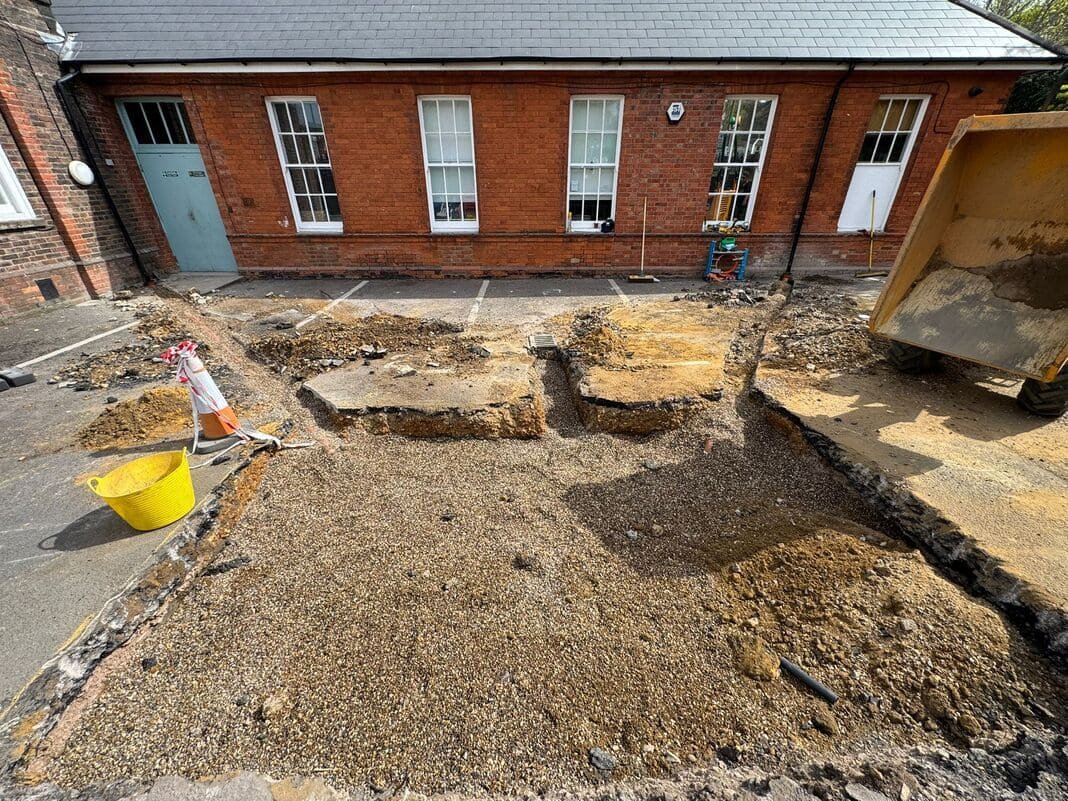
Where the discharge route or existing records are unclear, a survey can provide the evidence needed for the decision in front of you. That can support property sales, lease discussions and replacement planning.
Book surveyQuestions we get asked about private drainage choices
Can you sell a house with a septic tank?
Yes, but the buyer needs written information confirming that a sewage discharge is in place. The records should explain the system, the main locations, the discharge point and maintenance information where available.
Does every sewage treatment plant need an environmental permit?
No. In England, a septic tank or small sewage treatment plant does not need an environmental permit if all applicable general binding rules are met. If the rules are not met, the permit or sewer connection position needs proper review.
Is a drainage field the same as a rainwater soakaway?
No. A drainage field is part of the foul drainage system for treated wastewater, while a rainwater soakaway deals with surface water. Mixing those ideas can lead to the wrong compliance view.
Can a business use a septic tank?
A business can use off-mains drainage only where the system is suitable for the actual discharge and the applicable rules are met. Commercial use needs proper assessment because domestic assumptions can miss capacity and responsibility issues.
Who is responsible for a shared septic tank?
Responsibility depends on the ownership and agreement behind the shared system. In practice, the key evidence is who has access, who pays, where the discharge goes and what records exist for maintenance.
This is general information, not professional advice.
