
Does a drainage pipe really need excavating when an engineer says so?
Excavation may be the right repair, but the recommendation should be backed by survey evidence, pipe responsibility checks, safety planning, and reinstatement detail. Before approving work, ask what defect has been found, where it is, who owns the pipe, and why a less disruptive repair is unsuitable.
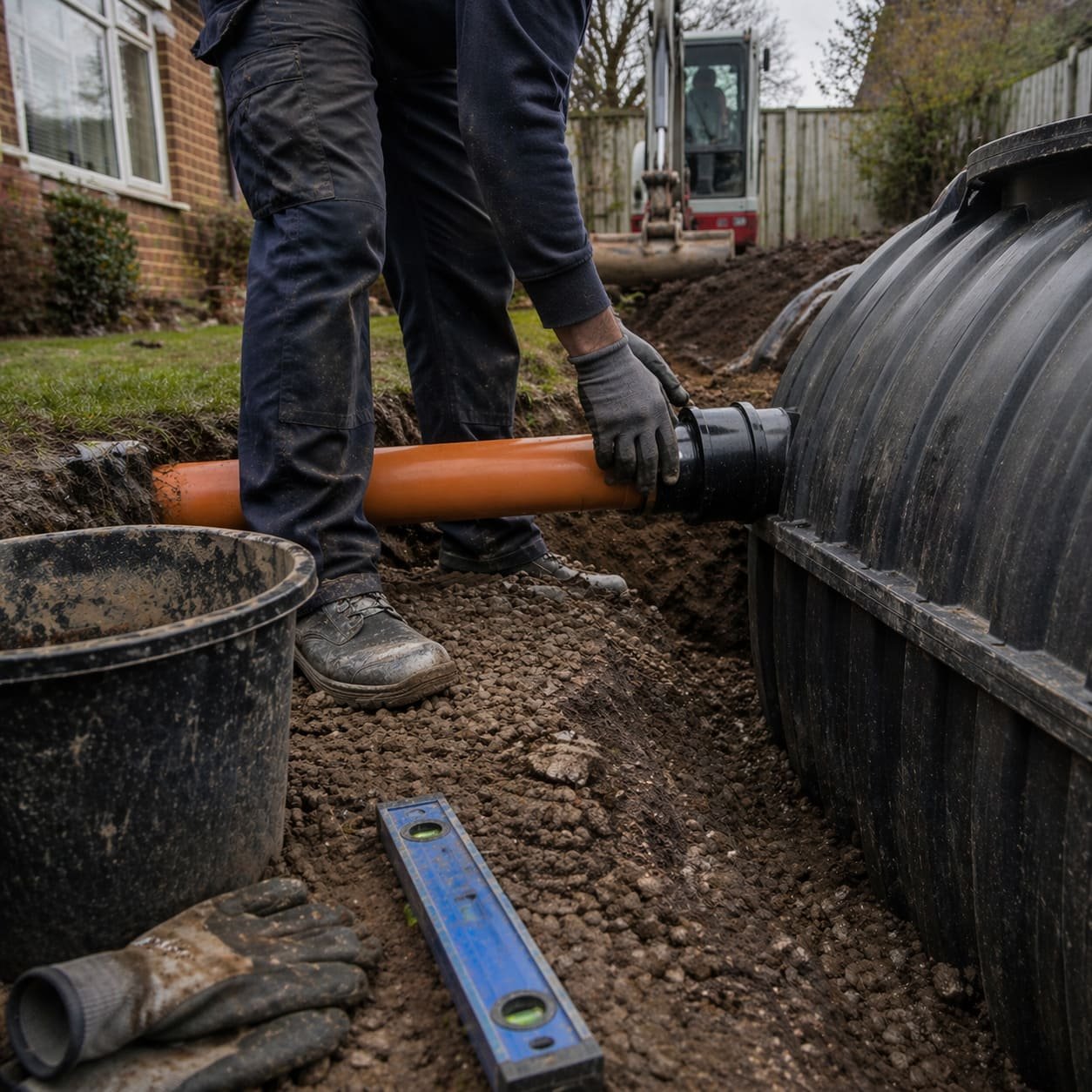
Pause before treating excavation as the only sensible answer
Someone hears “collapsed pipe” or “the pipe needs digging up” and the mind often jumps straight to cost, mess, and approval. That reaction is normal, especially if a sale, tenancy, claim, or business operation is already under pressure.
Excavation can be correct. A badly damaged pipe may need exposing and replacing. Yet the word “excavation” is still a recommendation, not a complete explanation. Good drain excavation advice starts before the first cut into a driveway, yard, garden, or access route.
Association of British Insurers guidance in The Drain Repair Book says an initial site investigation should always be carried out before drain repair work. The information gathered should decide what repair, if any, is needed and help reduce disturbance for the property owner.
That matters because a drain collapse, root damage, displaced joint, or deformation can have different repair routes. The same visible symptom, such as repeated blockage, can sit above a private drain, shared sewer, or public sewer. Each route brings different questions about cost, liability, insurance evidence, and reinstatement.
Asking for those answers does not make you awkward. It keeps a serious intervention under control.
Ask for the evidence behind the excavation recommendation
A verbal diagnosis is weak evidence. A documented excavation recommendation should link the defect, its location, its severity, and the proposed repair in a way that a homeowner, landlord, insurer, buyer, managing agent, or director can follow.
Start with the CCTV drain survey report. A useful report should do more than say “collapsed” or “too far gone”. It should show where the defect sits, how it has been coded, what the pipe condition is, and why excavation is being put forward over other repair options. In CCTV reports, defect coding is commonly linked to the Manual of Sewer Condition Classification, often shortened to MSCC.
Before agreeing to excavation, ask these questions:
- What does the footage show? Ask to see the relevant section, not just a short verbal description.
- Where exactly is the defect? Ask for the location, access point, and distance along the pipe, often shown as chainage.
- What condition grade has been given? Ask how the structural condition grading supports excavation.
- Was the drain cleaned before inspection? Obstructions can limit what the camera can prove.
- Who completed the CCTV survey? Association of British Insurers guidance says CCTV surveys should be carried out by a qualified CCTV contractor with a valid CCTV qualification.
- What repair options were considered? Ask why lining, patch repair, pipe bursting, or monitoring were ruled out.
- What record will be kept? The Drain Repair Book says recordings should be kept for at least three months and made available for audit if requested.
Those questions are practical, not confrontational. In high-pressure cases around Reading and Berkshire, 24hrs Drainage treats evidence as part of the repair decision, especially where an insurer, landlord, buyer, or commercial operator may later need a clear file.
CCTV does not answer every question by itself. Footage can support the case for excavation, but ownership and authority to repair still need a separate check. A report that proves damage does not automatically prove who must pay for it.
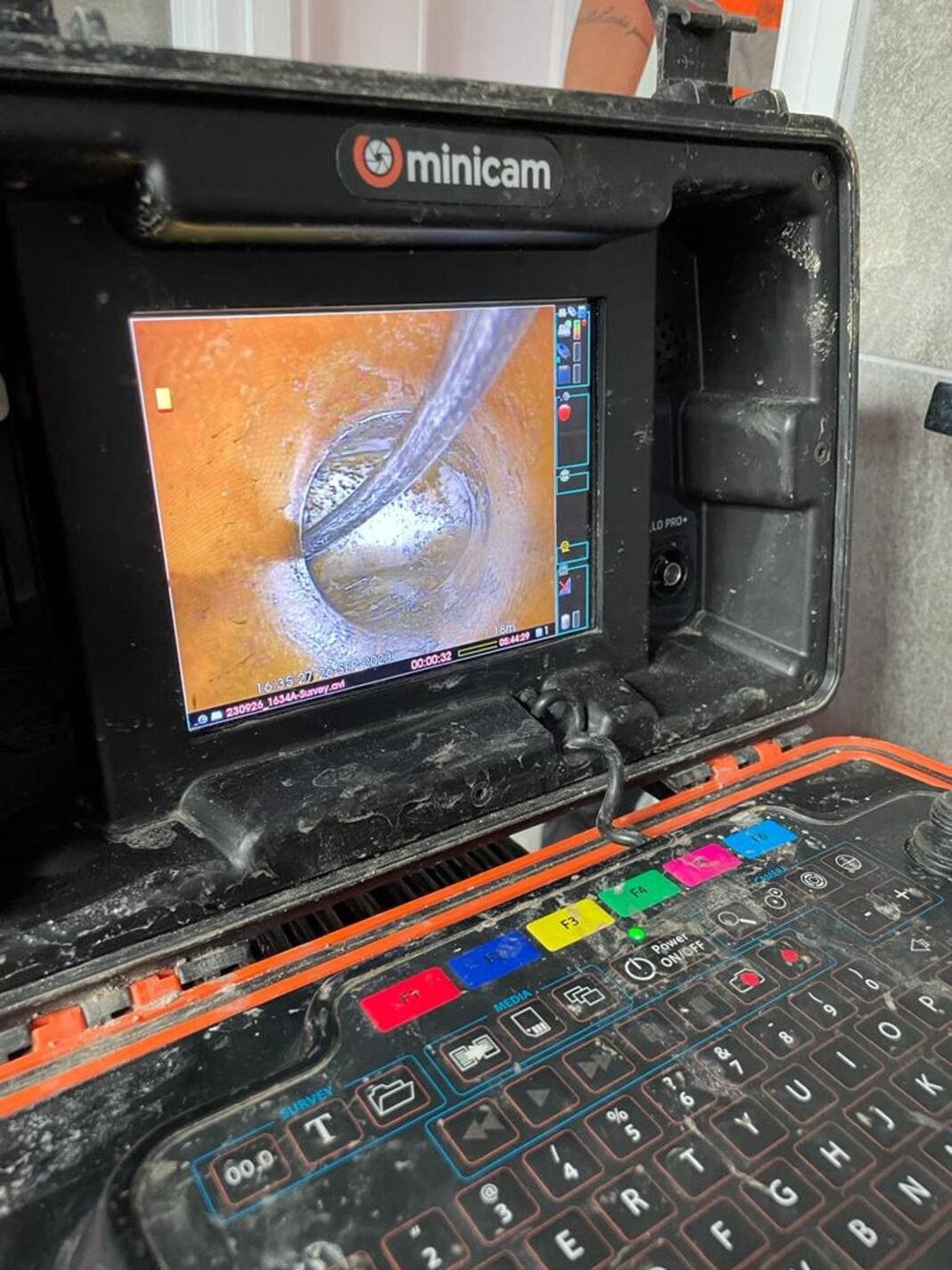
Get a clear review of your CCTV evidence, defect details, and repair options before you agree to excavation.
Request reviewCheck who is responsible for the pipe before approving work
Location alone does not decide responsibility. A pipe under your garden, driveway, or commercial yard may still involve a neighbour, Thames Water, an insurer, a landlord, or a public body.
Responsibility usually turns on what the pipe serves and where it sits in the network. A private drain serving one property is different from a shared sewer, a lateral drain, or a public sewer. That distinction affects who authorises the work, who pays, who needs records, and who may need to be told before access is disturbed.
Association of British Insurers guidance says responsibility should be determined before repair work, or before investigations that may involve access to other properties. It also says a property owner is generally responsible for foul and surface water drains serving a single property within the property boundary, although shared drains, sewers, and drains outside the boundary can be treated differently across the UK.
For Reading, Berkshire, and the Thames Valley, Thames Water responsibility checks can be especially relevant. Thames Water says homeowners are responsible for waste drainage pipes within their property boundary if those pipes serve only that property. If the drain joins with neighbours, Thames Water says it owns the joint part. It also says it owns, maintains, and repairs public sewers under roads and footpaths, plus sewers shared with neighbours, even when they pass under a garden or driveway.
Commercial sites add another layer. A facilities manager or small business operator may need to consider lease terms, landlord duties, customer access, staff areas, compliance records, and business interruption. An estate agent or buyer may need responsibility clarified before exchange, because a drainage defect can become a transaction problem if nobody can show who controls the pipe.
Responsibility should be settled before anyone approves irreversible work on a pipe that may not be theirs to repair.
Ask for the exact chainage and defect coding from the CCTV report before any excavation is agreed. That detail helps separate a genuine structural failure from a localised defect or blocked inspection.

Compare excavation with less disruptive repair options
The cheapest-looking repair can become expensive once reinstatement is included. A narrow drainage repair may still disturb paving, landscaping, a commercial yard, a car park, or an access route that has to be put back afterwards.
Excavation and replacement may be justified where the pipe condition leaves little sensible room for renovation. The Drain Repair Book recommends excavation and replacement for drains in very poor condition with significant deformation, condition grade C drains where arching support is lost, condition grade B drains where renovation is impractical or uneconomic, or where a larger replacement pipe is needed.
Some thresholds are technical, but they matter because they stop “digging” being a guess. The same guidance says non-rigid pipes such as plastics can be assumed to have insufficient arching support when deformation exceeds 20 percent. For rigid pipes such as clay, the figure is 10 percent.
Less disruptive methods may still be worth comparing. CIPP, meaning cured-in-place pipe, can line a pipe from within where the structure and access make that suitable. Patch repair can deal with some localised defects. Pipe bursting may be considered in certain replacement situations. None of those options is universal, and none should be treated as a magic alternative to excavation.
Total cost should include reinstatement, as well as the drainage repair. A recommendation that ignores the surface above the pipe is incomplete, because the real impact may sit in the driveway, shop entrance, loading area, garden wall, or shared access.
Ask the drainage engineer to explain why excavation is being chosen against those alternatives. A clear answer will usually refer back to the CCTV report, structural condition grading, access limits, ownership, and the cost of putting the site back afterwards.
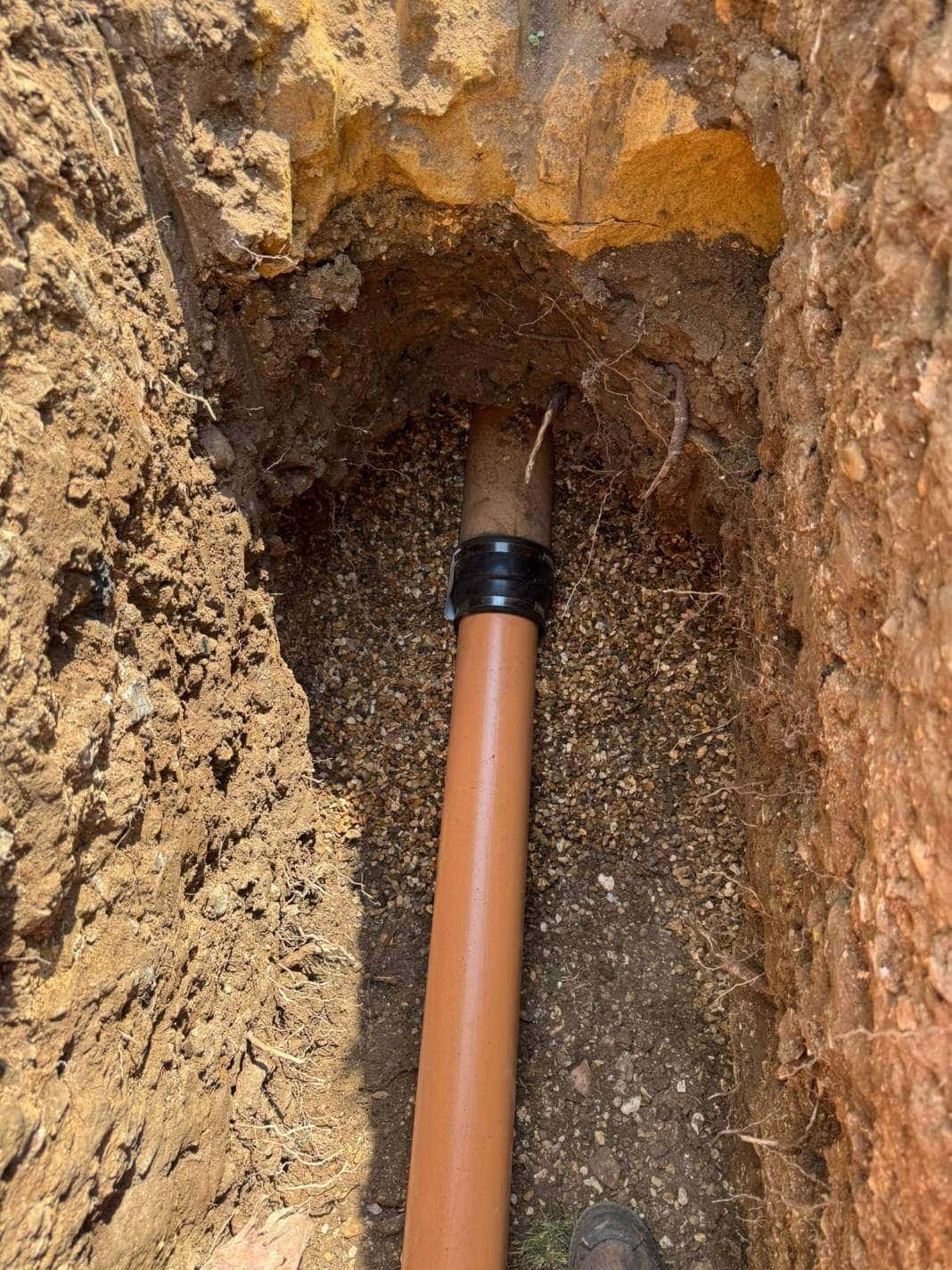
If the pipe sits near a boundary or joins neighbouring drainage, confirm responsibility before booking the work. This can prevent avoidable cost and delay when access or authorisation needs to be shared.

Agree disruption, safety, access and reinstatement in writing
Drain excavation affects the site around the pipe. The work can change access, expose buried services, disturb hard surfaces, and create safety duties for anyone managing a home, rental property, business, or shared site.
Safety planning is part of the decision. Health and Safety Executive guidance says excavation work should not start until steps have been taken to identify and prevent the risk of injury from underground services. Buried electrical cables and escaping gas can cause explosion, burns, serious injury, and property damage.
Ground stability also deserves direct questions. The Health and Safety Executive states that no ground can be relied upon to stand unsupported in all circumstances, and a cubic metre of soil can weigh in excess of 1.5 tonnes depending on conditions. That is why support, battering, access, and inspection should be treated as real site controls, not paperwork for the sake of paperwork.
For commercial clients, the duty to share site information can be part of safe planning. Relevant details may include ground conditions, underground structures or water courses, and existing service locations. A shop, office, yard, school, hospitality site, or industrial unit may also need clear plans for staff movement, customer access, deliveries, waste handling, and records.
Written agreement should cover the practical boundaries of the work. It should say what area is being opened, what surface is affected, how access will be managed, what reinstatement means, and what is excluded. If the work touches a footway, verge, road, or public highway, street works requirements may be relevant. If new drains or extensions to existing drains are involved, Local Authority Building Control questions may also arise.
In pressured domestic and commercial cases, 24hrs Drainage often has to balance drainage repair with continuity, access, and evidence requirements. That balance is the point. The pipe may be underground, but the consequences sit above it.
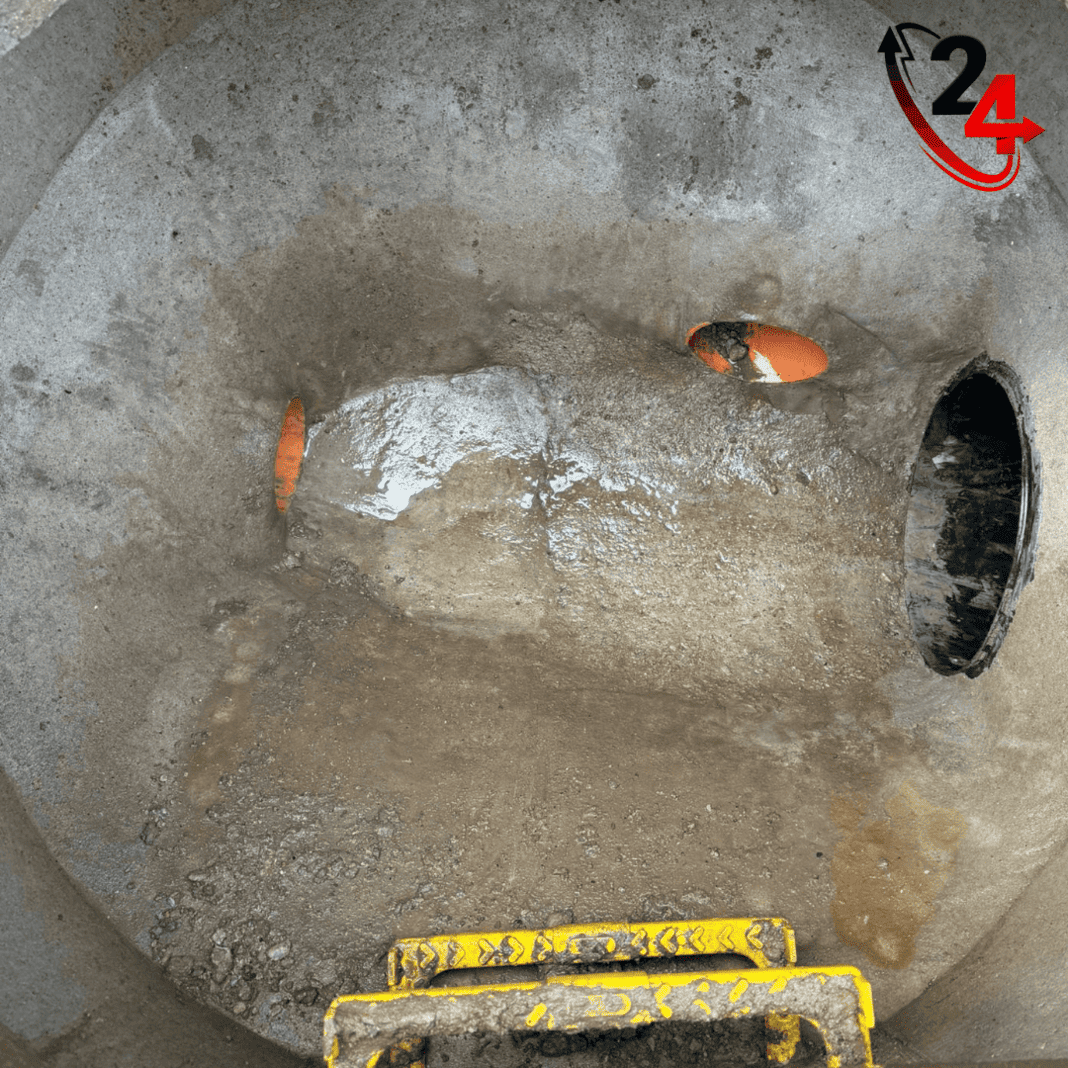
Reframe the decision as risk control, not permission to dig
The real decision is not whether you trust the phrase “needs excavating”. The real decision is whether the recommendation is strong enough to justify permanent disturbance to the property, budget, claim, transaction, or operation.
Urgency does not remove the need for evidence. A blocked business premises, a delayed sale, a disputed shared drain, or an insurance claim may make timing tighter, but it also makes documentation more important. A fast decision can still be a controlled decision if the report, responsibility check, safety plan, and reinstatement terms are clear.
A useful mental test is simple: would this recommendation still make sense if you had to explain it to an insurer, neighbour, buyer, landlord, or director? If the answer is yes, excavation may be a sound and proportionate repair. If the answer is unclear, the missing issue is probably not the digging itself. It is the evidence and responsibility behind it.
Confirm who is responsible for the drain before work begins, especially where boundaries, shared sewers, or public assets may be involved.
Check responsibilityFrequently asked questions
Do I need a CCTV drain survey before excavation?
A CCTV drain survey is usually the evidence base for deciding whether excavation is justified. The report should show the defect, its location, condition grading, and why excavation is being recommended over less disruptive options.
Can a collapsed drain be repaired without digging?
Some damaged drains can be repaired using methods such as CIPP lining, patch repair, or pipe bursting, depending on condition, access, and cost. Severe deformation, very poor condition, or an impractical renovation route may make excavation the right option.
Who is responsible for a broken drain under my driveway?
Responsibility depends on whether the pipe serves only your property, joins neighbouring drainage, or forms part of a public sewer. In the Thames Water area, shared sewers may be Thames Water’s responsibility even when they run under a garden or driveway.
Will home insurance cover drain excavation?
Insurance cover depends on the policy wording, cause of damage, evidence, responsibility, and insurer assessment. A clear CCTV report, repair recommendation, ownership check, and reinstatement detail can all matter when a claim is reviewed.
How disruptive is drain excavation?
Disruption depends on the pipe location, depth, surface above it, access needs, safety controls, and reinstatement. A driveway, shared access, shop entrance, landscaped area, or commercial yard can change the practical impact of the work.
