
Most CCTV drain surveys in Reading are completed within a few hours, although smaller domestic jobs can be shorter and larger commercial inspections can take longer. At the end, you would usually receive clear findings, often including footage, a written report, and recommendations that can be used for repairs, insurance, compliance, or property matters.

Pro Tip: Property owners should review the survey footage themselves to fully understand any issues highlighted in the report.
Survey time is shaped by the property, the drainage layout, and the condition of the system on the day. A straightforward inspection at a small house with easy drain access will usually move faster than a survey at a commercial site with multiple runs, restricted entry points, or a history of blockages.
A terraced house in Reading might have a relatively simple line to inspect. By contrast, a larger building used by local businesses, a mixed-use site, or premises managed by property management companies can involve several branches, surface water connections, and access arrangements that add to the survey scope.
The main factors usually include:
Urgency can also change the shape of the visit. A time-sensitive inspection linked to a sale, a compliance issue, or a business interruption may be prioritised operationally, but that does not mean the actual inspection becomes superficial. Faster attendance and shorter survey duration are not always the same thing.
Local familiarity matters as well. Drainage contractors who work regularly in Reading often have a practical feel for typical site constraints, older housing layouts, and the way certain commercial premises are arranged, including access expectations linked to Reading Borough Council requirements or property management procedures.
Book a CCTV Drain Survey
Arrange a professional CCTV drain survey for your property in Reading and receive a comprehensive report you can trust.
A domestic CCTV drain survey often takes between 1 and 3 hours from arrival to finish. A larger or more involved commercial survey can take several hours, and in some cases part of a working day or longer if the site is extensive.
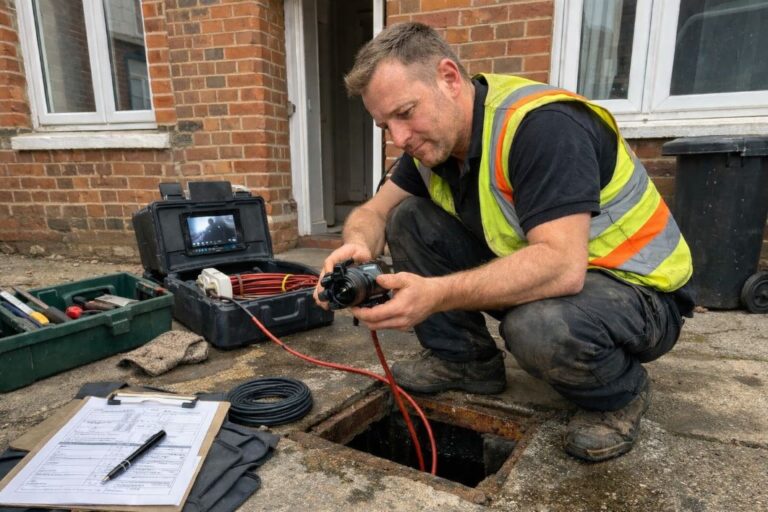
Arrival is only one part of the timetable. Once the team is on site, time is needed for access, setup, confirming the survey scope, running the inspection, and reviewing what has been captured. Even a short drain check still has to produce usable results.
For residential property owners, a simple survey with clear access and no major obstruction may sit at the lower end of that range. A house purchase survey, incidentally, can sometimes take longer if there are several lines to inspect or if the drainage layout is less obvious than expected.
Commercial premises in Reading usually require more time because the drainage network is often broader and operational constraints are tighter. A survey at a restaurant, warehouse, school, office block, or managed site may need to work around trading hours, staff movement, deliveries, or health and safety controls before the inspection is signed off at handover.
Certain issues can extend the process:
Emergency or out-of-hours attendance can shorten waiting time before the survey starts, although the inspection itself still depends on what is found underground. A fast CCTV drain check is useful because it gets the facts in front of the right people sooner, yet unforeseen complications can still add time once the camera goes in.
That distinction matters most when someone expects a quick visit simply because the booking was urgent.
Pro Tip: When booking a survey, confirm in advance whether you need formal documentation for insurance or compliance purposes.
Request a Drainage Report for Insurance
Secure the clear evidence your insurer needs with a prompt, high-quality drainage report prepared by local experts.
The result is usually a package of evidence and explanation, not just a verbal opinion on site. What you receive depends on the scope agreed at the start, but most clients expect documentation that can be used afterwards with confidence.
Typical survey documentation may include:
A basic summary may be enough if the aim is simply to confirm the condition of a short run. A more formal written report is often needed where property solicitors, insurers, compliance officers, or landlords want a clear record of the findings.
Footage has value because it shows what the camera actually saw. Written documentation has value because it translates those findings into plain language, identifies the issue, and states what it means in practical terms. Drainage engineers may also reference the position of defects so that follow-on decisions are based on evidence rather than assumption.
That can be especially useful where the survey outcome needs to support a sale, a dispute, or a decision on repair scope.
Some surveys are routine. Others sit under real time pressure.
A property sale can stall if drainage concerns are raised late in the transaction. Estate agents and solicitors may need evidence quickly so that buyers, sellers, and lenders can see whether the issue is minor, structural, or still uncertain. In that setting, an urgent drain survey is less about convenience and more about keeping the transaction grounded in facts.
Business use creates a different kind of pressure. Reading businesses dealing with disruption, foul water concerns, restricted facilities, or possible compliance exposure may need an emergency drain inspection because downtime has a direct operational cost. A survey in those circumstances supports decisions about continuity, occupancy, and immediate risk.
Insurance matters can be equally time-sensitive. Insurers often want evidence that is recent, clear, and properly documented before they assess responsibility, damage, or scope. Delays can complicate matters where the condition of the line changes after the initial incident.
Compliance deadlines have their own demands. If a landlord, site manager, or commercial operator is responding to a concern raised by a compliance inspector or local authority, timing affects more than convenience. It affects whether there is reliable evidence available by the date it is needed.
In urgent cases, firms such as 24hrs Drainage are often valued for speed of attendance and the ability to deal calmly with high-pressure situations, particularly where evidence provision matters as much as the inspection itself.
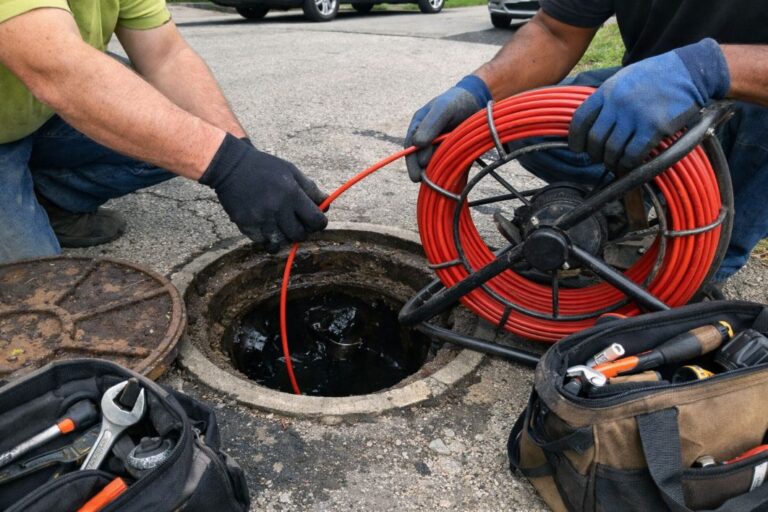
A CCTV survey does not solve the drainage issue by itself. What it does provide is the evidence needed to act with less guesswork.
Once the findings are in hand, several routes become possible:
That matters because drainage problems are often tied to bigger decisions. Insurance companies may need proof of condition. Legal advisors may need a clear record of what sits within a boundary or shared run. Property managers may need documentation before approving remedial work across multiple units.
A survey can also settle uncertainty where different parties have conflicting assumptions. One side may suspect misuse, another may point to ageing infrastructure, and a third may need confirmation before authorising cost. Video evidence and written findings give everyone the same reference point.
Readers sometimes assume the survey is the end of the story. In practice, it is often the point where the story becomes clear enough to handle properly, whether that means compliance documentation, dispute resolution, or a sensible plan for remedial work.
The fastest survey is not always the most useful survey. If footage is incomplete, access is poorly recorded, or defects are noted vaguely, the result may fail at the exact moment it needs to stand up to scrutiny from an insurer, assessor, solicitor, or compliance auditor.
A rushed inspection can miss the issue behind the issue. A blockage might appear to be the whole problem until the camera shows a displaced joint, root ingress, poor alignment, or a damaged section further along the run. If that more detailed cause is overlooked, the next step may be based on the wrong assumption.
Documentation quality matters for the same reason. A short verbal update on site may feel enough in the moment, but a property owner dealing with a claim or a sale usually needs something more durable than memory. A detailed CCTV inspection gives the matter a paper trail, which means decisions can be defended later if the issue is challenged.
For anyone balancing survey accuracy against speed, the useful question is whether the result will still hold value a week later, or three months later, when another party asks for proof. In drainage, certainty often comes from taking enough time to see the full picture properly.
Speak to a Drainage Specialist
Discuss your drainage concerns with a Reading-based specialist and get tailored advice on your next steps.
24hrs Drainage Limited
33 Falmouth Rd, Reading RG2 8QR
0800 020 9198
Opening Hours:
Monday – Sunday : Open and available 24 hours per day
Drain Services
We provide Drainage Services across Berkshire, Hampshire, Surrey, London, Oxfordshire, and the surrounding areas.
Contact Us
If You’re Dealing With Blocked Drains Or Require Drain Repairs, You’ve Come To The Right Destination. Contact Our Team Today At 0800 0209198 For Professional Guidance And A Complimentary, No-Obligation Quote!

We are the premier providers of comprehensive drainage solutions in Reading and throughout Berkshire. With years of experience and a dedicated team of experts, we are your trusted partners for all your domestic and commercial drainage needs.
By subscribing, I agree for my data to be stored and used to receive newsand offers from 24hrs Drainage.
👋 Need urgent drainage help?
We’re available 24/7 in Reading and surrounding areas.
Tap below to speak with our drainage expert now.
Chat on WhatsApp
Fast response | No call-out charges | Nearby
WhatsApp us 24/7