
Quick answer: why do soakaways fail in Berkshire clay?
When a soakaway fills again after rain, clay ground is a likely reason, but we still need to prove the actual fault. In Berkshire clay, water can enter the soakaway faster than the ground can absorb it. Blocked inlets, silt, collapse and poor siting can create the same surface problem.
A full soakaway does not automatically mean the chamber has failed. A rainwater soakaway has to do two jobs: hold incoming water for a short period, then pass it into the surrounding ground. Clay changes the second part of that equation.
Around Reading and parts of Berkshire, the ground is not uniform. The British Geological Survey describes the central Reading district, including Reading and Wokingham, as including the Lambeth Group and London Clay Formation, which are predominantly clay, with sandier strata elsewhere. That variation matters, because two sites a short distance apart can behave differently.
From the surface, a clay soil drainage problem can look like a blocked drain. Standing water, slow clearing after rain and a soakaway full of water all point to a drainage issue, but they do not prove the same cause. We start by separating the type of system involved, because the wrong label leads to the wrong fix.
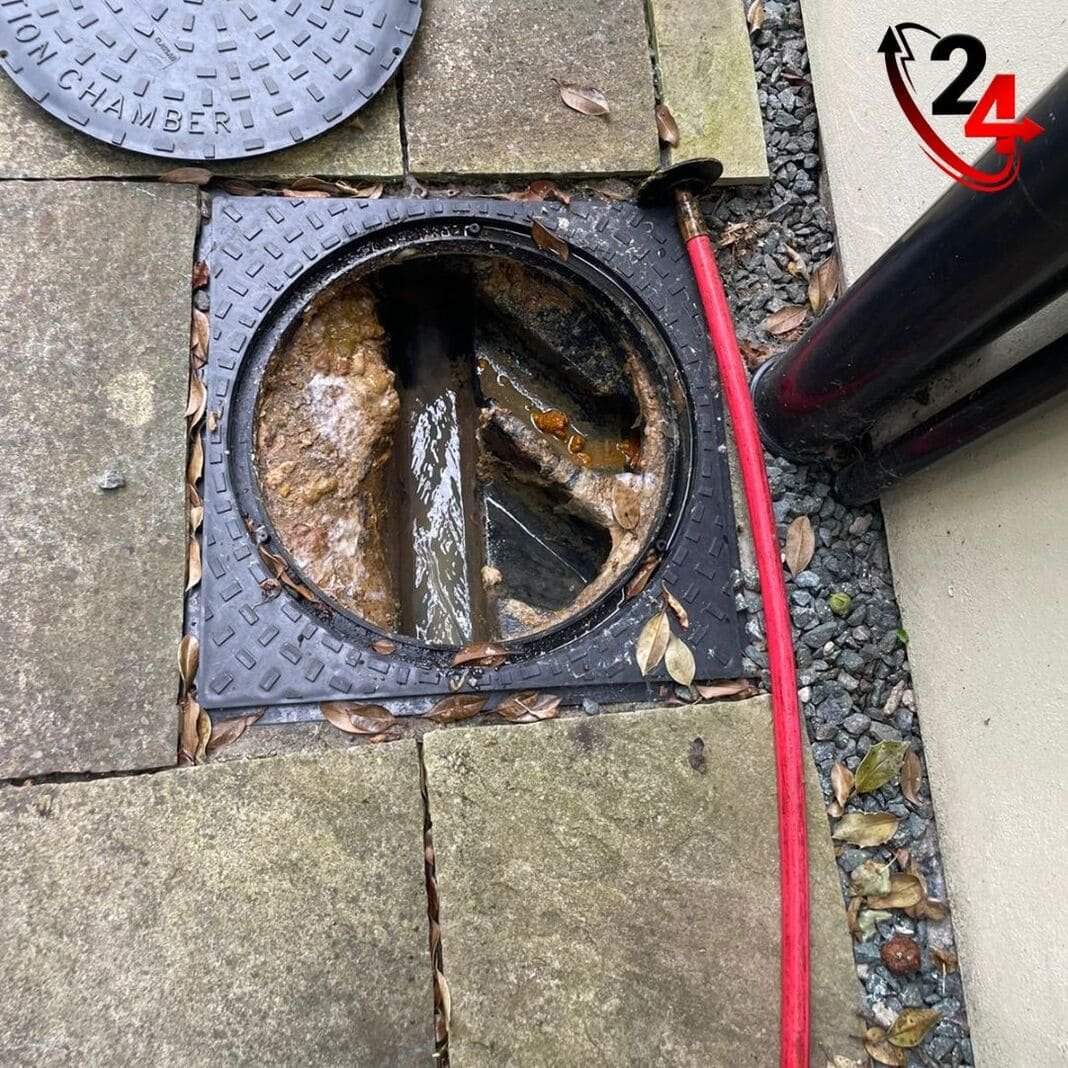
Surface water soakaways are not foul drainage fields
A surface water soakaway deals with rainwater from roofs or relevant paved areas. A foul drainage field is linked to wastewater from a foul drainage system, which is a separate subject with different risks and assumptions.
That distinction matters for commercial property owners, landlords and managing agents because the evidence needed for an insurer, sale, lease issue or planning condition changes with the system. A CCTV drain survey can show layout, pipe condition, silt and defects, but it does not by itself prove whether clay ground can absorb the water.
| System | What it deals with | Why the distinction matters |
|---|---|---|
| Surface water soakaway | Rainwater from roofs or relevant paved areas | The issue is whether rainwater can infiltrate or needs another lawful discharge route |
| Foul drainage field | Wastewater from a foul drainage system | Different rules and risks apply, so it should not be confused with a roof rainwater soakaway |
Building Regulations 2010 Approved Document H sets a priority order for rainwater drainage: an adequate soakaway or other infiltration system first where reasonably practicable, then a watercourse, then a sewer. That order is why we treat the investigation as a decision about evidence, not simply a decision about cleaning.
Honest advice and free quotes across Reading, Berkshire and surrounding areas.
Get a Free QuoteBerkshire clay turns storage into a bottleneck
Heavy clay does not make every soakaway across Berkshire fail. The better point is narrower and more useful: low permeability ground increases the chance that the soakaway stores water faster than the ground accepts it.
Storage and infiltration are different. Extra crates or a larger chamber may hold more water during a storm, but the water still has to leave through the surrounding ground. If that ground is saturated, slow-draining or affected by groundwater, adding volume can delay the visible problem without dealing with the limiting factor.
Local geology around Reading, Berkshire and the Thames Valley makes assumption expensive. Some sites have ground that drains acceptably. Others sit on clay where infiltration is unreliable, especially when rainwater from roofs, yards or paved areas reaches the system quickly. We want the underground evidence before anyone spends again on excavation, replacement or repeat clearance.
West Berkshire Council’s sustainable drainage guidance makes the same practical distinction for low permeability sites. It says sustainable drainage systems can still be used with modifications, except infiltration systems, and points to above ground components for attenuation and treatment. In plain terms, a failed soakaway does not mean there is no drainage answer. It may mean infiltration is the weak part of the design.
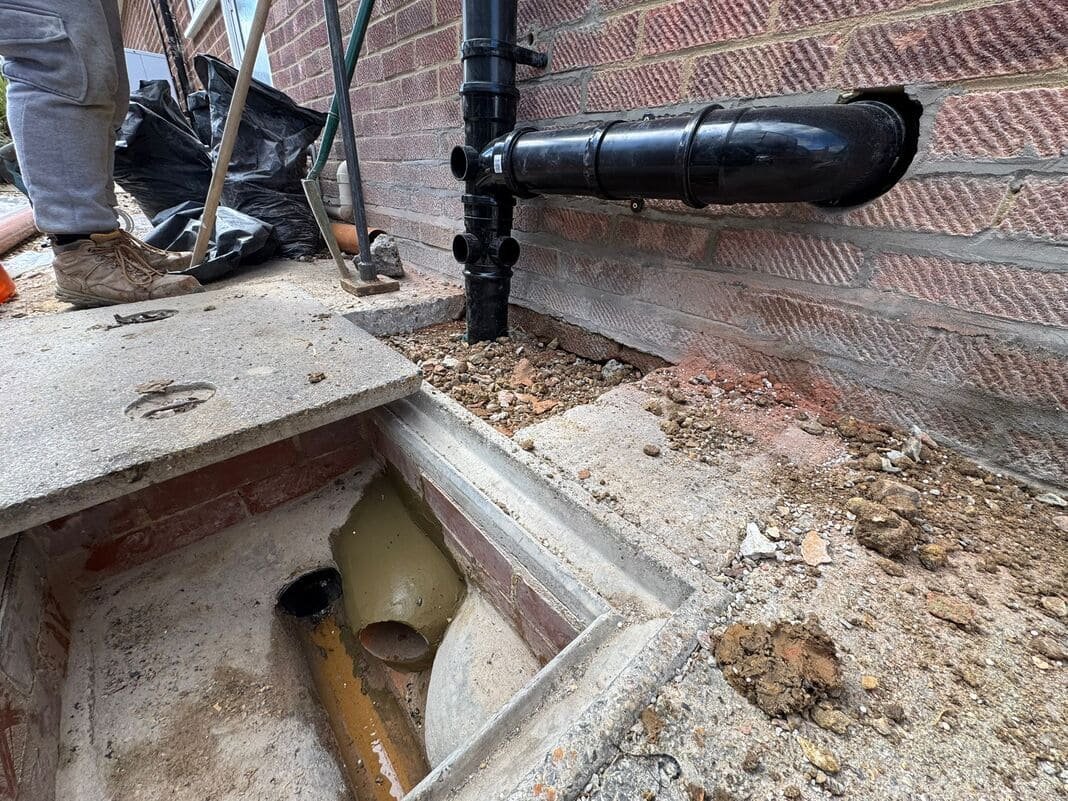
If the same soakaway problem returns after rain, focus the next inspection on whether the inlet pipe and chamber condition support the ground theory. That evidence often separates a repair from a wider design problem.

Underground findings separate a repair from a redesign
Two properties can both have standing water after rain, but the right answer can be completely different. One may have a restricted inlet pipe feeding an otherwise workable soakaway. Another may have a physically intact structure sitting in ground that cannot take the water.
At 24hrs Drainage, we treat a soakaway problem as an evidence question before we treat it as a repair question. The useful finding is the one that changes what happens next.
Underground checks commonly need to establish points such as:
- A blocked or restricted inlet pipe. Cleaning or a local pipe repair may deal with the immediate fault if the ground can still accept water.
- Silt in the chamber or crate system. This builds up where runoff has carried material into the structure over time.
- A collapsed or displaced feed pipe. That turns the issue into a drainage asset fault before any conclusion about clay is reached.
- Roots or debris in the drainage route. These can restrict flow well before the water reaches the soakaway.
- High groundwater in the structure. Standing water sitting in the chamber can make the same location unreliable whatever is done to it.
- Wrong siting. Insufficient separation from buildings or roads changes what can lawfully be rebuilt there.
- Evidence that infiltration is not practicable. On some parts of a site, the ground simply will not take the water.
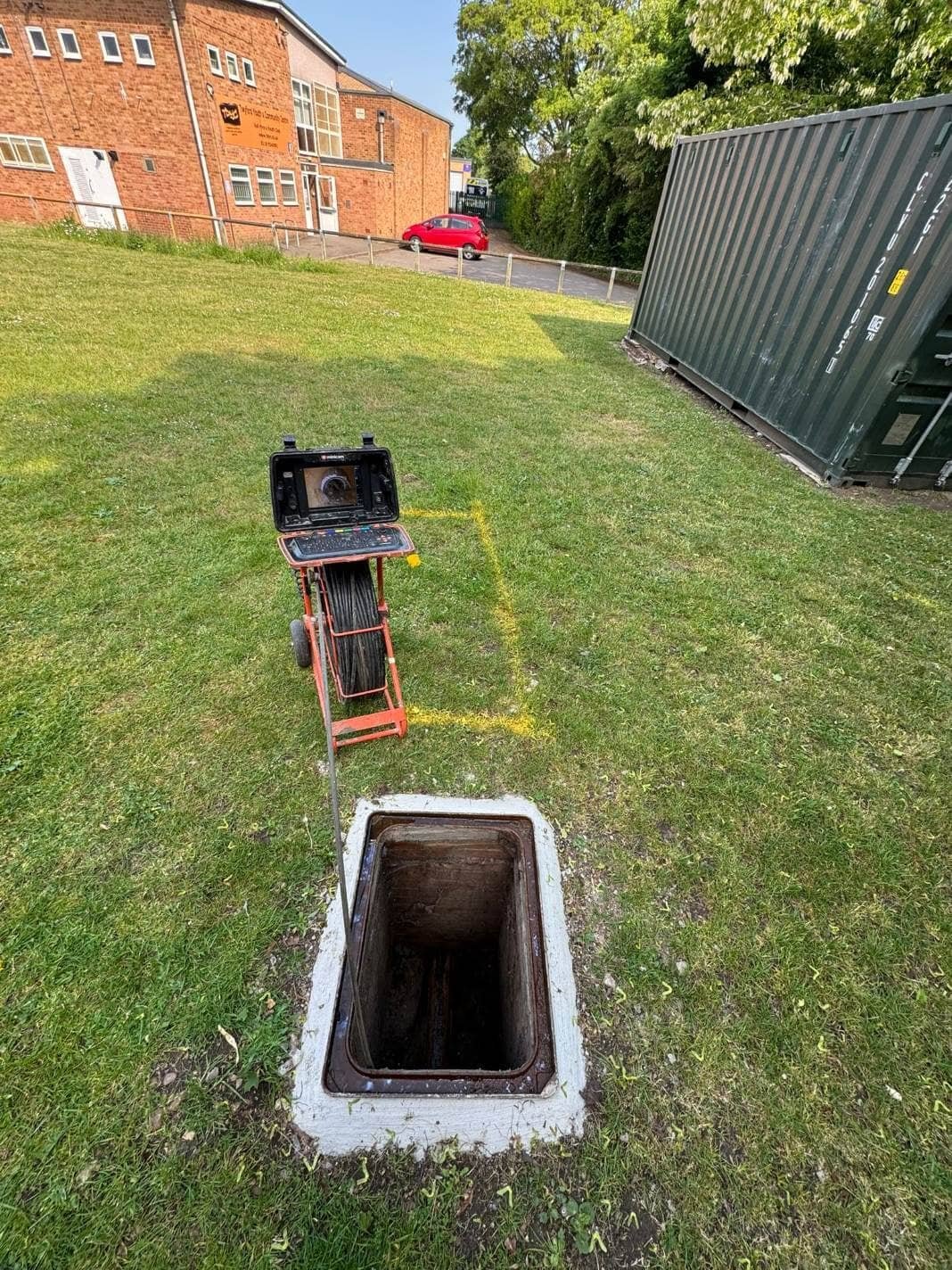
CCTV has a clear role here. It can show pipe route, visible defects and obstructions, and it can support a drainage condition report for a buyer, landlord, tenant, freeholder or insurer. For context, 24hrs Drainage publishes CCTV drain surveys from £150 excluding VAT and homebuyer CCTV drainage surveys in Berkshire from £125 excluding VAT. That is an investigation cost, not a soakaway repair price.
Ground suitability needs separate assessment where the evidence points away from a simple blockage. Guessing from the surface is the expensive route, because a chamber that looks full and a chamber that cannot drain into clay may need different decisions.
The rules matter once the same fix stops working
When the same fix keeps failing, the rule question becomes practical. The issue becomes whether the soakaway is adequately sited, whether infiltration is reasonably practicable, and whether another discharge route needs to be evidenced.
Siting and capacity cannot be guessed
Approved Document H says infiltration devices should not be built within 5 metres of a building or road, in unstable land, or where the water table reaches the bottom of the device at any time of year. That single siting point can change the answer from replacing it in the same spot to accepting that the existing location is part of the problem.
Capacity also needs evidence on clay ground. Approved Document H says percolation tests should be used to determine soil capacity, and soakaways should be designed for a once in ten years return period. For larger catchments, design references such as Digest 365 from the Building Research Establishment and the British and European drainage standard BS EN 752-4 may become relevant.
Older property problems and new development designs should not be treated as identical. Current national standards for sustainable drainage systems in England are aimed at new infrastructure and development, so they should not be applied too bluntly to every older retrofit problem. Even so, they reflect the same broad principle: the drainage route needs to match the ground and the site.
Alternative discharge needs evidence
A failed clay soakaway does not give anyone a free pass to send water wherever seems convenient. The discharge hierarchy matters because a lower priority route, such as a sewer, normally needs evidence that infiltration is not reasonably practicable.
For commercial sites, managing agents and higher value homes, that evidence can matter beyond the repair itself. Planning conditions, buyer enquiries, lease disputes and insurance questions all become easier to handle when the report explains the drainage layout, the condition of the pipework and the reason infiltration is unreliable. A French drain, an attenuation feature or another surface water route only works as a responsible option if it has a lawful outfall and does not move the problem to the next boundary.
Responsibility also has to be clear. Current national standards say that where sustainable drainage systems serve a single property, maintenance remains with the property owner unless another appropriate body adopts the features. Shared systems need the adopting or responsible body identified, because unclear ownership delays decisions when water is already affecting the property.
When a property sits on variable ground, keep the report tied to the actual site layout and discharge route. A general explanation of clay soil will not satisfy a buyer, insurer or managing agent on its own.
Good evidence changes the whole decision
The first question is usually why the soakaway has failed. The more useful question is whether this system can be relied on at this site. Once that is answered, the route becomes clearer.
Good evidence links the symptom to the cause. A report should make sense of the layout, pipe condition, chamber condition, ground suitability and discharge options. If the finding is a blocked inlet, the decision may be local repair or cleaning. If the finding is low permeability ground, high groundwater or poor siting, the answer may be redesign, attenuation or another lawful outfall.
At 24hrs Drainage, we focus the investigation on the finding that changes the decision. That matters in Berkshire clay because the wrong response can look sensible on paper and still fail after the next heavy rainfall. The better outcome is drainage that matches the property, the ground and the permitted discharge route.
A soakaway is only as reliable as the evidence behind it.
Whatever the problem — blocked, cracked, slow or smelly — we'll diagnose it properly.
Book an EngineerQuestions we get asked about soakaways in Berkshire clay
Can a soakaway still work on a site with clay soil?
Yes, a soakaway can work on some clay-influenced sites, but only if the ground can absorb water at a suitable rate. Site-specific evidence matters because clay, groundwater and local ground variation can make infiltration unreliable.
Do soakaway crates fix heavy clay drainage problems?
Soakaway crates add storage, but they do not make clay absorb water faster. If the ground is the limiting factor, extra storage may delay flooding without solving the cause.
Does a CCTV drain survey prove clay is the cause?
A CCTV drain survey can show pipe condition, blockages, silt, defects and layout. It does not prove clay infiltration failure on its own, so ground suitability needs separate drainage assessment where that is the suspected issue.
Who is responsible for maintaining a single-property soakaway?
For a system serving one property, the property owner is normally responsible unless another appropriate body has adopted it. Shared systems need the responsible party identified, because repair and evidence decisions can otherwise stall.
Why might an insurer, buyer or landlord ask for a drainage report?
A drainage report helps show what is underground, what condition it is in, and whether the problem is a repair issue or a wider drainage design issue. That evidence can support decisions during claims, sales, lease matters or property management disputes.
