Why would your drain be lined instead of dug up?
We line a drain when the survey shows the existing pipe still has enough shape and support to take a controlled repair, and lining avoids avoidable disruption above ground. We dig when the pipe has lost form, access is poor, replacement is needed, or excavation gives the safer documented outcome.
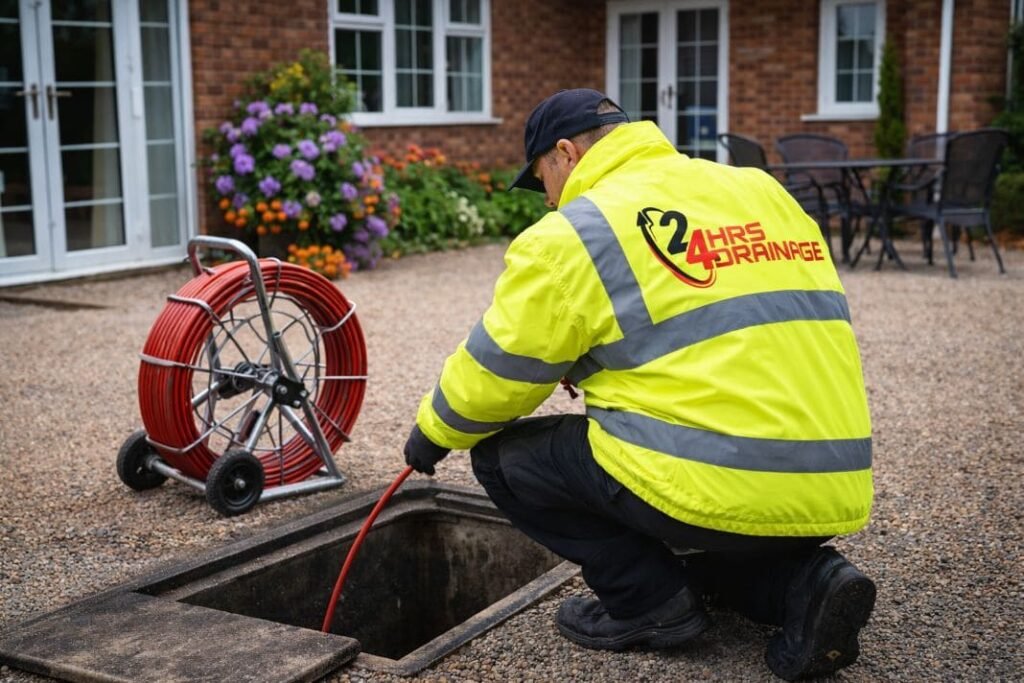
Drain lining is a repair choice, not a shortcut
A CCTV drain survey has shown a cracked pipe, root ingress, an open joint, or a displaced section. You are then asked to approve either drain lining instead of digging, or excavation and replacement. The right answer comes from the condition of the drain, not from a preference for no-dig repair.
Cured-in-place pipe, often shortened to CIPP, means a lining is installed inside the existing drain and set in place to form a new internal pipe. That only makes sense when the old drain can still act as a stable host pipe. If the pipe still has enough shape and support, lining can stabilise the run and reduce disturbance above it.
Digging being inconvenient is never enough on its own. We line because the drain condition supports it, and because the repair can be made without lifting a driveway, breaking a floor, closing a trading area, or creating reinstatement work that does not improve the drain outcome.
Excavation still has a proper place. A drain that has lost too much shape, needs a larger replacement pipe, or cannot sensibly be renovated should be opened up and replaced. The WRc Drain Repair Book groups private drain repair methods into excavation and replacement, cured-in-place pipe systems, and patch repair systems, with the choice driven by the defect and the drain condition.
Honest advice and free quotes across Reading, Berkshire and surrounding areas.
Get a Free QuoteCCTV evidence comes before the repair recommendation
A reliable recommendation starts with seeing the pipe. Symptoms such as repeated blockage or slow drainage tell us there is a problem, but they do not tell us whether lining, patch repair, or excavation is the right repair.
At 24hrs Drainage, we treat CCTV evidence as the basis for the repair decision because it connects the visible defect to the proposed method. A report should not just say that the drain is damaged. It should make clear why the recommended repair fits the condition and position of the defect.
Good survey evidence should clarify:
- The defect position in the pipe run, including whether it is near a chamber, junction, or bend.
- Whether the pipe still has continuity, shape, and enough access for lining.
- The repair purpose, such as stabilising a cracked section, dealing with root damage, or replacing a drain that has failed too far.
- Whether documentation is needed for an insurer, landlord, buyer, or commercial site record.
A pre-repair survey can also stop the wrong work being approved. If the footage shows a defect that is beyond renovation, lining would only delay the proper repair. If the pipe is suitable, excavation may add disruption without giving you a better outcome.
Post-repair verification matters where the repair has to stand up to scrutiny. A property sale, insurance claim, or managed commercial site needs a clear record that the approved work matches the condition found.
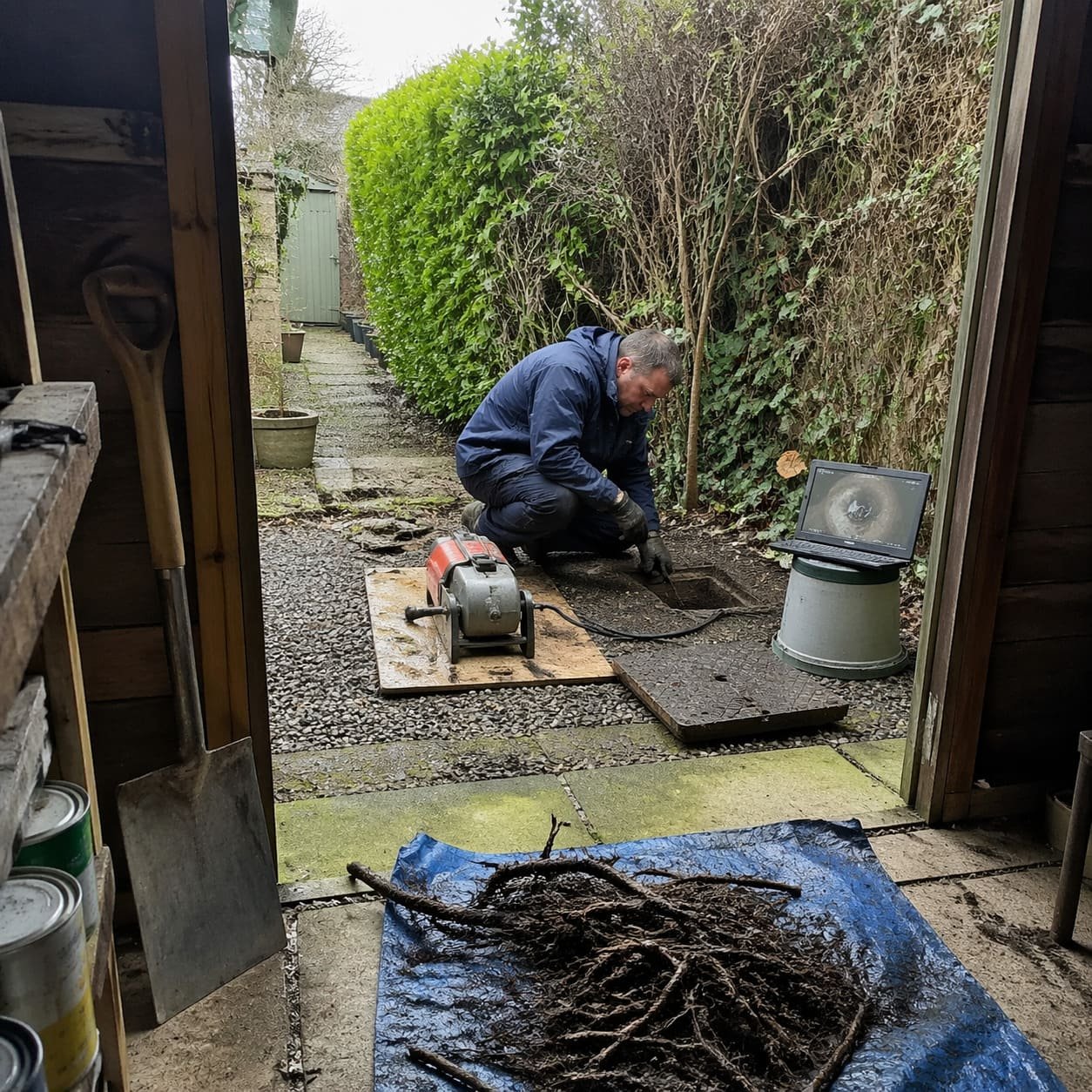
A repair recommendation carries more weight when the CCTV report explains the defect position, pipe condition, and why the chosen method fits both.

Shape and support decide whether lining is responsible
Can a damaged drain still be lined? Yes, where the old pipe still gives the lining something reliable to form against. No, where the pipe has lost too much shape or support for the lining to work as a controlled repair.
Shape and support decide suitability
A lined drain still depends on the host pipe at the point of installation. The old pipe does not need to be perfect, because cracks, fractures, open joints, and some root-damaged sections are exactly the kind of defects lining may be used to stabilise. It does need enough form to guide the liner and enough support to make the finished repair dependable.
A useful plain-English test is shape and support. If the pipe has a recognisable line and has not deformed too far, lining can be a responsible option. If the pipe has flattened, shifted badly, or lost the ground support around it, excavation becomes the clearer decision.
The WRc Drain Repair Book gives specific guidance on deformation. Non-rigid pipes such as plastic can be assumed to have insufficient arching support when deformation exceeds 20%, and rigid pipes such as clay when deformation exceeds 10%. Those figures matter because a lineable drain is damaged, but it is still capable of supporting renovation.
Clay pipes are a common reason this judgement has to be careful. A clay pipe with an open joint or crack may be suitable for CIPP drain lining if the run keeps its shape. A clay pipe that has broken down and moved out of line may need excavation and replacement.
Layout and access can change the repair method
Pipe condition is only half the decision. Access can make a technically possible lining job impractical, and layout can affect which repair is sensible.
Straight runs and swept bends are more suitable for many CIPP systems than tight bends or awkward changes in pipe diameter. Junctions, poor access from a manhole, or a defect tucked close to a chamber can also change the answer. A patch repair may suit a localised defect, while a longer damaged run may call for full lining or replacement.
We also look at what the drain has to do after repair. If the pipe is undersized for the site or a replacement is needed for a planned change, lining the existing diameter may not be the right decision. In that case, digging is not a failure of no-dig repair. It is the responsible way to give the drain the capacity or layout the site needs.
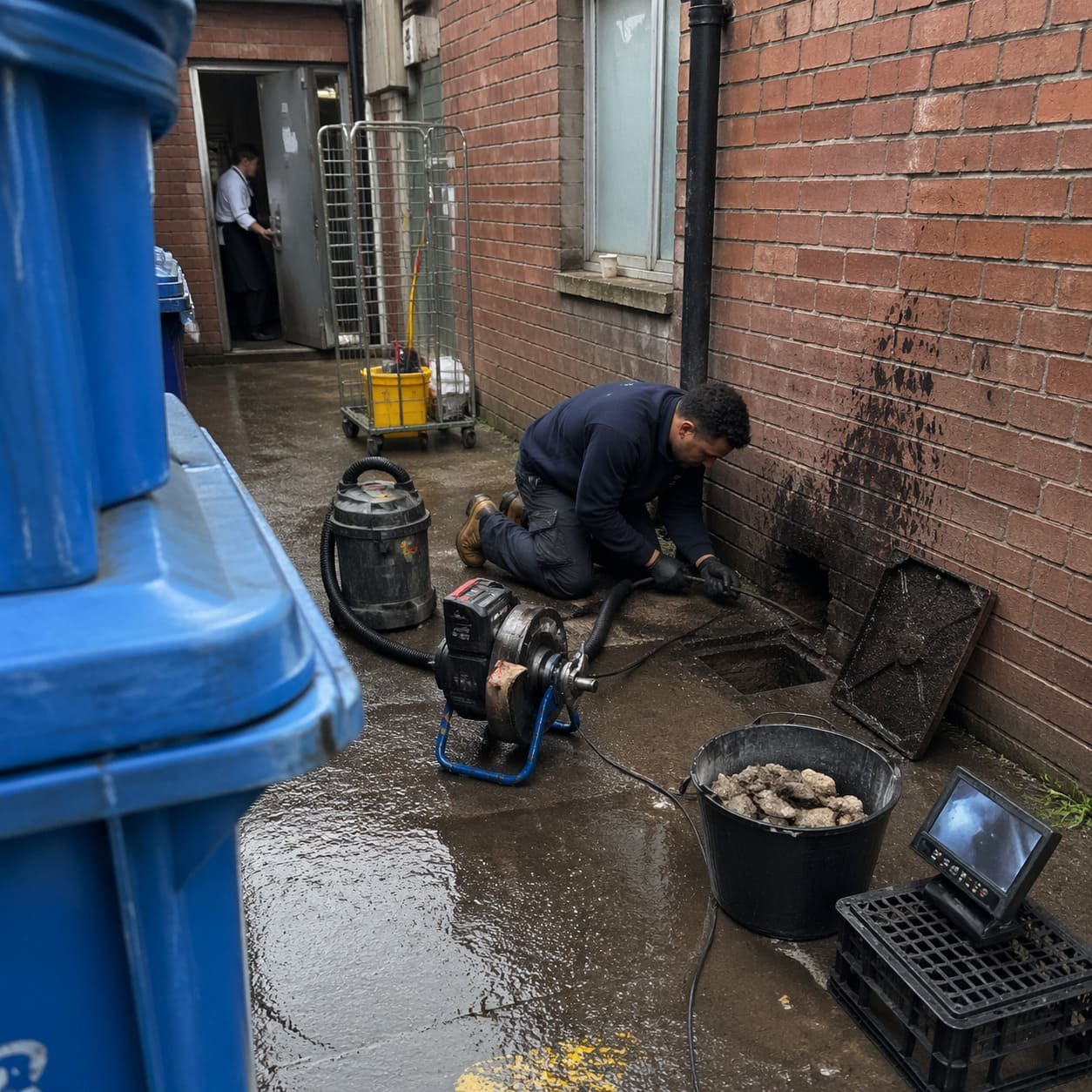
Disruption and reinstatement change the comparison
When the drain runs under a driveway, tiled floor, car park, landscaped area, or trading space, the repair method is only one part of the decision. The work above the drain can carry as much consequence as the work inside it.
| Lining | Excavation |
|---|---|
| Works from existing access where the pipe condition allows it. | Opens the ground so failed pipework can be removed and replaced. |
| Reduces disturbance to surfaces that are expensive or awkward to reinstate. | Gives direct access where the drain has lost shape, support, or practical repair access. |
| Fits cracks, open joints, root-damaged sections, and some broken drains that still retain form. | Fits serious deformation, impractical renovation, or cases where a larger replacement pipe is needed. |
| Needs clear survey evidence before approval and verification where records matter. | Needs surface reinstatement to be weighed into the overall decision. |
For Reading, Berkshire, and Thames Valley sites, 24hrs Drainage often has to weigh the drain repair against access, reinstatement, and site continuity. A dig in open ground may be straightforward. A dig through a commercial entrance, concrete yard, or finished floor can carry a very different cost to the business using the site.
Responsibility can also affect who should authorise the repair. Thames Water states that a homeowner is responsible for waste drainage pipes within their property boundary only where those pipes serve just that property. If the drain joins a neighbour’s drain, the joint part may fall under Thames Water responsibility, including shared sewers under a garden or driveway.
That local context matters before private work is approved. We check where the defective run sits, what it serves, and whether a public sewer or lateral drain may be involved, so the repair decision is made against the right responsibility position.
Where reinstatement would be costly or disruptive, the real comparison is the full outcome, including access, surface repair, and the likely durability of the fix.

The better question is how the repair choice is defended
By the time you are choosing between drain lining or digging, the useful question has changed. The issue is no longer whether no-dig drain repair sounds neater. The issue is whether the chosen method can be justified by the CCTV evidence, the pipe condition, and the consequence of getting it wrong.
We would rather explain why excavation is necessary than line a drain that should be replaced. The reverse is also true: if lining gives a sound structural repair and avoids breaking through a driveway, floor, or trading area, digging can create avoidable disturbance without improving the drain.
Least disruption matters only when the repair remains sound. Lining and excavation are both valid repair methods, and the right choice is the one the evidence can defend.
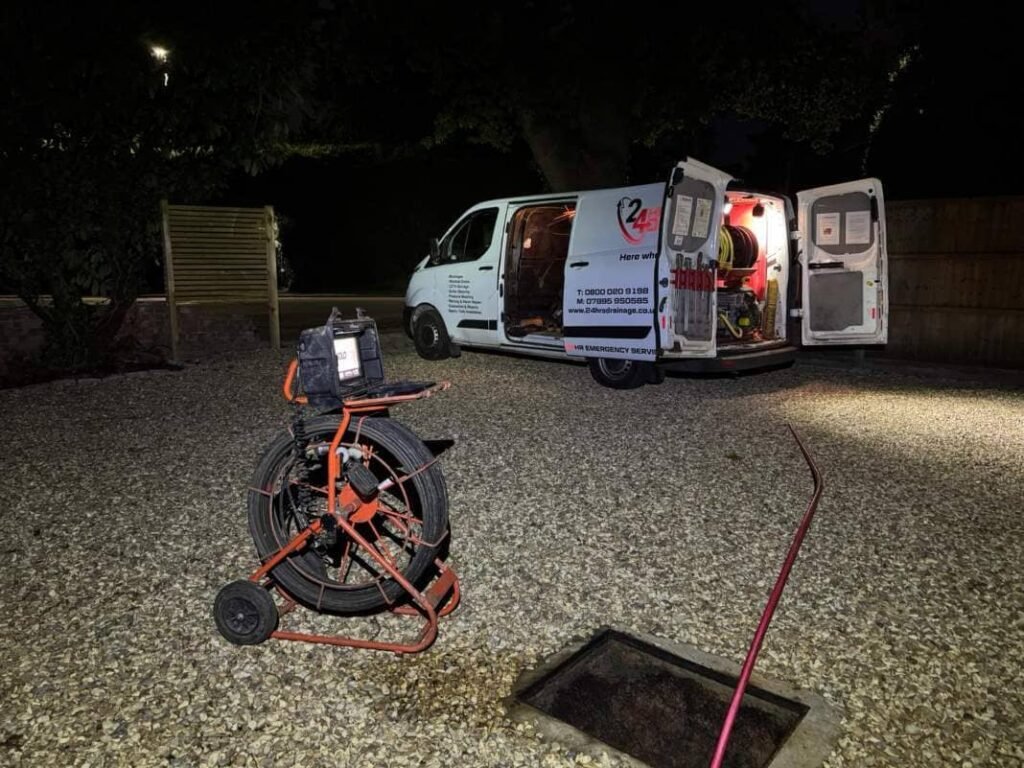
Whatever the problem — blocked, cracked, slow or smelly — we'll diagnose it properly.
Book an EngineerQuestions we get asked about drain lining and excavation
Can a drain be lined if tree roots have grown into it?
A root-damaged drain can be suitable for lining if the pipe still has enough shape and support after the defect has been assessed. If the roots have exposed a deeper failure or the pipe has moved badly, excavation may be the safer repair.
Does drain relining work on clay pipes?
Drain relining can work on clay pipes where the pipe retains its form and access is suitable. A badly deformed or displaced clay pipe may need digging up and replacing.
Will a damaged drain affect a property sale?
A damaged drain can affect a sale if the buyer, lender, or survey process needs evidence of condition and repair. Clear CCTV footage, a repair specification, and post-repair verification can help keep the issue factual.
Is drain lining suitable under a driveway or building?
Drain lining can be suitable under a driveway or building where access and pipe condition support it. If the pipe has failed too far, excavation may still be needed even where surface disruption is inconvenient.
Who is responsible for a shared drain repair?
Responsibility depends on whether the drain serves only your property or has joined another property’s drainage. Where a shared sewer or lateral drain is involved, the water company may be responsible for the joint section.
This is general information, not professional advice.