
What drainage faults are most likely to matter in your older Thames Valley home?
We treat older house drainage faults as a risk question first. The main faults are root ingress, cracked or displaced clay pipes, pitch fibre deformation, obsolete traps, redundant runs and poor access. The main issue is whether the defect affects structure, responsibility, evidence or saleability.
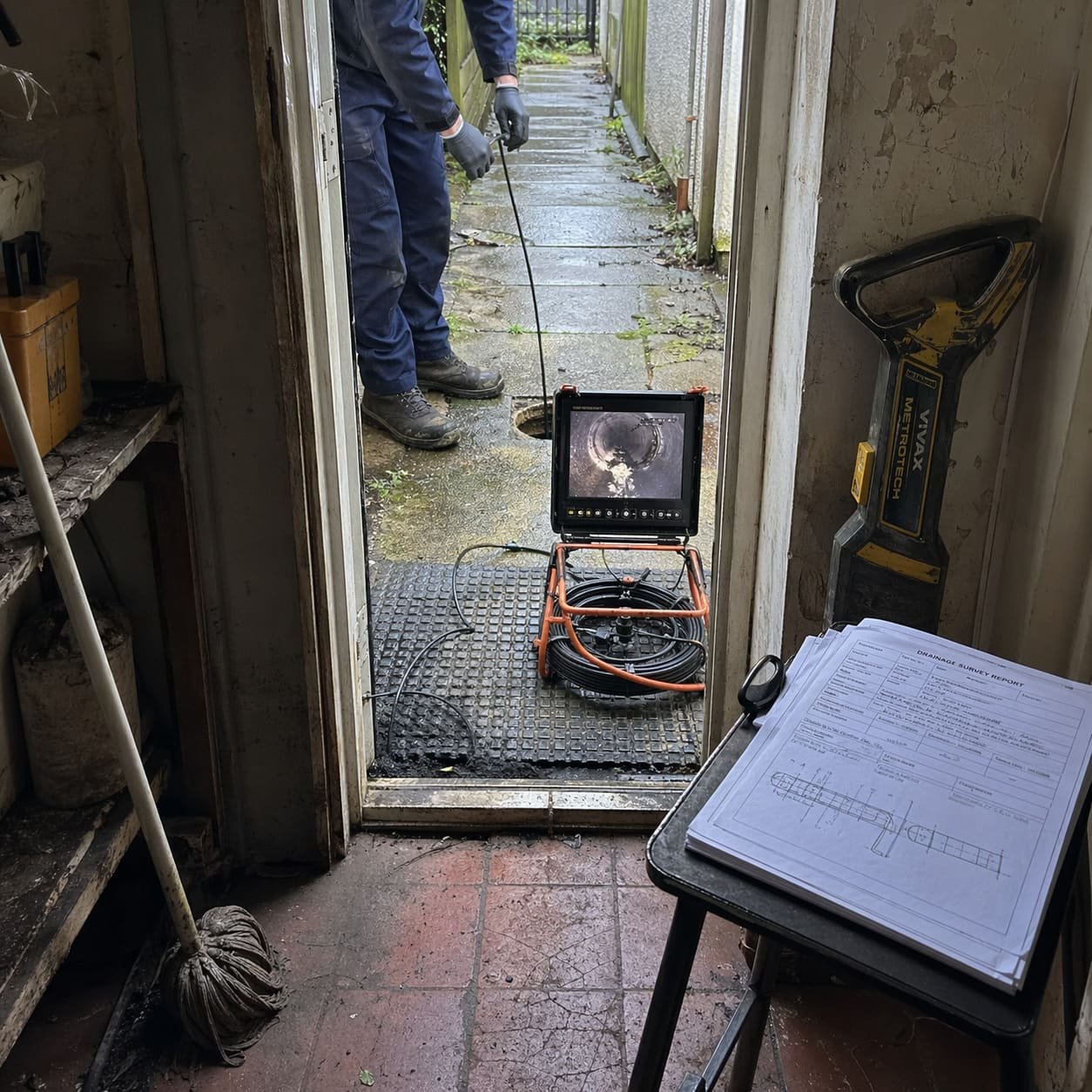
The visible chamber is only part of the drainage story
A clear inspection chamber can give false comfort. You may lift one cover, see a tidy channel, and assume the whole drain run is in similar condition. Older Thames Valley homes rarely make that assumption safe because the pipe can change material, direction or condition beyond the part you can see.
We see the same problem with a recently cleared blockage. The water runs away again, but the cause may still be sitting below ground. A root mass can be cut back without fixing an open joint. A displaced pipe can keep flowing until solids catch on the offset. A buried chamber can hide a route that nobody has properly recorded.
Approved Document H, the drainage part of the Building Regulations 2010 guidance, treats access as a practical requirement for drains that cannot be cleared by other means. It names rodding eyes, access fittings, inspection chambers and manholes as access types. That matters because poor access does more than slow a clean-up. It limits what can be proved.
For an older property, the useful question is whether the drain is blocked. We look at what the fault affects: the pipe structure, the route, the owner’s responsibility, the sale timetable, an insurance discussion or the continuity of a business tenant. A visible chamber is a starting point, not evidence of the whole run.
The faults we most often investigate below older Thames Valley homes
Older Thames Valley homes tend to present drainage faults in groups, especially where clay pipework, later alterations and partial access sit on the same run. In our work at 24hrs Drainage, we focus on what each fault changes for the property decision, not just what it looks like on camera.
Sava notes that properties built before 1950 are likely to have drainage systems based on older designs, with salt-glazed clay drain pipes and socket-and-spigot rigid joints common at that time. That does not mean every older home has the same defect, but it explains why open joints, movement and mixed materials come up so regularly in old property drain survey work around Reading, Berkshire and the Thames Valley.
| Fault | Older-property context | What it changes for your decision |
|---|---|---|
| Root ingress | Roots usually exploit joints, cracks or weaknesses in older clay drains. | You need to know whether the root issue is a maintenance nuisance or evidence of a structural opening. |
| Cracked clay pipework | Salt-glazed or vitrified clay can remain usable despite cracking. | A repeat blockage becomes a structural concern once the pipe condition is recorded. |
| Displaced joints | Rigid older joints can move out of line. | The pipe may still flow, but saleability and repair scope depend on the size and position of the displacement. |
| Partial collapse | A collapsed drain pipe changes the issue from blockage clearance to loss of pipe shape. | Delay affects repair planning, access and evidence for any claim or negotiation. |
| Pitch fibre deformation | Pitch fibre behaves differently from clay and can lose shape. | The material needs clear identification before anyone relies on a repair view or purchase decision. |
| Intercepting traps | Older trap arrangements can remain in place below ground. Approved Document H says intercepting traps are susceptible to blockage and require frequent maintenance. | The decision is whether the arrangement is still serviceable or now creating repeat disruption. |
| Redundant drains | Old unused runs can remain beneath altered properties. | An abandoned pipe can still matter if it affects ground condition, pests or later building work. |
| Poor alterations | Awkward bends, buried chambers and unclear routes appear where older systems have been changed. | A repair price or responsibility view is weaker until the route is properly evidenced. |
Root ingress is the fault people recognise fastest, but it is rarely the full answer on its own. Clay drain problems become more serious when roots, open joints and displacement appear together, because the camera evidence then points to a pipe condition issue rather than a one-off blockage.
Pitch fibre drains deserve separate attention. They are not clay with a different label. They have their own failure pattern, and that affects how confident a buyer, seller, landlord or managing agent can be in the next decision.
Honest advice and free quotes across Reading, Berkshire and surrounding areas.
Get a Free QuoteWhy pipe material changes can mislead buyers and owners
Older drainage systems can look simple from above and be mixed below ground. A chamber might show a neat clay channel, then the unseen section changes material further along the run. That matters most during a property purchase, insurance claim or dispute, because the person making the decision needs evidence of the hidden pipework, not a general reassurance from the nearest cover.
The chamber may not show the whole run
Pitch fibre pipework was installed in the UK between 1950 and 1970. Sava describes it as wood fibre impregnated with coal tar, and the material can deform or leak when the tar softens. Vitrified clay, by comparison, is a fired clay drainage material that is hard and rigid. Both can appear in the same wider drainage arrangement.
A chamber can mislead because pitch fibre may change to vitrified clay channels as it passes through inspection chambers. In plain terms, the open cover can show clay even if an out-of-sight section is pitch fibre. That is why a closed-circuit television drain survey, usually called a CCTV drain survey, has value when the material itself affects the decision.
The material affects the decision
Material identification is not a technical nicety. Clay pipes with roots raise questions about joints and cracking. Pitch fibre raises questions about deformation, leakage and how much of the run is affected. The next move changes depending on which material is actually present.
During a sale, uncertain material can leave both sides arguing over risk without a firm basis. In a landlord or managing agent setting, the same uncertainty can delay a decision on who pays, how much disruption is likely, and whether a tenant issue is routine or structural. Camera footage and a written condition view give that decision a firmer footing.
In older property cases, the most useful report names the pipe material as well as the defect, because that distinction changes how the issue is judged in a sale or claim.

The responsibility line is not always where people expect
Drain responsibility depends on route, boundary, shared use and connection, so private drains, lateral drains, shared pipework and public sewers cannot be treated as the same thing. A drain outside a wall is not automatically someone else’s problem, and a chamber inside a boundary is not private by default.
Thames Water describes a lateral drain as an extension of a private drain outside the property boundary that connects with the public sewer. Responsibility is affected by the boundary, whether the pipe is shared, and whether it connects to the public sewer. For older homes, that can matter because old routes do not always match the layout a buyer expects.
Manholes cause particular confusion. If a damaged manhole inside your boundary serves only your property, the responsibility sits differently from a cover that serves several properties. Where shared use is possible, the sensible move is to establish the route and who the pipe serves before turning a drainage fault into a neighbour dispute.
For 24hrs Drainage, the practical task in these situations is evidence. We need to show where the pipe runs, what condition it is in and who the fault appears to affect, so a buyer, owner, landlord or managing agent is not relying on assumption.
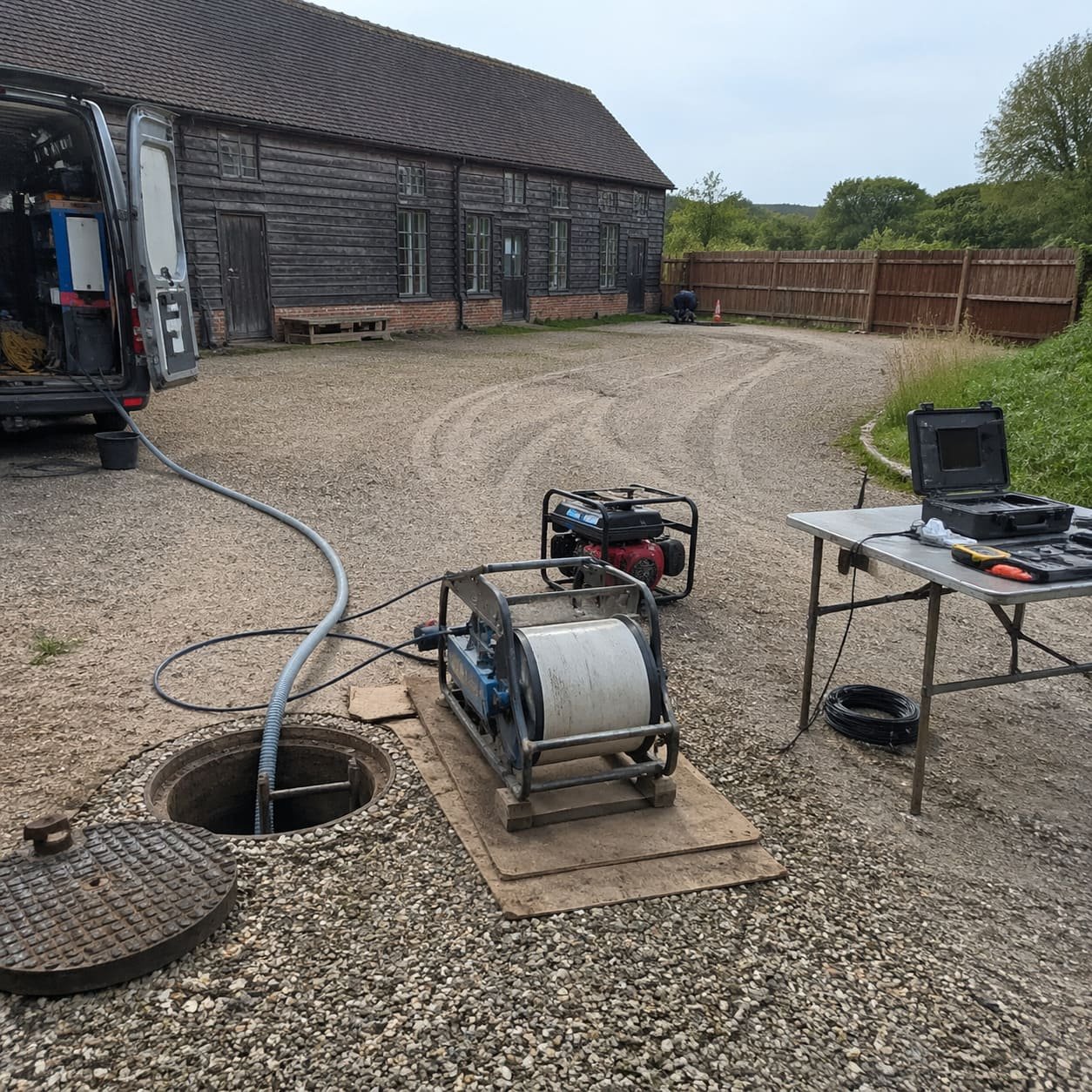
If access stops partway through a run, record where it happened and why, since an incomplete route often matters as much as the visible fault.

Why access problems turn small faults into slower decisions
When the survey cannot reach the full pipe run, the decision remains unfinished. Access controls how much of the fault can be seen, how clearly it can be reported and how confidently repair options can be judged.
Older alterations make this harder. Extensions, changed kitchens, paved areas and buried chambers can leave the drain route partly hidden. We are not asking you to inspect those points yourself. The point is simpler: limited access leaves gaps, and those gaps matter when a sale, claim or shared responsibility question is already under pressure.
Access problems that affect older property drainage reports include:
- Buried chambers that prevent a full view of the route.
- Awkward bends where a camera or clearing equipment cannot pass cleanly.
- Gradient changes that make repeat blockage or standing water harder to interpret.
- Junctions where another pipe joins and responsibility may need checking.
- Redundant drains, which are unused runs that can still create below-ground risk.
Approved Document H says access should be provided near key points such as the head of a drain run, bends, changes of gradient, changes of pipe size and junctions unless clearance is available from another access point. That is practical guidance, not paperwork for its own sake. If those points cannot be reached, the fault may remain partly unproved.
Disused drains also deserve attention. Approved Document H warns that disused drains and sewers can harbour rats, provide routes between sewers and the surface, and may collapse causing subsidence. For an older property, an unused pipe should not be dismissed just because no current appliance appears to discharge into it.
The next drainage decision will need better evidence
Over the next 12 to 24 months, older property drainage decisions in the Thames Valley will rely even more on clear records. Sales already stall when a buyer cannot tell whether a defect is routine or structural. Insurance discussions already depend on what can be shown. Shared drains already need route evidence before responsibility can be dealt with properly.
A CCTV drain survey for an older house is most useful when it answers the decision question. The strongest reports identify the material, the route, the condition and the point at which responsibility may change. A vague statement that the drain is “old” or “serviceable” gives little help when money, liability or occupation is at stake.
Clear evidence does not make every fault urgent. It separates the blocked gully from the fractured run, the private defect from the shared line, and the negotiable purchase issue from the repair that needs prompt attention. That is where a calm, evidence-led approach matters most.
The property market is becoming less tolerant of below-ground uncertainty. The homes that move cleanly through sale, claim or repair decisions will be the ones where the drainage record is clear enough to stand up when someone else reads it.
Whatever the problem — blocked, cracked, slow or smelly — we'll diagnose it properly.
Book an EngineerQuestions we get asked about older drainage faults
Is a CCTV drain survey worth it before buying an older house?
A CCTV drain survey is worth considering when the property is older, the drains are shared, or the sale depends on knowing whether a defect is structural. It gives you evidence of the route, material and condition below ground.
Are clay pipes with roots a problem when buying a house?
Clay pipes with roots need context. The issue is whether roots have entered through an open joint, crack or displaced section, because that can affect repair scope and negotiation.
Pitch fibre drains were found on a survey, so is that serious?
Pitch fibre drains need a careful condition view because the material can deform and leak. The seriousness depends on how much of the run is affected and whether the pipe has lost shape.
Who is responsible for a shared drain on my property?
Responsibility depends on the route, the property boundary, shared use and connection to the public sewer. Evidence of where the pipe runs and which properties it serves is the right starting point.
What happens if a drain survey cannot reach the whole pipe run?
An incomplete survey can leave the main decision unresolved. The next judgement then rests on what was reached, why access stopped and whether another access point can provide the missing evidence.
This is general information, not professional advice.
