
What drainage compliance risks do Reading gyms, spas and leisure sites overlook?
We treat drainage risk in gyms, spas and leisure sites as an operational exposure long before a major blockage appears. For Reading operators, the deciding points are where water is discharged, whether consent applies, whether wet areas remain safe, and whether records prove the site stayed in control.
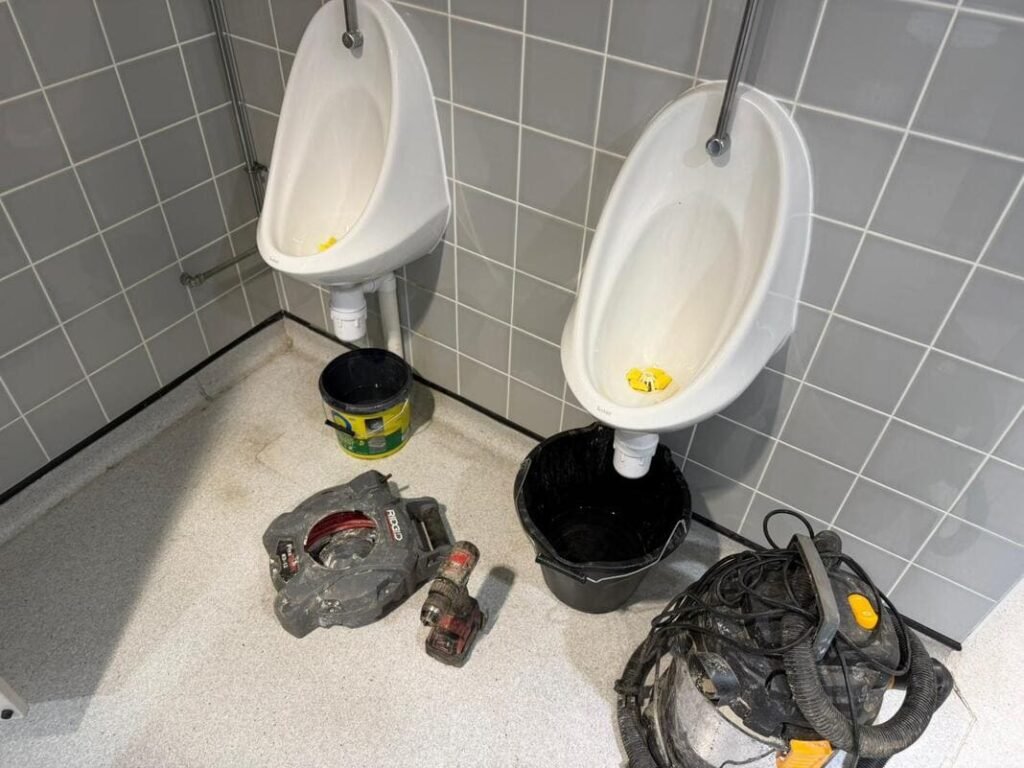
Drainage is an operational risk, not a toilet fault
Most operators assume drainage risk starts with a blocked toilet or a flooded changing room. In leisure premises, the better question is whether the site can show where water goes, what was checked, and what action was taken when something failed.
Gyms, spas, pools, showers, changing rooms, cafes and plant areas all create different drainage pressures. A single site can have ordinary foul drainage from toilets, process discharge from pool or spa operations, washwater from cleaning, and surface water routes that should be kept separate. Those routes matter when an insurer, landlord, local authority or internal safety lead asks for evidence.
Health and Safety Executive guidance says the person in charge of a swimming pool is legally required to protect workers and pool users. That duty sits alongside the Health and Safety at Work etc Act 1974 and associated regulations, so drainage becomes relevant whenever water, outlets, wet floors or plant failures affect safety and control.
For commercial drainage in Reading, Berkshire and the Thames Valley, we look at the operational issue first. Can the site stay open safely? Does the discharge route match the use? Is there a clear record of the fault and the remedial action? Those questions set the frame for everything that follows.
Honest advice and free quotes across Reading, Berkshire and surrounding areas.
Get a Free QuoteTrade effluent checks belong before pool and spa discharges
A pool backwash line can look like ordinary drainage until the consent or discharge route is questioned. That is where many leisure site drainage risk problems begin, because the pipe may be clear but the paperwork or route may be wrong.
Thames Water defines trade effluent as liquid waste discharged into its sewers from a business, industrial or trade process, excluding domestic sewage and surface water. Its guidance says businesses need permission before discharging trade effluent into a public sewer, and that discharging without consent is an offence under the Water Industry Act 1991. Commercial swimming pools are listed by Thames Water among industry types that would normally require consent to discharge trade effluent.
That does not make every gym drain a trade effluent issue. Toilets, pool process discharge and rainwater are different categories, and mixing them up can cause trouble for an operator who thought the site was simply using the nearest drain.
| Drainage route or discharge type | Why it matters | What the operator needs to know |
|---|---|---|
| Domestic sewage from toilets | Domestic sewage is treated differently from business process discharge. | The route still needs to work, but it should not be confused with pool or spa process water. |
| Pool or spa process discharge | Commercial swimming pool discharge can fall within trade effluent consent requirements. | The site needs to know whether consent applies and what evidence shows the discharge route. |
| Surface water drains | Surface water routes are for rainwater, not trade effluent. | Pool or spa process discharge should not be treated as acceptable simply because water disappears into a drain. |
| Foul or combined sewer | Trade effluent can only go to the correct sewer route with consent in place. | Drainage plans and survey findings help show where the discharge actually goes. |
| Waste that cannot go to the sewer | Some waste needs a different disposal route. | Tankering by a licensed waste disposal company may be needed where sewer discharge is not accepted. |
At 24hrs Drainage, we look for the practical evidence an operator may need, such as drainage routes, CCTV drain survey findings and remedial records. A CCTV drain survey means a camera survey of the drainage system, which can help show condition, route and obvious faults without relying on guesswork.
Assumptions cause the damage here. A discharge route that has always been used is not the same as a discharge route that has been checked, recorded and accepted for the way the site now operates.
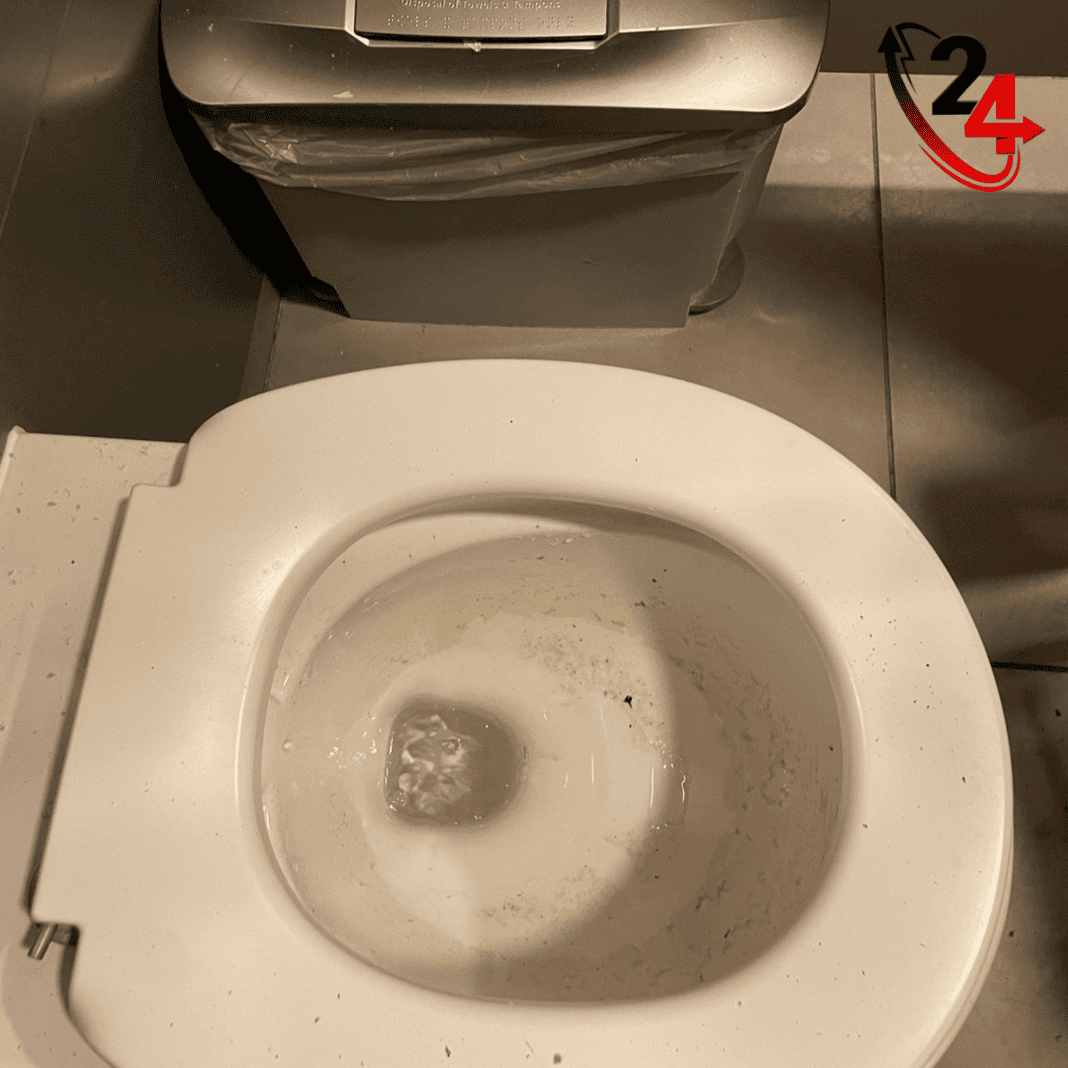
Keep drainage plans with the latest contractor report and survey footage in one place. That makes it easier to show what failed, what was checked and what remains unresolved.

Spa-pool controls need drainage evidence
Spa-pool compliance is often treated as a water-testing matter, but drainage becomes part of the evidence trail when controls fail. A site may need to show that draining, cleaning, remedial works and reopening decisions were supported by usable records.
Failed water results create drainage demands
The Health and Safety Executive HSG282 guidance covers control of legionella and other infectious agents in spa-pool systems. Spa pools are a recognised source of infectious disease risk, including Legionnaires’ disease, so the drainage side of remedial action cannot be treated as an afterthought.
A failed water result can trigger action that depends on the site being able to drain, clean and return the system to controlled use. HSG282 states that a Legionella result above 1000 cfu/l requires immediate closure of the pool, along with remedial action that includes shutdown, cleaning, disinfection, review of controls, refilling and retesting. That is a serious operational moment, and the drainage system has to support the response rather than complicate it.
We are not asking you to become a water-treatment specialist. The practical point is simpler: if spa-pool controls rely on draining and cleaning, the drainage route, access and records must be credible when someone asks what happened.
Written schemes work only when the site evidence matches them
A written control scheme should set out how the spa-pool system is controlled, including checks, remedial actions, testing, water replacement, closure criteria and reopening criteria. The scheme also needs an up-to-date schematic diagram, which is the plain plan showing the system and associated plant.
Paperwork that does not match the plant room or drainage route loses value fast. If a balance tank, drain line or access point has changed, the written scheme should reflect the working site. The same applies after a repeat blockage or drainage repair that affects spa operations.
Names such as Legionella pneumophila, Pseudomonas aeruginosa and the bacteria E. coli belong in the water-quality record, not in a drainage engineer’s guesswork. Our role on the drainage side is to help the operator show what was found, what was cleared or repaired, and whether any unresolved drainage risk remains.
Safety risks sit alongside drainage faults
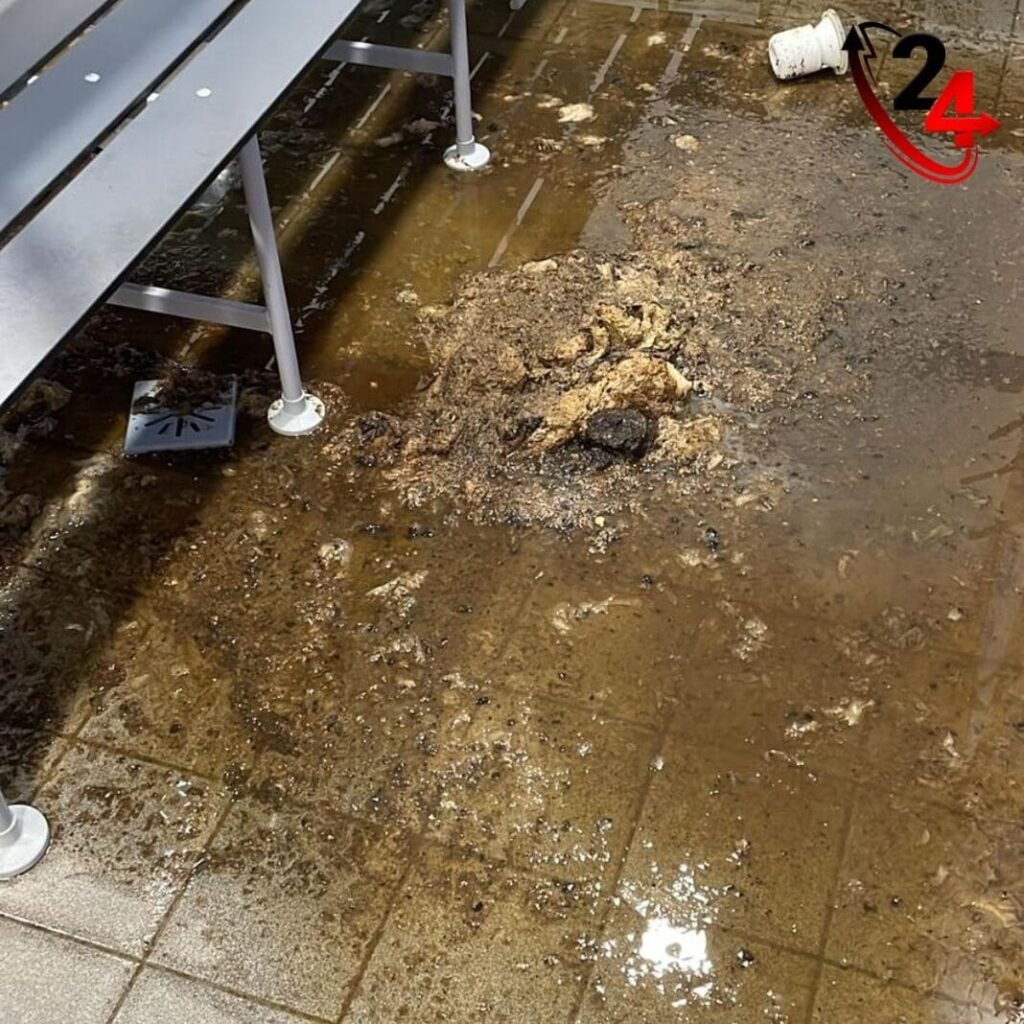
A changing-room drain that repeatedly leaves water in a customer area is no longer a simple nuisance. The puddle matters less than the pattern behind it: whether the fault was known, whether records show action, and whether the area was kept safe enough for continued access.
Pool drainage hardware deserves the same practical seriousness. HSE swimming pool safety management guidance warns that a pool with only one sump outlet can create a suction risk if a user covers the outlet, and it states that grille covers should be securely fixed across sump outlets in all pools. That is a safety issue with a drainage connection, not a decorative plant-room detail.
Food and refreshment areas create another route into liability. Oil and grease can build up in sewers and lead to blockages, odour problems and flooding, so a cafe sink or wash-down area can affect the wider drainage system even when the front-of-house issue looks minor. We separate that from pool and spa discharge because each problem needs its own evidence and control route.
Pool operators will also recognise the Pool Water Treatment Advisory Group, which produces detailed swimming pool water quality and treatment guidance that regulators treat as the standard for an effectively managed pool. Drainage records do not replace pool safety documents, but they support the normal operating plan and emergency action plan when a drainage fault affects wet areas, customer access or plant performance.
Record the discharge route separately for pool, spa, foul and surface water systems. A clear record helps when an operator has to answer questions from a landlord, insurer or local authority.
Clearance does not close liability
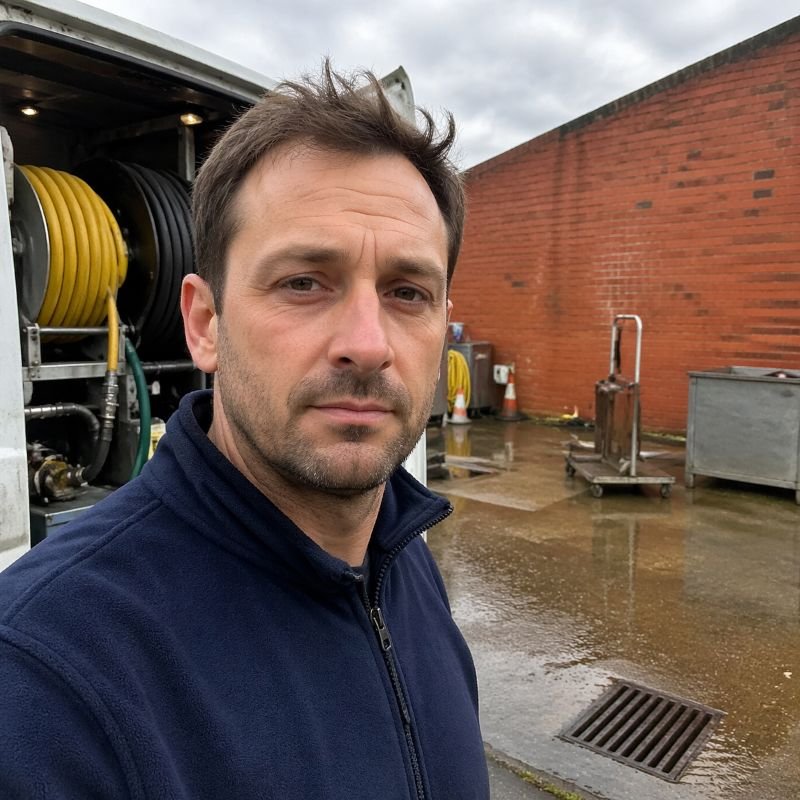
Once water is moving again, the immediate pressure drops. That moment is exactly where operators can lose the evidence they later need, because a short note saying “blocked drain cleared” rarely explains cause, condition or remaining risk.
Repeat failures, customer incidents, landlord questions, local authority attention and insurer queries all put weight on records. The useful evidence is practical and plain:
- Drainage plans showing where foul, combined and surface water routes go.
- CCTV drain survey footage that records condition, obstruction, collapse or misuse.
- Contractor reports with the cause, the action taken and any unresolved risk stated clearly.
- Remedial evidence after repair, cleaning, tankering or planned maintenance.
- Records connecting drainage action to pool, spa, wet-area or cafe operations, where that link matters.
At 24hrs Drainage, we treat reports, footage and remedial evidence as part of the outcome for operational premises. That matters for Reading leisure sites because a drainage issue can become a trading, safety, compliance or insurance question after the engineers have left.
The common mistake is assuming a cleared blockage closes the matter. It does not. In a gym, spa or leisure site, the stronger position is being able to prove what failed, what was checked and what has changed.
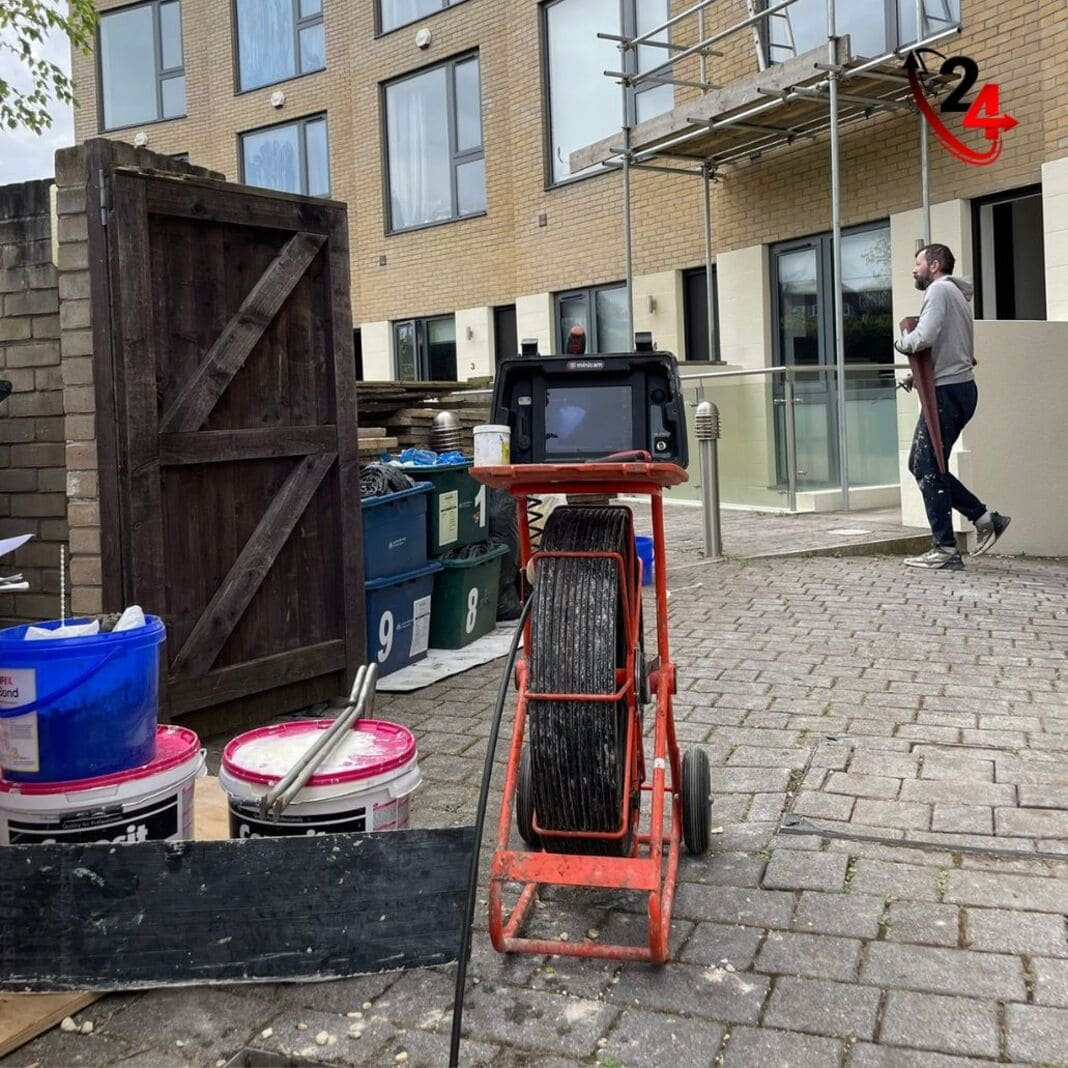
Whatever the problem — blocked, cracked, slow or smelly — we'll diagnose it properly.
Book an EngineerCommon questions about drainage in gyms, spas and leisure sites
Can swimming pool backwash go into a surface water drain?
Pool or spa process discharge should not be sent into a surface water sewer. The operator needs to know the actual discharge route and whether trade effluent consent applies for the site.
Does every blocked drain mean a leisure site has to close?
No. Closure depends on the risk, the affected area and any specific pool or spa control requirements, so a blocked toilet is not treated the same as a failed spa-pool control result or unsafe wet area.
Who is responsible for blocked drains in a commercial leisure property?
Responsibility can depend on the lease, ownership arrangements and the part of the drainage system affected. The operator still needs to manage immediate safety and keep clear evidence of the fault, action taken and any unresolved risk.
Do gym cafes always need special drainage controls?
A cafe or refreshment area should not be ignored because oil and grease can contribute to blockages, odour and flooding. The exact controls depend on the site and the discharge involved, so the operator should avoid assuming it is only a sink problem.
What evidence helps after a drainage incident at a gym or spa?
Useful evidence includes drainage plans, CCTV drain survey footage, contractor reports and records of remedial work. Those records help show the cause of the issue and what the site did to bring the risk back under control.
This is general information, not professional advice.
