Can Your Business Be Fined for Drainage That Doesn't Meet Trade Effluent Rules?

Can a business face fines if its drainage does not meet trade effluent rules?

Yes. A business can face enforcement action if wastewater from its premises is discharged in a way that breaches trade effluent regulations, consent conditions, or wider environmental law. Penalties vary with the facts, but they can include formal warnings, enforcement notices, prosecution, and financial penalties, especially where pollution, repeated breaches, or poor records are involved.

Table of Contents

Pro Tip: Keep thorough, dated records of all drainage issues, maintenance, and communications to support your position in any compliance review.

Understanding Trade Effluent Rules and Their Relevance to Businesses

Many firms assume trade effluent rules only apply to heavy industry. That is a common mistake. Any business that produces wastewater beyond normal domestic sewage may fall within this area, including food premises, garages, salons, healthcare settings, workshops, and some managed commercial sites.

In simple terms, trade effluent is wastewater produced by a business or industrial activity. Domestic wastewater usually means ordinary sewage from toilets, sinks, and staff welfare areas. Once a discharge includes substances linked to business operations, the legal position can change.

A few practical distinctions help:

  • Waste from toilets and standard washrooms is usually treated as domestic sewage.
  • Water containing oils, chemicals, food residues, detergents, grease, or process waste may be classed as trade effluent.
  • A business may need a trade effluent consent before discharging certain wastewater into the public sewer.


The legal framework often sits around the Water Industry Act 1991, along with controls enforced by local water authorities and, in some cases, the Environment Agency. Environmental permits may also be relevant, depending on the activity and the nature of the discharge. What matters in practice is whether the wastewater being released is authorised, properly managed, and unlikely to cause pollution or damage to the sewer network.

Book a Compliance Assessment

Ensure your drainage systems meet legal requirements with a professional on-site inspection and detailed reporting.

Book Your Assessment

When Drainage Becomes a Compliance Issue: Triggers and Red Flags

Regulators do not usually appear because of a single minor inconvenience. Attention tends to follow something noticeable, persistent, or linked to risk.

Complaints are one obvious trigger. Unusual odours, visible pollution, repeated blockages, discoloured discharge, or wastewater appearing where it should not can all lead to scrutiny from Environmental Health, a local council, a water company, or pollution control officers. A neighbour’s complaint or a report from another occupier in a shared building can be enough to start questions.

Operational changes also matter. A business might add new equipment, increase output, change cleaning products, alter kitchen processes, or take on a different type of tenant without revisiting drainage compliance. On paper the premises may look unchanged, yet the wastewater profile can be very different.

Accidental non-compliance and negligent non-compliance are not the same thing, although both can still lead to enforcement. An isolated incident caused by an unforeseen failure may be viewed differently from a situation where warnings were ignored, consent was never obtained, or known problems were left unresolved over time.

Red flags that often attract attention include:

  • Repeated drainage incidents linked to trading activity
  • Signs that discharge quality has changed since consent was issued, or without any consent at all
  • Poor incident reporting or missing records after a spill, overflow, or pollution complaint


A drainage inspection often becomes more likely once a pattern starts to form, particularly where the issue affects neighbours, public sewers, or receiving watercourses.

Pro Tip: Early consultation with a drainage specialist helps clarify consent requirements and can prevent costly enforcement action.

Request Trade Effluent Consent Support

Get expert help with applications, variations, and ongoing compliance for all your trade effluent needs.

Request Support

Fines and Enforcement: What Businesses Need to Know

A breach does not always lead straight to court, but businesses should not assume that non-compliant drainage will be treated informally. Enforcement is usually shaped by the seriousness of the discharge, the risk of pollution, the business’s response, and the quality of its records.

Possible outcomes include:

  1. Informal advice or a warning where the issue is limited and addressed quickly.
  2. An enforcement notice requiring remedial action or changes to the way wastewater is managed.
  3. Prosecution, which may lead to fines and a criminal record for the business or responsible parties in serious cases.


Minor and major breaches are treated differently. A technical breach with no obvious environmental harm may be handled in a narrower way than a discharge that damages infrastructure, causes pollution, or continues after a business has been told to act. If a case reaches the Magistrates’ Court or a higher court, the evidence behind the incident becomes highly important.

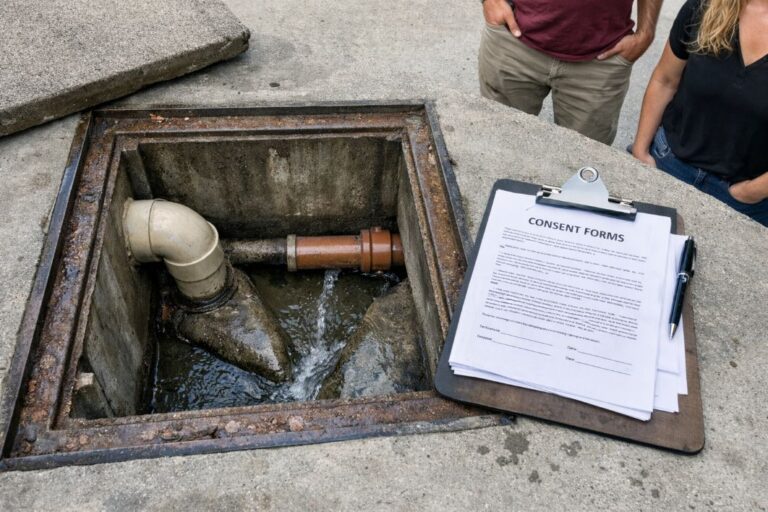
Documentation often influences the outcome as much as the physical problem itself. Records of previous issues, site reports, consent paperwork, incident logs, and evidence showing that the business acted promptly can all affect how liability is viewed. In higher-stakes situations, companies such as 24hrs Drainage may be brought in to document conditions, identify the extent of the issue, and support a clear factual record rather than leaving the business to rely on assumptions.

Steps to Take if Your Business Is at Risk of Non-Compliance

Once a business suspects its drainage may not meet trade effluent rules, delay can make the position harder to manage. The priority is to reduce risk, preserve evidence, and avoid casual decisions that create a worse record later.

A sensible response usually starts with four actions:

  1. Stop treating the issue as a routine blockage or maintenance nuisance if the discharge may involve business wastewater.
  2. Gather and retain records, including consent documents, incident dates, internal reports, contractor findings, and any communication from the water company or regulator.
  3. Seek a professional assessment quickly if there is uncertainty about the source, extent, or legal status of the discharge.
  4. Review whether a trade effluent consent application, variation, or formal notification may be needed.


Under pressure, businesses sometimes make avoidable mistakes. Staff may clear an immediate symptom without recording what happened. A manager may assume that because the drainage still functions, the matter is operational rather than regulatory. Someone may also speak too confidently about the cause before any proper assessment has been carried out.

Professional input is often most useful when the issue affects trading, insurance, tenancy matters, or possible enforcement. A drainage specialist, water company, or environmental consultant can help establish facts and produce documentation that stands up better than informal internal notes. In time-sensitive cases across Reading and Berkshire, 24hrs Drainage may be involved where a fast response and clear evidence are both needed, particularly if the business must show that it acted promptly once the risk became apparent.

The Broader Impact: Why Compliance Matters Beyond Fines

Fines tend to get the attention, yet they are rarely the only consequence worth considering. Drainage compliance sits much closer to continuity, insurability, and business credibility than many operators realise.

An unresolved trade effluent issue can affect several areas at once:

  • Insurance claims may become harder to support if records are poor or previous concerns were left unanswered.
  • Property transactions, lease discussions, and surveys can become more complicated where drainage history is unclear.
  • Stakeholder confidence can weaken if a business appears casual about pollution risk or regulatory obligations.


Reputation is part of the picture as well. A minor breach on paper may still create practical problems if it leads to complaints, lost time, management distraction, or additional scrutiny from environmental regulators. For commercial sites, the disruption can extend beyond one unit and affect landlords, neighbours, and service providers.

Environmental compliance also reflects how a business manages risk more generally. A company that understands its wastewater responsibilities is usually better placed to protect operations, keep records in order, and respond coherently if something goes wrong. Seen in that light, trade effluent compliance is less about avoiding a single penalty and more about keeping one preventable issue from spreading into a wider operational problem.

Speak to a Drainage Specialist

Discuss your situation confidentially with an experienced drainage professional and receive practical advice.

Contact a Specialist

24hrs Drainage Limited

33 Falmouth Rd, Reading RG2 8QR

0800 020 9198

https://24hrsdrainage.co.uk/

Opening Hours:
Monday – Sunday : Open and available 24 hours per day