
Who is liable when a warehouse or industrial unit drainage blockage stops your work?
Liability usually turns on your commercial lease, where the blockage sits in the drainage system and what the evidence shows caused it. We treat the first callout as an operational job and an evidence job, because the party that needs work moving first may differ from the party that pays.

The short answer on liability
A blocked drain stopping work does not by itself decide who is liable. Downtime makes the problem urgent, but responsibility still depends on the commercial lease, pipe ownership and evidence of the visible cause.
For a commercial tenant, the immediate issue may be staff welfare facilities, vehicle access, a loading bay closure or a shared yard that has become unusable. Those risks need control before the cost argument has finished. GOV.UK says that when you rent a property for your business, some responsibilities apply by law, but most depend on what the lease says.
We can help establish what the drainage evidence shows. We cannot decide a legal dispute between a landlord, tenant, managing agent, insurer or Thames Water. That distinction matters, because the first sensible action is to get the site safe and moving again while keeping the later responsibility question properly evidenced.
Honest advice and free quotes across Reading, Berkshire and surrounding areas.
Get a Free QuoteThe Thames Valley responsibility split
Drainage responsibility in Reading, Berkshire and the Thames Valley starts with one practical question: where does the blockage appear to sit? A blocked gully in a warehouse yard, a backed-up trade counter toilet and flooding near an estate road can point to different parties.
Ofwat, the Water Services Regulation Authority, says sewerage companies are responsible for public sewers, and property owners are normally responsible for drains and private sewers up to the point where they connect with public sewers, usually at the property boundary. Thames Water may need to assess a blockage where public sewers are in the area and the issue appears to be outside the boundary or more than one property is affected.
The table below is a working guide for commercial sites, including industrial estates and business parks.
| Where the blockage appears to sit | Who may need to deal with it | What evidence usually helps |
|---|---|---|
| One unit has problems, and the drain appears to serve only that unit | Tenant, landlord or property owner, depending on the lease and ownership | Drain location notes, CCTV drain survey findings and records of affected facilities |
| Shared estate drain in a multi-tenant yard or business park | Landlord, managing agent, service charge route or Thames Water assessment, depending on location | Evidence showing whether more than one unit is affected and where the blockage sits |
| Pipework outside the property boundary or a problem affecting several properties | Thames Water may need to assess responsibility | Survey findings, site plan information and evidence of wider impact |
| Gullies or drainage on roads maintained by the local authority | Local authority highways drainage may be separate from the commercial site | Clear location record showing the drain sits on a maintained road |
| Drainage within common parts, estate roads or shared services | Landlord, managing agent or service charge route may be involved | Lease wording, service charge documents and technical evidence from the drain run |
Thames Water also gives a useful private responsibility test: a blockage may be the property owner’s responsibility if only one property has problems, the property does not share a drain with others and there is no other local flooding. That test is useful, but it does not replace a proper look at the site, the lease and the drain route.
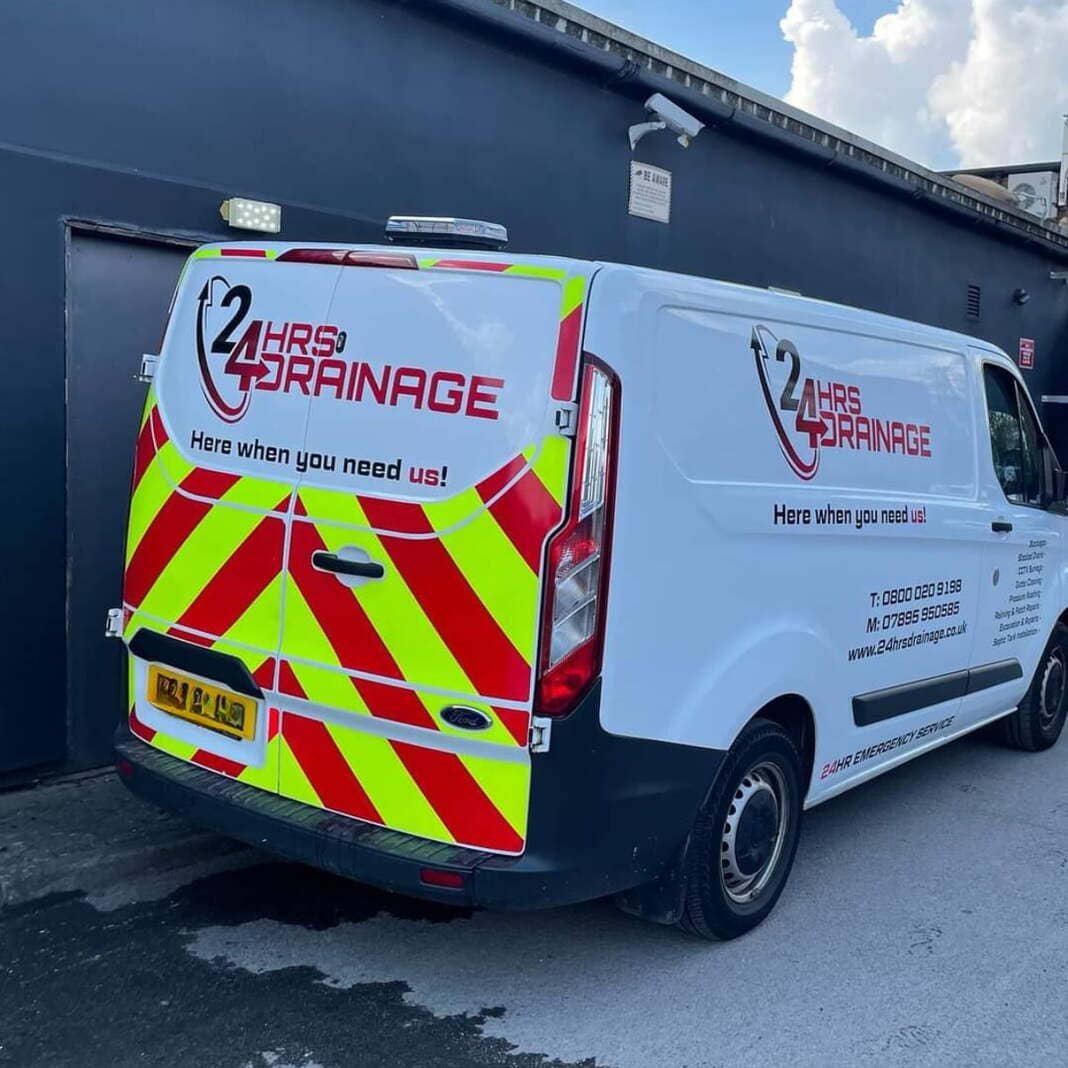
Keep a written note of which units, yards or welfare areas were affected before any clearance work begins. That detail often helps separate a private issue from a shared drainage problem.

The lease decides more than the drain cover
When the immediate blockage is under control, the lease becomes the document that sorts responsibility. GOV.UK says a commercial lease should state who is responsible for repairs and maintenance of the property, and responsibility not mentioned in the lease will usually be the tenant’s.
Look at the lease for the wording that separates your unit from shared areas. The phrase on the drain cover rarely matters as much as the clauses that define who repairs, maintains and pays.
- Repairing obligations. These clauses say who maintains the property, and they may separate the building interior from external drainage.
- Demised premises. The demise tells you what part of the property you occupy and control. Drainage inside that area may be treated differently from shared services.
- Common parts and shared services. Shared yards, estate roads and multi-tenant drainage often bring in the landlord or managing agent.
- Service charge wording matters where the cost of estate drainage is shared across units.
- Dilapidations. Drain condition can become relevant at lease end if one party says the system has been left in poor repair.
- Lateral drain wording. If the lease uses this term, treat it as a sign that the drain route needs to be located and recorded clearly.
Commercial drainage responsibility is rarely settled by assumption. A tenant may arrange the first attendance because work has stopped, while a landlord, managing agent or insurer reviews cost recovery later.
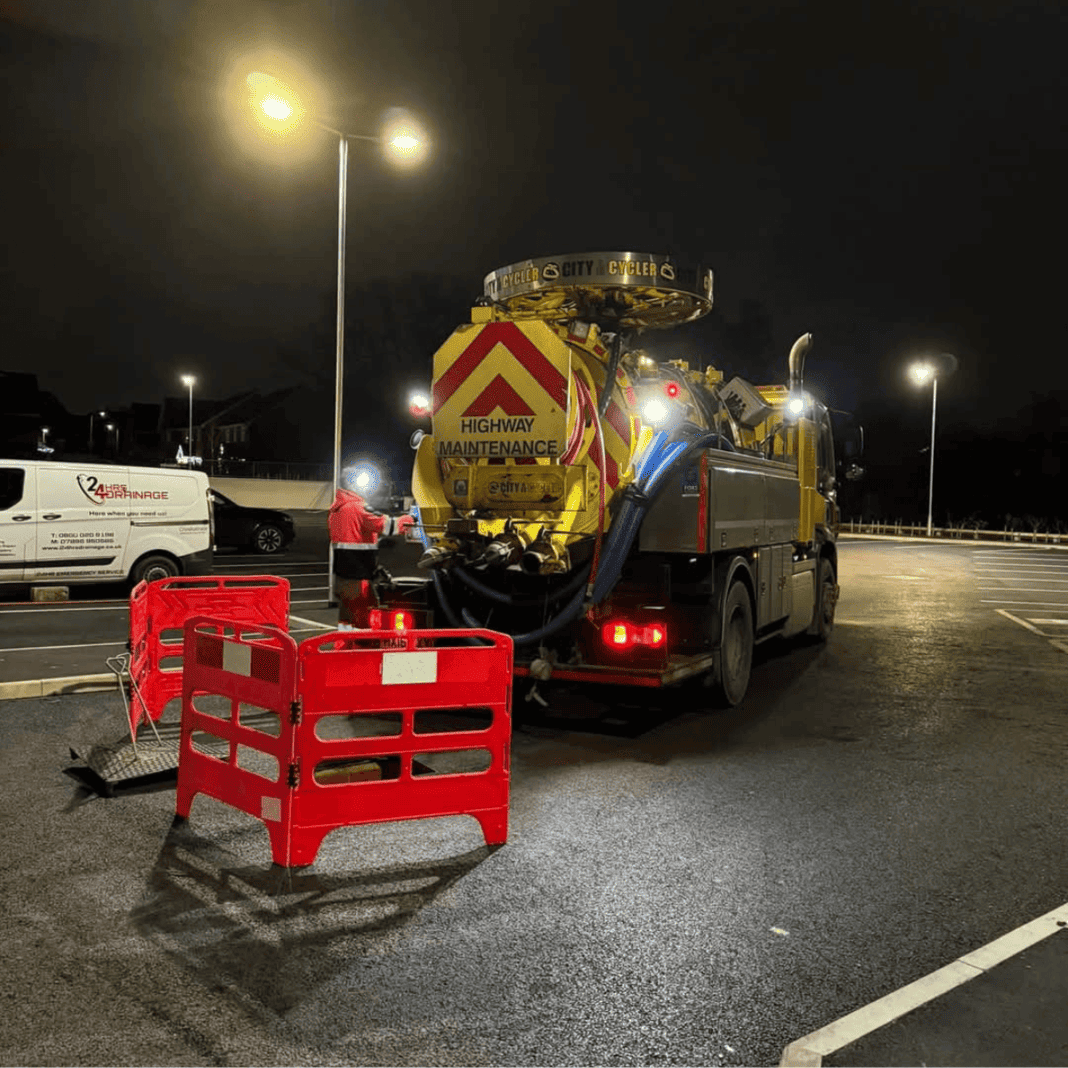
Why evidence matters before costs are argued
A loading bay can be closed before anyone knows whether the blockage sits in a private drain, shared estate drainage or pipework that may need Thames Water assessment. At that point, a clear drainage report is worth more than competing opinions.
At 24hrs Drainage, we treat the survey and report as part of the risk control, rather than an afterthought. A CCTV drain survey can give evidence of location, pipe condition and visible cause. It should not be treated as guaranteed proof of fault, because lease wording, insurance review and Thames Water assessment may still matter.
The blockage location
Location evidence helps separate operational responsibility from liability. If the blockage appears within the tenant’s demise, the conversation starts in one place. If the survey points to a shared estate drain or pipework beyond the property boundary, the managing agent or Thames Water may need to be involved.
Clear location notes also reduce confusion in a busy industrial unit. A facilities manager needs to know whether the affected drain serves the warehouse alone, a shared yard, the loading area or welfare facilities used by several occupiers.
The visible cause
Visible cause can change the cost discussion. Fat, oil and grease, silt, root ingress, collapse or poor pipe condition each point to a different kind of responsibility conversation.
Our report should help you separate what the survey shows from what people assume. Photographs, drain run notes and written findings give landlords, tenants, insurers and managing agents something firmer to work from than a string of emails sent after the site has already lost time.
Ask for photographs and survey notes that show where the blockage appears to sit. Those records are often more useful later than a verbal account of what was seen on site.
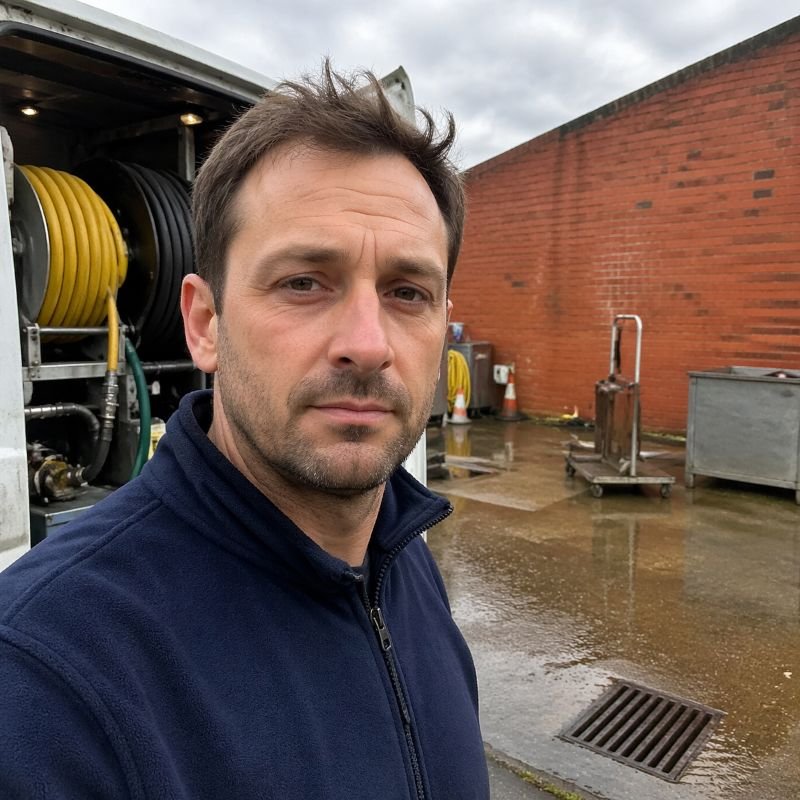
The real risk is downtime without proof
Once a blockage stops work, the question changes. The drain still needs clearing, but the commercial risk sits in the gap between lost operating time and unclear responsibility.
GOV.UK says business tenants must carry out a health and safety risk assessment and take action to remove hazards, and it names the Health and Safety at Work etc. Act 1974 as the main UK law covering health and safety at work. That matters even where another party may later bear the cost under the lease or through an insurer.
Business interruption discussions also need evidence. Do not assume cover applies, and do not let the first action on site destroy the record you later need. Blame can wait; evidence cannot.
Across commercial drainage situations in Reading, Berkshire and the Thames Valley, 24hrs Drainage works where continuity, responsibility and evidence all sit in the same problem. The better question is who is liable. The better question is how you get the site moving again while preserving the proof that lets liability be dealt with properly.
Whatever the problem — blocked, cracked, slow or smelly — we'll diagnose it properly.
Book an EngineerQuestions we get asked about commercial drainage liability
Can a commercial tenant be charged for a blocked drain?
Yes, a commercial tenant can be charged if the lease, the drain location and the evidence support that outcome. The lease is the starting point, and the drainage evidence helps show whether the issue sits within the tenant’s responsibility.
Should you report a blocked business park drain to Thames Water?
You should consider Thames Water involvement where the issue appears outside the property boundary or more than one property is affected. A private drainage specialist can help record what is affected before the responsibility route is agreed.
Does a CCTV drain survey prove who caused the blockage?
A CCTV drain survey can provide evidence of location, condition and visible cause. It does not replace lease interpretation, insurer review or Thames Water assessment where responsibility is disputed.
Who deals with a blocked drain in a shared yard?
A shared yard blockage may involve the landlord, managing agent, service charge route or Thames Water, depending on where the blockage sits. The most useful first evidence is a clear record of the affected units and the drain location.
Can insurance cover losses from a blocked drain that stops work?
Insurance cover depends on the policy, the cause and the evidence available. Keep records of the drainage findings, the operational impact and any communication with the landlord or managing agent.
This is general information, not professional advice.
