
Where can your surface water go?
Surface water from your roof, driveway, garden or hardstanding goes to one of four places. Into the ground through a soakaway, into a watercourse, into a surface water sewer, or into a combined sewer. The useful answer is the one you can prove.
Surface water is rainwater running off roofs, yards, car parks, driveways and paved areas. We keep it separate from foul water, which comes from toilets, sinks and waste pipes. Mixing the two terms leads to poor decisions.
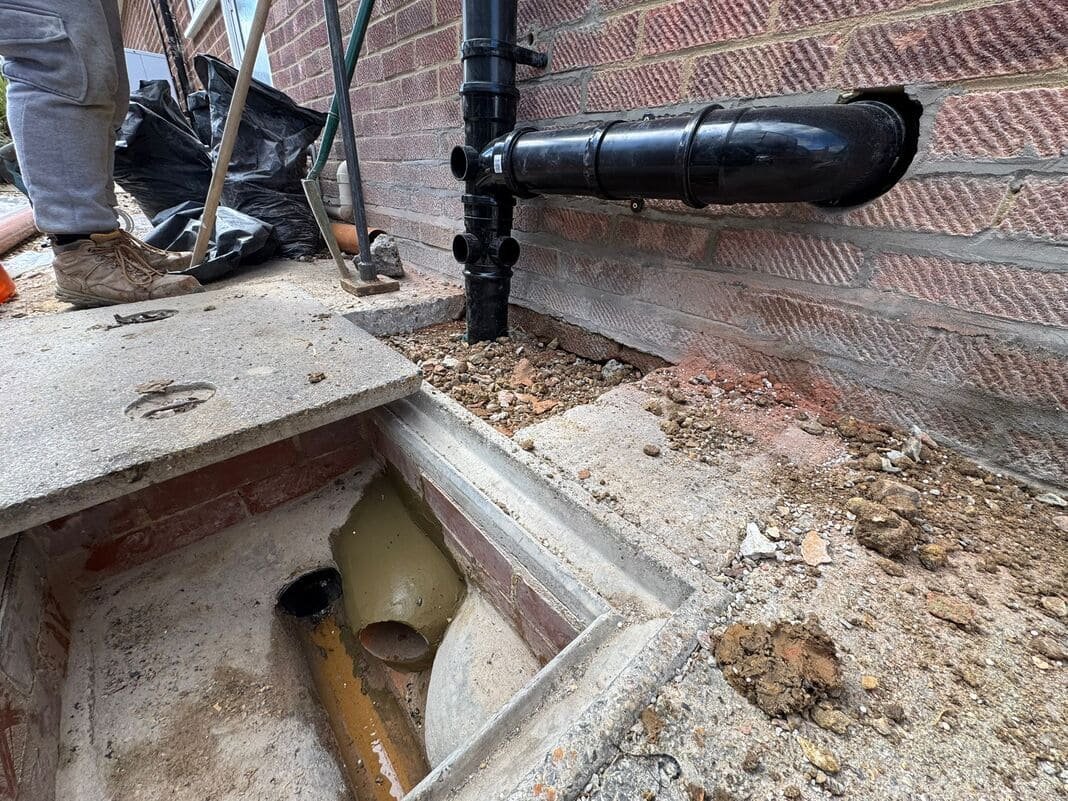
In Thames Water territory, which covers Reading, Berkshire and the wider Thames Valley, the route can change from one house to the next. A downpipe may run into a gully. That still does not prove where the water ends up. The pipe beyond it could lead to a soakaway, a stream, a surface water sewer, or a combined sewer carrying both rainwater and foul water.
Building Regulations 2010, Approved Document H, sets the usual order of priority. The preferred route is a soakaway or other infiltration system. Next comes a watercourse. A sewer comes last, where the earlier options are not reasonably practicable. That order matters if you are planning work, checking old alterations, or trying to explain why a property drains the way it does.
A visual clue gives you a starting point. Proper evidence tells you whether that clue is strong enough for a bill query, a sale pack, an insurance question or a dispute.
What should you check before assuming the route?
Start with records, before you rely on what you can see outside. Records will not always settle it. They usually show whether the property looks connected to a public sewer, whether a charge is being applied, and what known assets sit nearby.
At 24hrs Drainage, we treat records as the starting point, not the whole answer.
- Your water bill and charge status. The bill may show whether you pay a surface water drainage charge, or whether a rebate is already applied. Thames Water says a rebate can be backdated up to six years, where a property is not connected to the public sewer for surface water and the customer has been paying.
- CON29DW or purchase records. A CON29DW drainage and water search helps during a sale, because it records drainage information linked to the property. We would not treat it as proof of every pipe route.
- Thames Water asset or sewer records. Asset searches and sewer maps show known sewers near a property. They have limits. Lateral drains and public sewers can exist without appearing on the map.
- Old plans and past reports. Drawings, building control papers and earlier CCTV drain survey reports can narrow things down. Their value depends on whether they match the layout today.
- Professional evidence, where the decision rests on proof. If records conflict, the drain looks shared, or a sale or claim hangs on the answer, a CCTV drain survey or drain tracing gives you site evidence instead of a paper assumption.
Good records cut down the guesswork. We still want the evidence to match the decision you need to make.
Honest advice and free quotes across Reading, Berkshire and surrounding areas.
Get a Free QuoteWhich evidence is strong enough for your decision?
Evidence only has value if it is strong enough for the decision in front of you. A clue that is fine for a rough idea may be weak once money, ownership or insurance is at stake.
| Evidence type | What it can tell you | Where it falls short |
|---|---|---|
| Visual clues, such as gullies and downpipes | Where rainwater enters the system at surface level | It does not prove the outfall, or who owns the pipe beyond that point |
| Water bill | Whether a surface water charge or rebate is present | Billing status does not map the pipes on site |
| CON29DW or asset search | Record-based drainage information for a sale or development | Public records may miss a lateral drain or public sewer |
| Old plans or past reports | What was believed, approved or surveyed at the time | Later paving, repairs and extensions may not show up |
| CCTV drain survey or drain tracing | Site evidence of route, connections and condition | Only as good as the report. It has to answer the question, not bury you in footage |
For a simple billing query, records may be enough to tell you whether to ask more. For a disputed shared drain, a buyer’s query, a landlord record or an insurer’s request, we would want evidence that links the physical route to the issue being decided.
A report should answer the practical question. Where does the rainwater go, what does it connect to, and why does that matter for responsibility or risk.

Keep the water bill, any search result and any survey report together in one file. When the property is reviewed again, that history is often worth more than a single document.

Why does the route change cost, responsibility and risk?
Surface water gets expensive when the assumed route turns out to be wrong. It often starts with a blocked gully or an odd search result. Then it becomes a question about who pays, whether building work is acceptable, or whether flood risk needs better evidence.
Billing and repair responsibility
Responsibility does not follow the boundary alone. Thames Water says pipes inside your boundary are your responsibility if they serve only your property. Shared sewers can be theirs, even where they run under your garden or drive.
That difference matters for a blocked drain, a damaged pipe or a row with a neighbour. A private drain serving one house points one way. A shared sewer points another. So the route, and what the pipe serves, become part of the evidence.
Building work and wrong connections
Rainwater drainage affects extensions, new paving and changes to commercial sites, because the route has to suit the work. Approved Document H also says a rainwater system going to a sewer must be separate from the foul system, where separate surface water sewerage is reasonably practicable.
The reason is simple. Extra rainwater in a foul sewer adds load it was never built for, and that raises flooding risk. If you are buying, extending or sorting out a failed inspection, a vague answer about the drain out front is not enough.
Flood risk, insurance and sales
Surface water flooding does not need a river nearby. GOV.UK says it happens when rainfall overwhelms local drainage. Its map can be searched by address for area risk, future climate risk, flood depth and the relevant Lead Local Flood Authority.
The map is useful. It does not decide flood risk for one building, and it does not cover blocked drains or burst pipes. When a buyer, insurer or premises manager asks about surface water, the public map and the site evidence answer different halves of the question.
For Reading and Berkshire properties with older layouts, shared drainage, or a patchwork of paving and extensions, that uncertainty can stall a decision long before anyone agrees who pays.
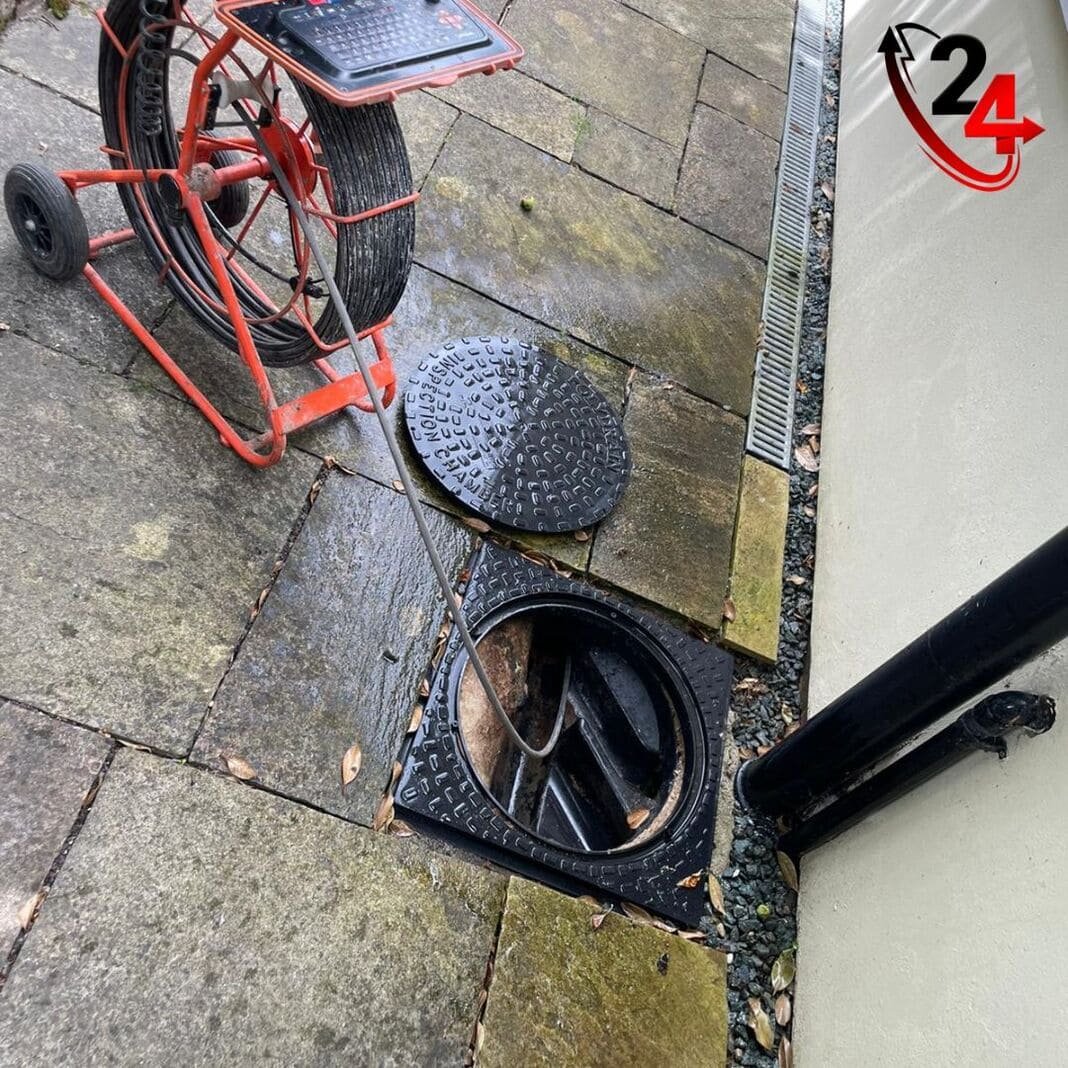
If the decision turns on responsibility, ask for evidence showing both the route and what the pipe serves. A record naming a sewer can still leave ownership unresolved.
What will matter more once the drainage route is clear?
Once the route is clear, the real value is the record it leaves behind. A usable drainage record lets you answer later questions about a sale, a claim, a landlord file or planned works without starting again each time.
Surface water evidence is getting more important, because flood data is now current and searchable. The national surface water flood risk map was updated in 2025, using better data and modelling to show risk where people live, travel and work. Old assumptions and old search packs will carry less weight when a decision needs proof.
At 24hrs Drainage, we focus on giving owners evidence they can use for the decision in front of them. For Thames Valley homes and commercial sites, that means the route, the responsibility question and the practical consequence have to sit together.
Buyer checks, insurer queries and building decisions are all moving the same way. Current flood data raises the question. Site evidence is what answers it.
Whatever the problem — blocked, cracked, slow or smelly — we'll diagnose it properly.
Book an EngineerQuestions we get asked about surface water drainage
Can one property have more than one surface water route?
Yes. Roofs, yards and paved areas can drain separately, especially on a property altered over the years. We would not assume one visible gully explains the whole site.
Does a water bill prove who must repair a surface water drain?
No. A bill shows whether a charge or rebate applies. Repair responsibility depends on the pipe route, and on whether the drain serves one property or several.
What is a combined sewer?
A combined sewer carries foul water and rainwater in the same pipe. Older areas often have them, which is why we keep surface water sewer, foul sewer and combined sewer as separate terms.
Can a flood map show whether a blocked drain caused my problem?
No. The GOV.UK map gives area risk only. It does not cover blocked drains or burst pipes. A blockage needs site evidence.
Why might old drainage plans be wrong?
They may pre-date later paving, extensions, repairs or pipe changes. We treat them as useful records, then check them against the site where accuracy matters.
