
Who is responsible for blocked drains in your Reading block of flats?
Drain responsibility usually turns on three points: what the lease says, whether the pipe serves one flat or the whole building, and whether the affected pipe falls within Thames Water responsibility. We separate the urgent drainage decision from the later payment decision, because delay and liability arguments make a bad situation worse.
The short answer on drain responsibility
Blocked drains in flats responsibility is rarely decided by who first notices the problem. The better starting point is to identify the pipe, who uses it, and whether the issue sits within the building system or the public sewer network.
| Situation | Who usually arranges action | Who may ultimately be responsible | Evidence needed |
|---|---|---|---|
| Blockage inside one flat | Leaseholder, occupier or landlord, depending on the arrangement | Leaseholder or landlord, subject to the lease or tenancy | Location of the blockage and whether the pipe serves that flat only |
| Pipe serving only one flat, partly outside the flat | Leaseholder, landlord or managing agent, depending on access | Leaseholder may remain responsible if the pipe serves that flat only | Pipe route and confirmation that no other flat uses it |
| Pipe serving several flats or communal areas | Managing agent, freeholder, residents management company or Right to Manage company | Freeholder or landlord route, often recovered through the service charge | Confirmation that the pipe serves the building or communal system |
| Issue outside the property boundary | Managing agent or owner may report or arrange investigation | Thames Water may be responsible where its public sewer responsibility applies | Boundary position and whether more than one property is affected |
| Tenant in a rented flat | Tenant reports to the landlord | Landlord route first, with later checks if misuse or lease issues are alleged | Prompt report, landlord response and drainage findings |
These are working starting points, not a substitute for reading the lease. The Leasehold Advisory Service, known as LEASE, says the lease should set out which parts of the building are the leaseholder’s responsibility and which are the landlord’s responsibility.
A managing agent may need to arrange access or emergency work before every cost question has been settled. That does not automatically make the managing agent the final payer. It means someone with control of the communal parts may need to stop the issue spreading while the evidence catches up.
Honest advice and free quotes across Reading, Berkshire and surrounding areas.
Get a Free QuoteThe lease decides more than the building layout
A waste pipe can run beyond the edge of a flat and still serve only that flat. In that case, the physical route of the pipe does not answer the responsibility question on its own.
We look first at function. Does the pipe take waste from one leasehold flat, or does it serve several flats, a communal stack or the wider building? That distinction matters because LEASE says leaseholders are usually responsible for repairs and maintenance inside their flat, including plumbing, and this usually includes pipes serving only that flat even where part of the pipe sits outside the flat.
Communal pipework points in a different direction. Where the pipe serves the whole building or common parts, the landlord, meaning the freeholder in many leasehold blocks, will usually carry the repair responsibility. In share of freehold blocks, residents management company buildings and Right to Manage company arrangements, the people making the decision may differ, but the drainage fact we need is the same: who uses the pipe.
Converted houses in Reading and Berkshire can blur the issue because older drainage routes do not always follow neat leasehold lines. We separate the drainage facts from the lease decision. If the lease wording or service charge route is disputed, you need LEASE or legal advice on that lease point, while the drainage evidence remains a technical record of where the problem sits.
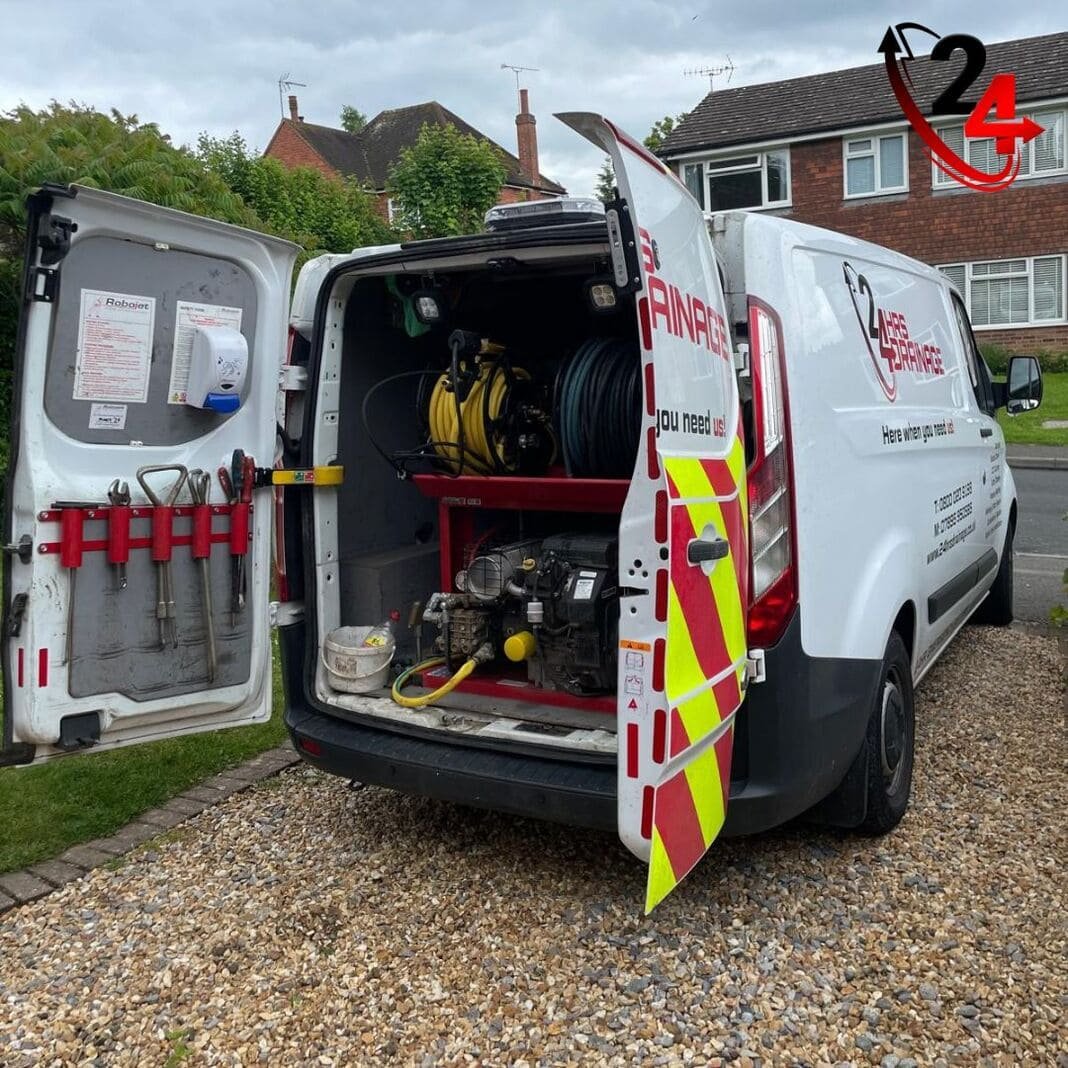
Keep photographs, survey findings and access notes together from the first visit. Those records help separate the urgent repair from the later payment dispute.

The Reading issue is Thames Water’s boundary
In Reading, Thames Water is the relevant sewerage company for public sewer responsibility. The local question is whether the affected pipe is private, shared within the building, or part of the network Thames Water is responsible for.
Reading Borough Council’s local guidance says property owners are responsible for pipes in the home and the pipes connecting to shared pipes maintained by Thames Water. Thames Water also says a blockage may be the property owner’s responsibility where only one home has problems, the property does not share a drain with any others, and there is no other local flooding.
At 24hrs Drainage, we look for the evidence that shows which route the issue appears to sit in. That matters because a shared drain inside a block, a pipe under private grounds and a public sewer issue can look similar at the surface.
Useful indicators include:
- only one home or flat is affected
- several flats or a neighbouring property have the same problem
- the issue appears to sit outside the property boundary
- no wider flooding or other local drainage problem is present
- similar problems have been reported nearby, which Reading Borough Council treats as an indicator that Thames Water is likely to be responsible
Boundary questions need care. A blockage affecting more than one property may point away from a single leaseholder’s private responsibility, but it still needs evidence before anyone treats it as Thames Water’s issue.
The payer is not always the arranger
The urgent issue is often who has authority to act, not who will pay at the end. A managing agent or freeholder may need to arrange investigation because they control access to the communal system, even though the cost route is dealt with later.
A clean order of decisions keeps the argument in the right place:
- Establish whether the issue affects one flat, several flats, the communal system or an outside boundary.
- Identify who has access and authority to arrange urgent investigation.
- Record the drainage findings before assigning final responsibility.
- Check the lease, tenancy or management structure for the payment route.
- Keep service charge or insurance disputes separate from the immediate drainage facts.
Leaseholders can still end up funding freeholder-arranged drainage repairs through the service charge where the lease allows it. LEASE says unexpected repairs may need an extra amount unless they are covered by a sinking fund or buildings insurance. If a repair will cost any one leaseholder more than £250, LEASE says the landlord must follow Section 20 consultation.
Tenants have a different route. Reading Borough Council says tenants should tell their landlord about a blockage as soon as possible, and if the landlord does not clear it in a reasonable time, the tenant should ask the council drainage team to investigate.
Payment disputes need careful handling, especially where an insurer, freeholder, landlord or managing agent has a different view. Drainage findings do not decide lease law, but they stop the discussion floating around guesses.
Where several flats are affected, treat the pipe route as the key question before assuming the cost sits with one leaseholder. That evidence often settles the dispute faster than lease arguments alone.
The evidence settles the disputed part
A common misconception is that the first visible blockage tells you who is responsible. It does not. A blocked gulley, backing-up stack or overflowing chamber may be the visible point, while the responsibility question depends on the pipe route and who it serves.
A closed-circuit television drain survey, usually called a CCTV drain survey, can help locate the blockage and show whether the affected section appears private, communal or potentially within Thames Water responsibility. Written findings also help when an insurer, managing agent, freeholder or leaseholder needs a record before authorising repair or allocating cost.
At 24hrs Drainage, we focus on establishing the drainage facts that other parties can use without turning the site visit into a lease argument. That approach matters in mixed cases such as converted houses, share of freehold buildings, Right to Manage company blocks and private grounds where the pipe route is not obvious from the lease plan.
The misconception to drop is this: “outside my flat” does not automatically mean the freeholder pays, and “shared drain” does not automatically mean Thames Water pays. Responsibility starts with evidence, because assuming the wrong route is how a drainage problem becomes a cost dispute.
Whatever the problem — blocked, cracked, slow or smelly — we'll diagnose it properly.
Book an EngineerQuestions we get asked about drain responsibility in Reading flats
What happens if the lease does not clearly mention drains?
The lease still needs to be checked for repair wording, demised parts and service charge powers. Where wording is disputed, drainage evidence can show what the pipe serves, while lease interpretation should be dealt with through LEASE or legal advice.
Does a share of freehold change who pays for a blocked drain?
A share of freehold changes the management structure, but it does not remove the need to identify the affected pipe. We still look at whether the drain serves one flat, the building, or a wider system before anyone treats it as a shared cost.
Can a managing agent arrange drainage work before liability is agreed?
A managing agent may arrange urgent investigation or clearance where access, health risk or communal property is involved. That practical action does not settle final responsibility, so records and drainage findings matter.
Can a tenant be charged for a blocked drain in a rented flat?
A tenant should report the blockage to the landlord promptly. Any later charge depends on the tenancy position and the cause alleged, so the first practical step is landlord reporting and a proper record of what the drainage issue is.
Does a CCTV drain survey prove who is legally responsible?
A CCTV drain survey does not interpret the lease. It can show where the blockage is and what the pipe appears to serve, which gives the leaseholder, freeholder, managing agent or insurer better evidence for the responsibility decision.
This is general information, not professional advice.
