
Can your neighbour drain rainwater onto your property?
Water crossing a boundary does not automatically make your neighbour responsible. Rain that runs downhill on its own is treated differently from water pushed onto your land by paving, pipes, gutters or a change in ground level. The cause decides what evidence you need.
Most disputes start the same way. Water came from next door, so next door must be at fault. That jump is too quick. The House of Commons Library explains that in England and Wales, a lower property owner usually has no claim when flooding comes only from rain travelling downhill because of the shape of the land.
Artificial drainage changes things. A neighbour may be responsible if they collect water, alter their land, or use drainage works in a way that sends water onto your property and causes damage or gets in the way of how you use it.
So a sloping garden that gets wetter after heavy rain points one way. A new downpipe by the boundary, with water running across your path, points another. The useful question is simple. What caused the flow?
| Situation | What it usually points to | Evidence that helps |
|---|---|---|
| Rain running downhill on its own | Natural runoff | Rainfall timing, ground levels, repeat pattern |
| New paving, channel, pipe or downpipe | Altered or artificial drainage | Dated photos, video during rain, layout changes |
| Overflow from a drain serving one property | Private drain issue | Drain inspection, blockage diagnosis, repair records |
| Backing up from a shared sewer | Possible water company responsibility | Drain tracing, sewer route, Thames Water response |
The direction the water travels rarely settles the argument on its own.
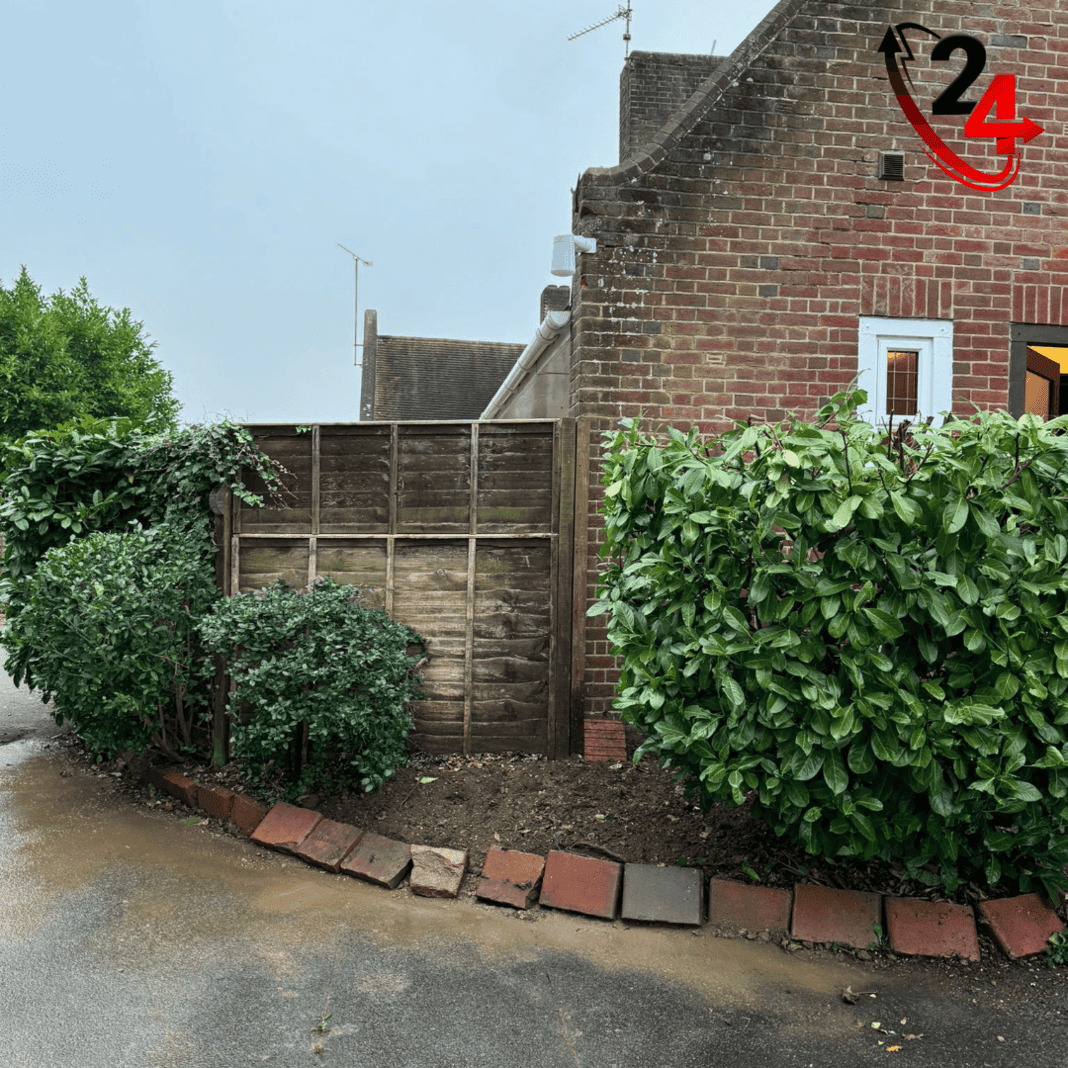
What turns natural runoff into a real dispute?
A wet boundary is not the same as a proven drainage route. What matters is whether something changed, and whether that change explains the water.
Say your neighbour lays a new driveway, raises the ground level or moves a downpipe. Water then starts reaching your wall, garden or yard when it rains. That order of events gives you something to test. A new feature on its own still proves nothing. We need to know where the water starts, where it goes, and what it damages.
Building Regulations 2010, Approved Document H, Requirement H3 sets an order for rainwater drainage. It should go first to a soakaway or infiltration system. If that is not reasonably practicable, it should go to a watercourse. If neither works, it can go to a sewer. In plain terms, rainwater needs a proper outlet. It should not simply be pushed across a boundary because that is the easy route.
Driveways need a closer look. GOV.UK guidance says hard surfacing of more than 5 square metres of a front garden is permitted development only if the surface is permeable, or if the water is dealt with another way. If your problem began after new front paving, the local planning authority may have a part to play. That still does not replace drainage evidence.
Our job here is to test the route before we accept the claim. Paving, a gutter, a gully and a blocked outlet each point to different evidence.
Honest advice and free quotes across Reading, Berkshire and surrounding areas.
Get a Free QuoteWho is responsible: you, your neighbour or Thames Water?
Responsibility follows the drainage route. Guessing at it wastes weeks, and that matters across Reading, Berkshire and the Thames Valley, where shared pipes often run under gardens and drives.
Thames Water says a homeowner is responsible for gullies, gutters and drains inside their boundary if those pipes serve only that property. It also says it is responsible for sewers shared with neighbours, even when they run under a garden or driveway, and for public sewers under roads and footpaths.
That split matters day to day. Overflow from a drain serving one house points to a private drain. Backing up from a pipe used by several homes may need Thames Water. A ditch, culvert or wider flood problem may bring in the council flood risk team. Councils do not sort out every private drainage row between neighbours.
At 24hrs Drainage, we treat this as a route question before we treat it as a blame question. Drain tracing and a CCTV drain survey show whether the water links to a private drain, a shared pipe, a blockage or a broken pipe. That gives you firm ground before you speak to a neighbour, an insurer, a solicitor or a surveyor.
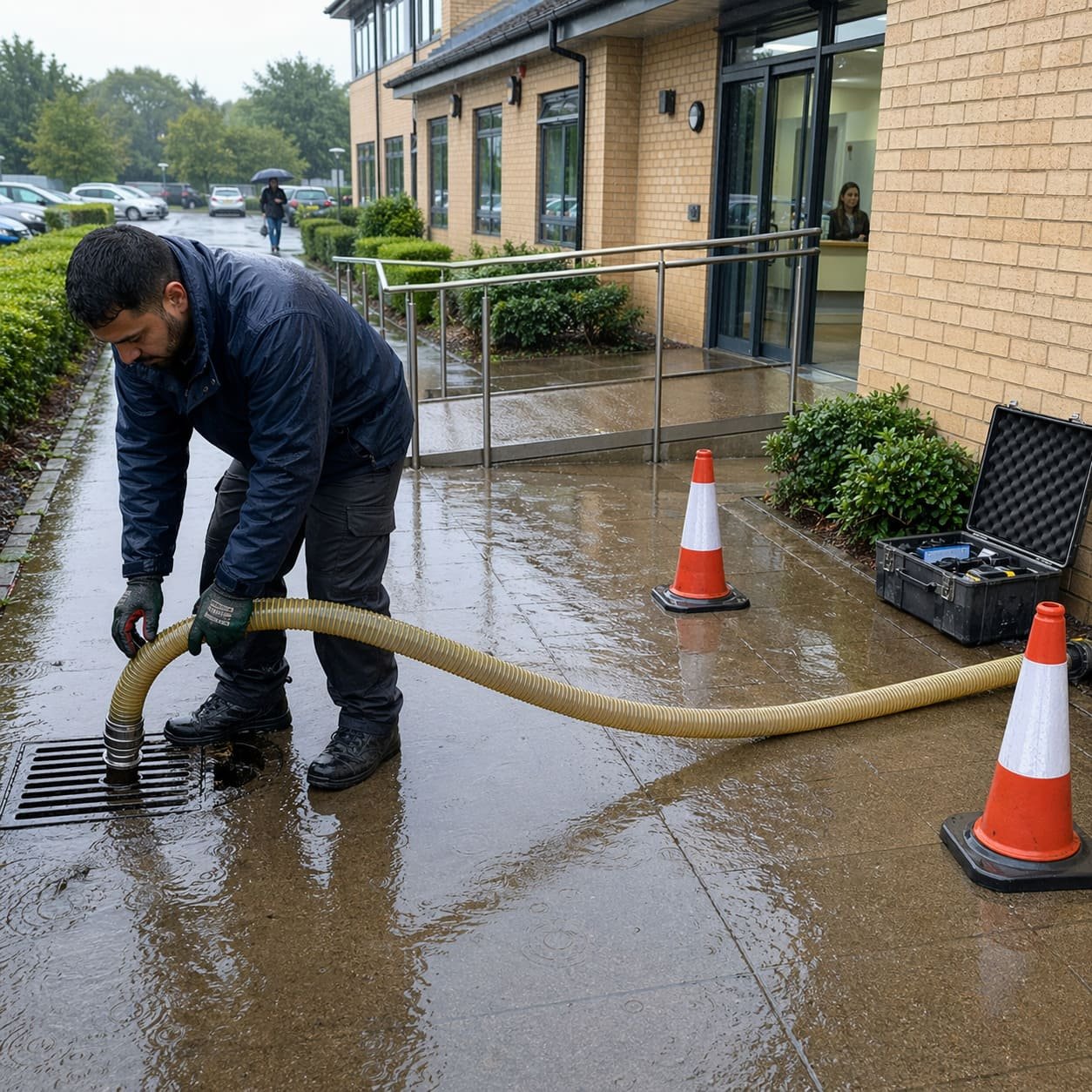
Keep one dated note for every rainfall event. A short line on the time, the place and the effect beats a large pile of undated photos.

What evidence do you actually need?
Good evidence shows three things. When the water appears, where it travels, and what harm it does.
Photos help, but they often leave gaps. A picture of a flooded garden shows the result. It does not show whether the cause was natural runoff, altered drainage next door, a blocked private drain or a shared sewer backing up. Stronger evidence joins those pieces up.
- Record the timing and the pattern. Keep dated notes of when water appears, and whether it follows heavy rain or a repeat blockage.
- Film the route during rain. Video shows the direction of flow in a way a still photo cannot.
- Keep letters, messages and repair records. They show what changed and what has already been checked.
- Check your property paperwork. Title documents and survey papers help a solicitor or surveyor look at rights, boundaries and shared drainage.
- Get technical evidence where the route is disputed. Drain tracing and a CCTV drain survey give a clearer record than an argument across a fence.
Everyday evidence that shows the pattern
Dated photos, video during rain and written notes let you show the pattern before memories blur. If the problem only happens now and then, those records matter even more, because the ground may look dry by the time anyone visits.
Letters and messages have value too. A calm note to your neighbour, or a reply from your insurer, places the problem in time. Keep the wording factual. Accusations add heat and rarely add proof.
Technical evidence that shows the drainage route
A CCTV drain survey is a camera inspection of the drain. It is usually recorded, so the route and condition can be reviewed later. Drain tracing shows where a pipe runs, and whether it links to another property or a shared sewer.
A drainage report does not decide legal liability on its own. That still rests on cause, land rights, damage and the wider facts. The value of a report is narrower and more useful. It shows the route, finds any blockage or defect, and gives an insurer, solicitor or surveyor something better than guesswork.
24hrs Drainage publishes CCTV drain survey prices from £150 excluding VAT, and homebuyer CCTV drainage surveys in Berkshire from £125 excluding VAT. Those are starting prices, not a fixed cost for every job. What you pay depends on access, the layout of the site and how much evidence you need. The point is that you can get documented findings early, before the dispute grows legs of its own.
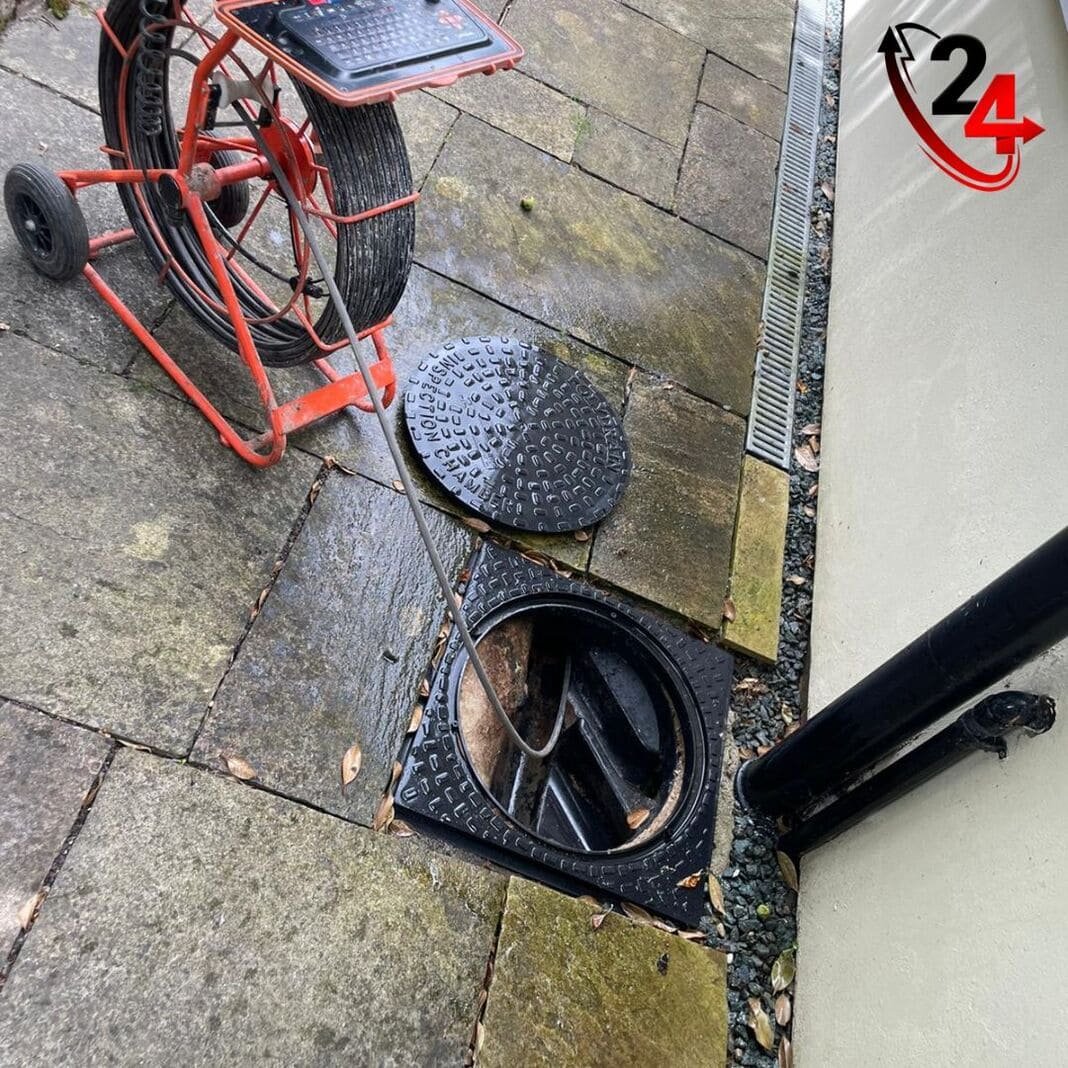
If a boundary, driveway or downpipe has changed, ask for route evidence early. Where the water starts matters far more than the fact that it crosses onto your land.

Is it better to prove it or assume it?
A neighbour dispute hardens fast once both sides decide they already know the answer. One says the water is obvious. The other says rain falls where it falls. Without proof, both dig in around the wrong point.
Evidence gives you more control. If the findings show natural runoff, you avoid pushing a weak complaint and souring things next door. If they show altered drainage, a private drain fault or a shared sewer, you have solid ground for the next conversation with the right party, whether that is your neighbour, your insurer, Thames Water or a solicitor.
Assumption starts with blame and looks for facts later. Proof starts with the water path, the drain route and the damage, which leaves you in a calmer and far stronger position months down the line.
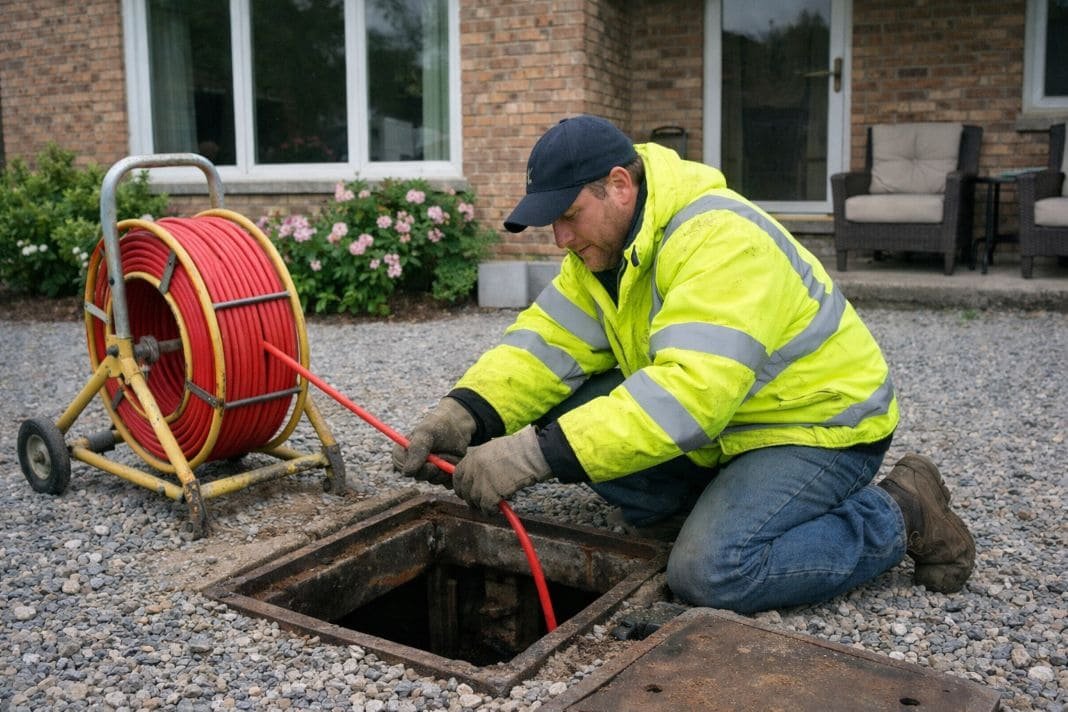
Whatever the problem — blocked, cracked, slow or smelly — we'll diagnose it properly.
Book an EngineerQuestions we get asked about neighbour drainage disputes
Can I block water coming from my neighbour’s property?
Take advice before you alter anything. Blocking water can make matters worse if it pushes the problem somewhere else or hides the real cause.
Does my insurer need drainage evidence before looking at damage?
An insurer may ask for it where flooding, subsidence or a collapsed pipe is involved. A technical report can show the state of the drain and whether a blockage or defect is part of the problem.
Should I speak to my neighbour before getting a drainage report?
A calm early chat helps when the cause is obvious and you still get on. If the cause is disputed, getting evidence first stops the talk turning into a row over assumptions.
Is rainwater from a neighbour’s driveway always a planning issue?
No. Planning becomes more relevant where new hard surfacing, altered levels or building work may have changed how surface water is handled.
Does it matter that the water only appears in heavy rain?
It can help you. A problem that only shows up in heavy rain still leaves a pattern, and that pattern is easier to prove if you log the dates and film the flow each time.
