A landlord is generally responsible for keeping the property’s drains, gutters, external pipes, and sanitary installations in proper repair, as set out in the Landlord and Tenant Act 1985. That duty usually covers faults caused by age, wear, damage to the structure, or drainage defects that the tenant did not cause. A tenant may still be responsible for blockages or damage caused by misuse, but the exact position can depend on the tenancy agreement, the type of building, and whether the issue affects shared drainage or the wider structure.
Pro Tip: A written record of all drainage reports and actions taken can be crucial if a dispute or enforcement action arises.
Landlord drainage law in the UK starts with a simple principle: the owner of the property carries the main repair duty for the drainage system that serves that home, especially where the problem relates to the structure or fixed installations.
Under the Landlord and Tenant Act 1985, landlords must keep in repair the structure and exterior of the dwelling, including drains, gutters, and external pipes. They must also keep in repair and proper working order installations for sanitation, including basins, sinks, baths, and toilets. In practice, that places most legal drainage duties on the landlord where the defect is part of the property itself.
Contract terms still matter, although they do not usually remove a landlord’s basic statutory obligations. A tenancy agreement may set out who deals with minor day to day issues, reporting duties, or costs caused by tenant misuse. It cannot usually override the repair obligations imposed by law.
Confusion often arises around fair wear and tear. Normal use over time may explain why a drain has deteriorated, but it does not usually shift the repair burden onto the tenant. By contrast, a tenant who flushes unsuitable items and causes a blockage may face responsibility for that specific problem.
The Housing Act 1988 shapes the wider landlord and tenant relationship, though the repair duty itself is more directly linked to the 1985 Act. Local authorities and Environmental Health teams may become involved if drainage defects create health risks, nuisance, or living conditions that fall below acceptable property standards. That tends to matter most where sewage backs up, waste water cannot discharge properly, or foul smells point to a serious defect.
Book a Drainage Assessment
Schedule a professional inspection to clarify where your drainage responsibilities begin and end.
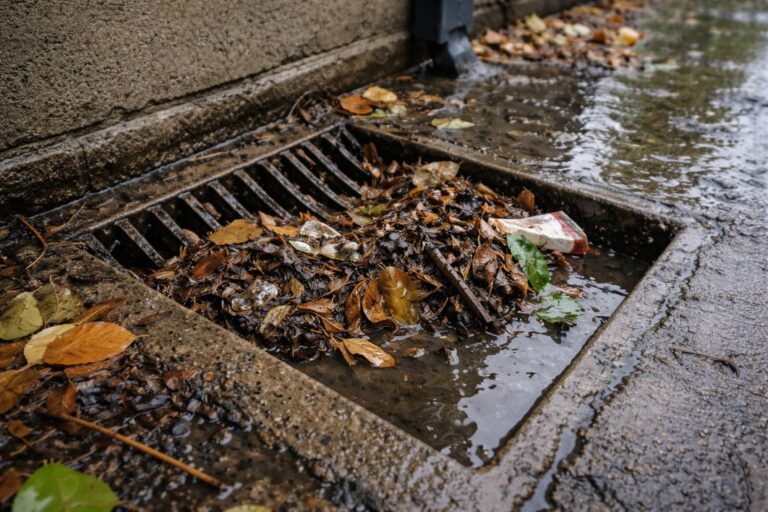
A common dispute starts with a blocked toilet or overflowing drain, because the immediate problem is obvious but the cause is not. Responsibility often turns on whether the issue comes from tenant behaviour, a hidden defect, or a part of the drainage system outside the tenant’s control.
Landlords are usually responsible for problems such as:
Tenant responsibility is more likely where the blockage results from items put down the toilet, sink, or drain in a way that falls outside ordinary use. Even then, the line is not always neat. A tenant may report a blockage, but a later inspection might show that the real cause was a broken pipe or poor drain condition.
Shared drainage can complicate matters further. In a block of flats, the landlord, managing agent, freeholder, or another party under the leasehold structure may carry responsibility for communal pipework. Water companies may also become relevant where a public sewer is affected, because private and adopted drains do not always sit under the same responsibility boundary.
Emergency issues usually sharpen the need for a prompt decision. If sewage is entering the property, if a commercial tenant cannot trade because of drainage failure, or if multiple occupiers are affected in a multi-let building, the landlord will often need to act quickly even before every liability point is fully argued. Delay in that setting can turn a repair issue into a habitability, insurance, or complaint problem.
Pro Tip: When facing complex drainage issues in multi-let buildings, clarify responsibility boundaries early with managing agents to avoid escalation.
Download Landlord Drainage Checklist
Stay compliant with a practical checklist covering every legal drainage duty for landlords.
Drainage regulations in the UK matter because landlords are judged by legal duties, not by informal assumptions about who ought to deal with the problem. The main framework is practical once stripped of legal language.
The Landlord and Tenant Act 1985 is the starting point for repair standards in most rented homes. It places responsibility on landlords to keep core parts of the property in repair, including drains and external pipework, and to keep sanitation systems working properly.
Building Regulations may become relevant where drainage works are being altered, replaced, or rebuilt. They are less about routine repair and more about whether the system meets the required standard after works are carried out. A landlord dealing with substantial drainage repairs may need to think about compliance, records, and whether any approval is required.
The Environmental Protection Act 1990 can come into play if defective drainage creates a statutory nuisance. Foul odours, sewage escape, and conditions affecting neighbouring property may trigger local authority attention. Environmental Health officers may inspect and, where necessary, require action.
Enforcement risks can include:
A landlord does not need to memorise every section of every Act. What matters is recognising that drainage faults can sit within repair law, housing standards, environmental law, and wider legal compliance at the same time, especially where health or sanitation is affected.
Liability often depends on notice, cause, and response time. A landlord is more likely to be legally exposed once they know, or ought reasonably to know, that a drainage defect exists and then fail to act within a reasonable period.
If a tenant reports repeated backing up from an external drain and the landlord does nothing, liability can build from that point. The same principle often applies where managing agents receive notice on the landlord’s behalf. Once the issue is known, the clock does not run forever, but neither does it stand still.
Misuse can change the position. Where a tenant causes the problem by flushing wipes, fats, or other unsuitable material, the landlord may not be responsible for the cost of that particular landlord blocked drain claim. Even so, the landlord may still need to arrange the immediate attendance if the property has become unsanitary, then address the question of cost separately under the tenancy terms.
In shared buildings, responsibility can spread across more than one party. A landlord may be liable to the tenant for living conditions inside the flat, even if the actual repair must be carried out by a freeholder or managing company controlling the communal system. That gap between practical control and legal responsibility is one reason drainage problem responsibility can become disputed so quickly.
Insurance may overlap with liability, although insurance does not replace the repair duty. A policy might assist with damage, tracing the cause, or certain repair costs, but the existence of insurance does not permit inaction. For landlords, the most important points are usually clear reporting, records of notice, and a response time that matches the seriousness of the defect.
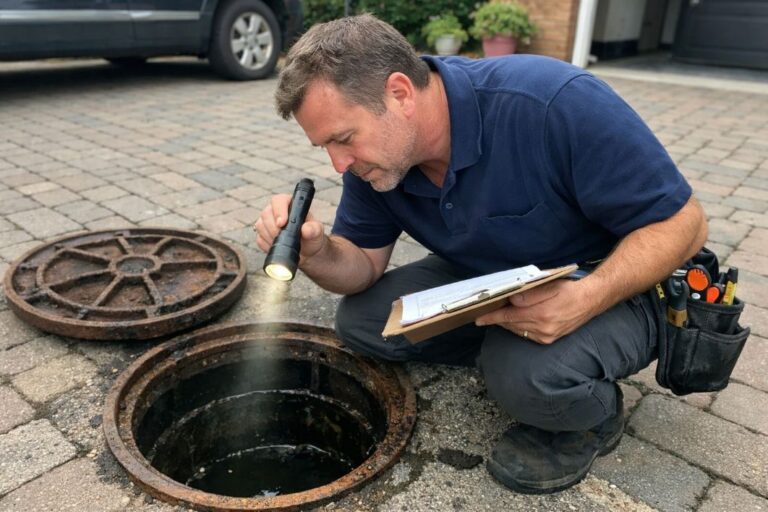
Some drainage issues move beyond ordinary property management very quickly. A recurring foul water problem, a drainage defect affecting several occupiers, or a situation tied to an insurance claim often needs professional drainage services because the landlord must show more than intention. The landlord may need evidence, timing, and a clear record of what was found.
Professional support can assist with landlord drainage compliance in several ways:
That evidence matters in practice. If a tenant alleges long term neglect, if a property sale is delayed by a drainage concern, or if local authority scrutiny follows a complaint, a documented inspection can carry more weight than informal assumptions. In Reading and Berkshire, firms such as 24hrs Drainage are often brought in at the point where urgency, documentation, and reliable diagnosis matter as much as the repair itself.
Certified drainage contractors and insurance assessors also play a part where the question is no longer just whether a drain is blocked. The issue may be whether the landlord acted reasonably, whether the defect was pre-existing, and whether the records support that position.
Many landlord drainage mistakes begin with assumptions that sound sensible but do not hold up once the facts are examined.
A great deal of conflict around landlord tenant drainage issues comes from poor classification at the start. The question is rarely just who pays. The better question is what caused the problem, who controls that part of the system, and what was done once the issue became known.
Knowing the legal position does more than reduce the chance of a dispute. It gives landlords, agents, and tenants a clearer way to respond when a drainage issue threatens living conditions, operations, or a time-sensitive transaction.
Clarity on drainage responsibility supports:
Property management best practice often comes down to accuracy at the start. If the duty is understood, the report is logged promptly, and the cause is properly identified, many avoidable arguments never gain momentum.
Drainage faults have a way of exposing uncertainty in a tenancy very quickly. A clear grasp of the law gives that uncertainty less room to grow.
Speak to a Legal Expert
Discuss your drainage obligations with a property law specialist for peace of mind.
24hrs Drainage Limited
33 Falmouth Rd, Reading RG2 8QR
0800 020 9198
Opening Hours:
Monday – Sunday : Open and available 24 hours per day
Drain Services
We provide Drainage Services across Berkshire, Hampshire, Surrey, London, Oxfordshire, and the surrounding areas.
Contact Us
If You’re Dealing With Blocked Drains Or Require Drain Repairs, You’ve Come To The Right Destination. Contact Our Team Today At 0800 0209198 For Professional Guidance And A Complimentary, No-Obligation Quote!
We are the premier providers of comprehensive drainage solutions in Reading and throughout Berkshire. With years of experience and a dedicated team of experts, we are your trusted partners for all your domestic and commercial drainage needs.
By subscribing, I agree for my data to be stored and used to receive newsand offers from 24hrs Drainage.
👋 Need urgent drainage help?
We’re available 24/7 in Reading and surrounding areas.
Tap below to speak with our drainage expert now.
Chat on WhatsApp
Fast response | No call-out charges | Nearby
WhatsApp us 24/7