Responsibility usually depends on where the drain sits, who uses it, and whether it is classed as a private drain, a lateral drain, or a public sewer. In many cases, a homeowner pays for repairs to drains serving only their property within the boundary, while water companies often take responsibility for shared drains or sewers outside that line. Insurance, lease terms, deeds, and shared access arrangements can all affect the final answer.
A collapsed drain under a house, driveway, garden, shop, or rental property can create immediate confusion. Many owners assume the water company, the council, or an insurer will automatically deal with it. In practice, the position is often more specific than that.
Pro Tip: Keep photo evidence and documents from the earliest stages of any drain problem to support discussions with insurers or neighbours.
The starting point is drain ownership. A drain that serves only your property is usually your responsibility up to the point where it joins a shared system. Once pipework serves more than one property, or forms part of the wider public network, responsibility may shift.
A simple way to think about it is this:
Property boundaries matter, but they do not tell the whole story. Shared drainage can pass under a garden or driveway and still fall outside private ownership if it serves neighbouring homes as well. That is one reason neighbour disputes arise so often after a collapse is found.
Many people also confuse the roles of local councils and water companies. Councils do not usually maintain ordinary foul drains on private land. Water companies are often responsible for adopted sewers and some shared pipework, under rules shaped by the Water Industry Act 1991 and later changes to sewer ownership. The Environment Agency may become relevant in separate cases involving pollution, discharge, or environmental impact, although that does not usually make it the body paying for repairs to a domestic collapsed drain.
Drainage maps, property deeds, and site records can all help clarify the position. On older properties, records may be incomplete, which means that ownership sometimes has to be established from a combination of plans, inspection evidence, and physical layout on site.
A drain collapse can move quickly from inconvenience to property risk. One common example is a house sale that stalls after a surveyor flags drainage concerns below an extension or driveway. Another is a business premises where wastewater cannot move properly, creating operational disruption and possible hygiene issues.
The immediate implications often include:
Delay can make a practical problem more expensive. A localised defect may widen, surrounding surfaces may weaken, and documentation can become harder to assemble if the site changes before anyone records the damage.
Commercial sites face an extra layer of pressure. A blocked or collapsed drainage line can affect staff facilities, customer access, food hygiene arrangements, or waste handling. Business interruption is not always caused by dramatic flooding. Sometimes it starts with one failed line beneath a yard or service area that nobody can safely ignore.
Book a Professional Drainage Assessment
Get clarity on collapsed drain issues with a thorough site survey and expert advice.
Payment follows responsibility in most cases, but ownership, access, and property type all matter. The answer can be straightforward on a single freehold house, or far less clear on flats, mixed use sites, and shared drainage runs.
Here are the main patterns.
Land Registry records and property deeds can help, although they do not always describe drainage arrangements in full. Lease agreements deserve close attention because the legal occupier and the paying party are not always the same. A tenant may report the issue, yet the landlord or management company may hold the repair obligation.
Shared drains create the most friction. If a collapsed line serves two or more homes and has not been adopted by the water company, owners may need to split costs. Trouble often starts when one neighbour assumes another household uses the drain more heavily, or believes the damage began on adjoining land. In those situations, evidence matters more than assumption.
Exceptions do exist. Councils may become involved where highways, public land, or enforcement issues are affected, but that does not automatically mean they fund the repair. The key question is always the same: whose asset is it?
Insurance can help, but cover depends on the policy wording and the cause of the collapse. Many building insurance policies include some protection for underground services, yet that does not mean every damaged drain is insured.
A common distinction is between sudden insured damage and gradual deterioration. If a drain fails because of an insured event, a policy may respond. If the problem stems from age, wear, lack of maintenance, poor installation, or a pre-existing defect, the insurer may reject part or all of the claim.
A broad guide looks like this:
Often considered for cover
Often excluded or disputed
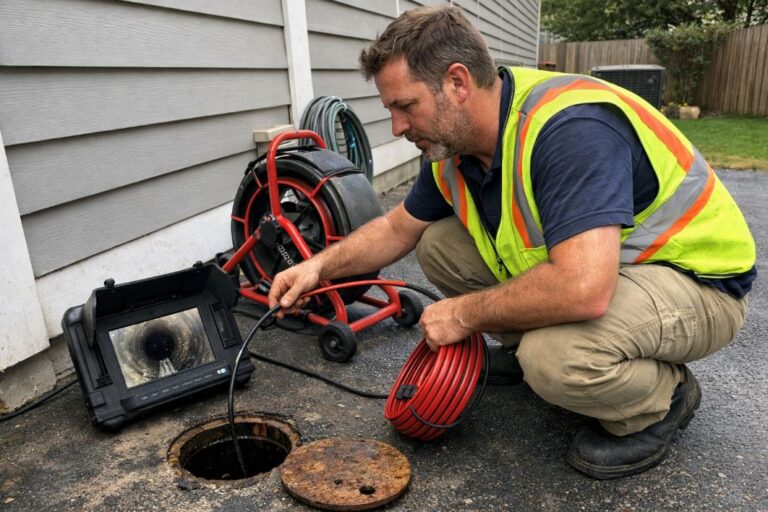
Loss adjusters usually want clear evidence. That may include photographs, site notes, invoices, location plans, and a survey report showing the position and condition of the pipe. CCTV survey evidence is often useful because it can help establish whether the issue is a sudden collapse, a long-term defect, or part of a wider drainage failure. Firms such as 24hrs Drainage are often brought in at this stage because the issue is no longer just about repair. It is also about proving what happened and when.
The Chartered Institute of Loss Adjusters does not decide individual claims, but its professional standards reflect the fact that insurers assess evidence carefully. A weak record can slow a valid claim, especially if the site has already been altered before the insurer has reviewed it.
Pro Tip: Before starting repairs, confirm with your water company or property manager which sections of pipework are private, shared, or adopted.
Discuss Your Insurance Claim
Speak with our team for support gathering evidence and navigating insurance for drainage repairs.
Once liability is uncertain or the damage affects use of the property, the best route depends on the stakes involved. One owner may be dealing with a sale deadline, while another is managing a commercial site that cannot afford downtime.
A specialist drainage assessment is often the quickest way to establish the location, extent, and likely ownership of the problem. That matters where the collapse sits near a boundary, under a building, or on a shared line.
Independent evidence can also help if insurers, neighbours, surveyors, or managing agents need the same facts from the outset. In a disputed case, clear findings often carry more weight than a series of informal opinions.
If the drain may be a public sewer or lateral drain, the relevant water company may need to confirm whether the asset is adopted. That can affect both payment and repair authority.
Timing matters here because a private owner arranging work to an adopted sewer can create complications of its own, especially if access, approval, or reinstatement obligations apply.
Solicitors tend to become relevant where neighbour disputes, lease obligations, service charge disputes, or property transactions are affected. Legal advice may also be needed if one party refuses access, denies use of a shared line, or disputes contribution to costs.
A boundary issue can look like a drainage issue at first glance. Later, the real dispute may sit in the lease, transfer document, or historic arrangement between adjoining owners.
Surveyors can be useful where a collapse affects structural concerns, value, saleability, or lending decisions. If the drain runs near foundations, extensions, retaining walls, or paved areas, a drainage finding may need to be considered alongside wider property condition.
That becomes especially relevant on older buildings where one defect can trigger several separate questions about risk, reinstatement, and disclosure.
Drain collapse cases often become harder because of assumptions made in the first few days. Most are understandable, but they can still increase cost and delay.
Property management companies can add another layer. They may control access, appoint contractors, or recover costs through service arrangements, which means the person reporting the damage is not always the person with authority to approve works.
A collapsed drain under your property is disruptive, but it is rarely impossible to untangle. Most cases come back to a few practical points: who owns the pipe, what evidence exists, what the policy says, and whether the line is private or shared.
Three ideas make the situation easier to manage:
Clarity reduces wasted time. Once responsibility is properly identified, decisions become more straightforward, whether the issue sits with an owner, a neighbour, a management company, or a water utility. That is often the point at which a stressful drainage problem starts to look manageable again.
Consult a Legal Property Expert
Resolve disputes over drainage responsibility by consulting a specialist in property law.
24hrs Drainage Limited
33 Falmouth Rd, Reading RG2 8QR
0800 020 9198
Opening Hours:
Monday – Sunday : Open and available 24 hours per day
Drain Services
We provide Drainage Services across Berkshire, Hampshire, Surrey, London, Oxfordshire, and the surrounding areas.
Contact Us
If You’re Dealing With Blocked Drains Or Require Drain Repairs, You’ve Come To The Right Destination. Contact Our Team Today At 0800 0209198 For Professional Guidance And A Complimentary, No-Obligation Quote!
We are the premier providers of comprehensive drainage solutions in Reading and throughout Berkshire. With years of experience and a dedicated team of experts, we are your trusted partners for all your domestic and commercial drainage needs.
By subscribing, I agree for my data to be stored and used to receive newsand offers from 24hrs Drainage.
👋 Need urgent drainage help?
We’re available 24/7 in Reading and surrounding areas.
Tap below to speak with our drainage expert now.
Chat on WhatsApp
Fast response | No call-out charges | Nearby
WhatsApp us 24/7