
What is actually inside a blocked commercial kitchen drain?
We usually find a mixed blockage, not one neat lump of grease. Fat, oil and grease often bind food scraps, plate residue, floor rubbish and cleaning residue together. In a busy Berkshire kitchen, that mix tells us where the risk sits, from one sink waste to a wider trading issue.
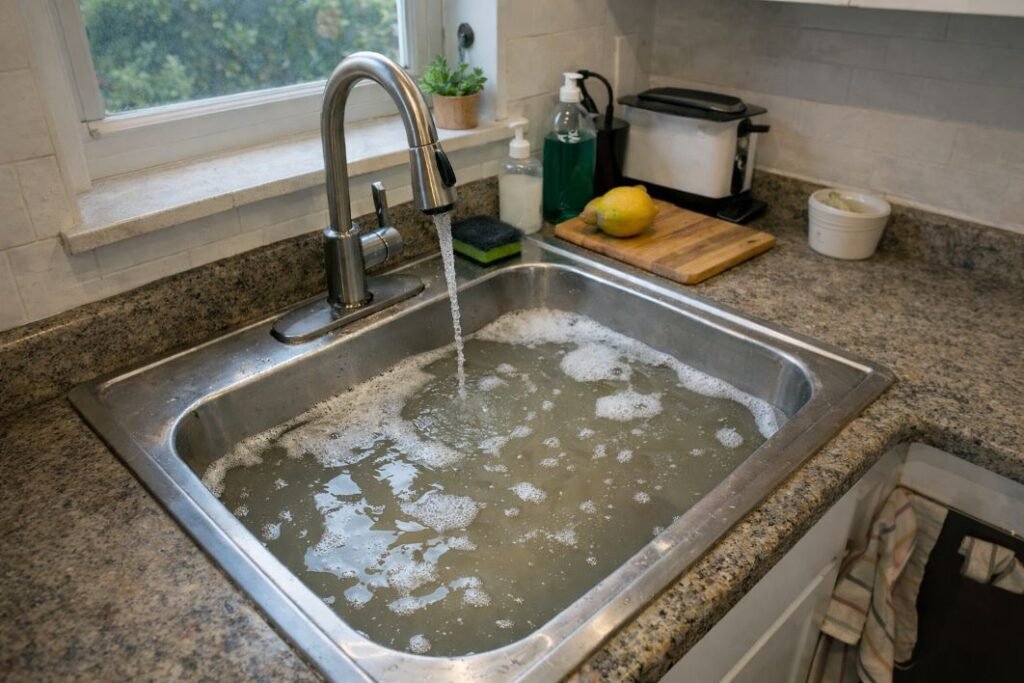
The drain usually contains a mixed blockage
Inside a blocked commercial kitchen drain, the contents usually point back to several parts of the kitchen working at once. A commercial sink, dishwasher, combination oven, often called a combi oven, and floor drain can each add different material to the same restriction.
We look for the mix, because the mix tells you more than the label. A “grease blockage” can be accurate, but it may be too narrow for a food business drainage problem where downtime, hygiene and responsibility all matter.
Common materials include:
- Fat, oil and grease, known in the trade as FOG, which means fat, oil and grease from cooking and washing-up water.
- Food scraps from plates, pans and preparation areas that have escaped bins or sink strainers.
- Waste oil residue, especially where used cooking oil handling is weak or containers are not being managed properly.
- Floor rubbish and sediment from wash-down, including small debris that never came through a sink at all.
- Soap and cleaning residue that mixes with grease and food particles, making the restriction less predictable.
Thames Water tells food businesses in its region, including Reading and much of Berkshire, not to wash cooking fats, oils or greases down the sink, to use sink strainers, to keep floor rubbish out of drains, and to arrange leftover oil collection through a licensed contractor. That advice matches what we see inside the pipework. The materials rarely arrive from one source.
A blocked kitchen sink in a commercial site can still be local. Once several fixtures slow at the same time, or dirty water starts to back up away from the sink, we treat the drain contents as evidence of how the kitchen is behaving under pressure.
A blocked kitchen drain can affect service, hygiene and responsibility at the same time. Get a clear assessment when the back up is starting to affect the premises.
Enquire nowGrease is only part of the blockage
Grease matters, but grease alone is rarely the full story. The stronger question is what the grease has gathered on its way through the system.
Fat, oil and grease works as a binder. Food particles stick to it. Floor sweepings can lodge in it. Wash-down water can carry fine debris into places staff never see. A quick clearance that treats all of that as “just grease” misses the pattern that made the blockage grow.
Hot water and washing-up liquid are also the wrong way to think about a commercial kitchen drainage issue. Flow might improve briefly, yet the material further along the run can still be there. For a restaurant, pub, school kitchen or care-site kitchen, that matters because a returning blockage can interrupt service at the worst possible time.
Waste cooking oil raises a separate concern. The Food Standards Agency says waste cooking oil from catering premises must be stored properly, must not spill, and must be collected by an authorised collector. It must not be poured down drains or sewers because it causes blockages, bad smell, vermin problems and polluted watercourses, with potential prosecution risk.
That does not mean every blockage is a compliance failure. It means the material inside the drain needs to be read properly, because the same pipe can contain evidence of grease control, waste handling and appliance discharge problems at once.
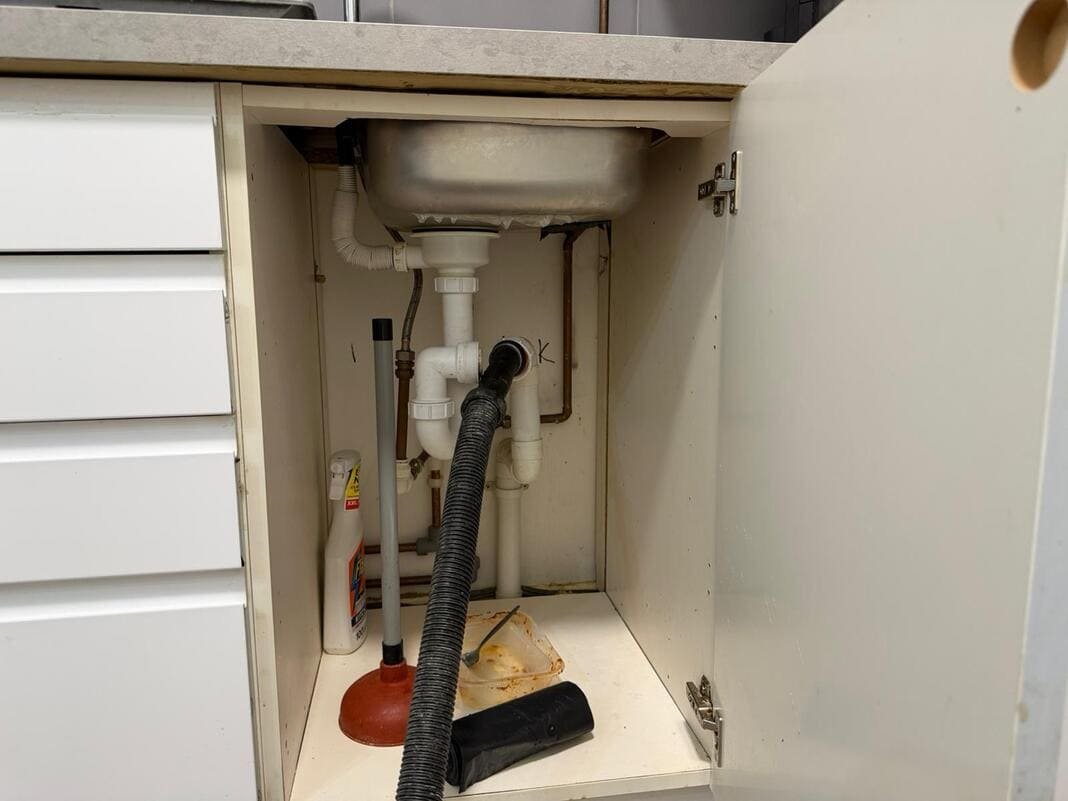
The location of the back up matters as much as the material in the drain. A sink issue, floor drain issue and appliance linked issue can point to different responsibility and risk.

Grease equipment can become part of the problem
A sink backing up when a dishwasher or combi oven drains often points to more than a blocked waste pipe. The appliance discharge may be pushing dirty water into a system where the grease equipment is not keeping pace with the kitchen.
For commercial hot food buildings, Thames Water points to drainage being fitted with a grease separator complying with British Standard BS EN 1825-1:2004 and designed in accordance with BS EN 1825-2:2002, or another effective means of grease management. The last part matters. The issue is whether the site has an effective means of controlling grease for the way it actually operates.
Here is the practical difference we look at on site:
| Equipment | What it is meant to do | What a problem can indicate |
|---|---|---|
| Grease trap | A local unit that captures grease before wastewater moves further into the drainage run. | The unit may be overwhelmed, poorly maintained or no longer suited to the kitchen’s use. |
| Grease separator | A drain-line system that separates fats, oils and greases from wastewater. | The wider drainage setup may need checking, especially if several fixtures are affected. |
| Grease removal unit | A unit that can serve appliances such as sinks, dishwashers and combination ovens, collecting fats, oils and greases in a container. | Daily emptying matters, because collected material has to leave the kitchen system, not return to it. |
At 24hrs Drainage, we treat grease equipment as part of the site picture, not as a box-ticking item. A grease trap near one sink will not explain every back-up if the dishwasher, combi oven and floor drainage are also feeding into the problem.
For you, the practical point is simple enough: having equipment in place does not prove the drain is protected. The blocked pipe still needs to be judged by where the water is backing up and what the cleared material shows.
Floor drains show how far the issue has spread
A slow sink during prep is one level of disruption; a floor drain backing up during appliance discharge is a wider operational issue. Water appearing through a commercial floor drain can show that the restriction is no longer confined to one fixture.
Floor drains collect different material from sinks. Mop water, service debris and fine floor waste can all enter that route. Once those materials meet FOG deeper in the run, the restriction can affect cleaning, movement through the kitchen and the ability to keep the operating area under control.
Food premises need adequate drainage and must be kept clean, maintained and in good condition. That is why a blocked commercial kitchen drain in Reading or the Thames Valley should be viewed through service continuity as well as pipe clearance. If water is coming up through a floor drain in a restaurant kitchen, the location of the back-up changes the decision.
Documentation also starts to matter here. A landlord may want to know whether the issue sits inside the tenant’s kitchen waste system or further along shared drainage. An insurer may need evidence of cause. A local authority Environmental Health Officer may focus on whether the premises can stay clean and controlled.
24hrs Drainage is often brought into kitchen situations where the first question is no longer “can the water move?” but “what does this mean for trading, evidence and responsibility?” That is the right shift in thinking when the back-up has moved beyond one sink.
Waste cooking oil residue is often part of a wider pattern inside the pipework. Evidence from the drain contents can be useful when a landlord, insurer or Environmental Health Officer needs clarity.
The right response separates clearance from control
Clearance and control are different commercial outcomes. Flow restored gets the kitchen moving again; cause identified tells you whether the same blockage is likely to come back into service.
A controlled response looks at the drain contents as site evidence. We want to know what was found, where it appeared and whether the blockage connects to grease equipment, appliances or floor drainage.
A practical commercial response asks for four things:
- What material came out of the drain. Grease alone says less than grease mixed with food scraps, floor rubbish or waste oil residue.
- Where the back-up showed itself. One blocked commercial sink carries a different risk from drains backing up through the kitchen floor.
- Which fixtures are linked. Dishwasher discharge, combi oven drainage and sink waste can point to different pressure points in the same system.
- Whether evidence is needed. A CCTV drain survey or drainage report can help where responsibility, insurance or inspection questions are in play.
For Reading, Berkshire and Thames Valley food businesses, guesswork is a poor basis for decisions because drainage affects service, hygiene and accountability at the same time. A one-off nuisance mindset aims to open the pipe and leave the rest unanswered. A controlled commercial response treats the contents of the drain as evidence about how the kitchen is operating, which is the approach that holds up better when trading pressure, repeat blockages or disputed responsibility enter the picture.

When a kitchen drain issue may involve shared drainage, landlord responsibility or insurance, a clear report helps support the next decision.
Request a surveyQuestions we get asked about blocked commercial kitchen drains
Can a grease trap make the kitchen sink back up?
A grease trap can be part of the issue if it is full, overwhelmed or not suited to how the kitchen is being used. The back-up still needs to be checked in context, because the restriction may also sit further along the drainage run.
Why does the sink back up when the dishwasher or combi oven drains?
A sink backing up during appliance discharge can point to a shared restriction in the kitchen drainage system. The appliance is adding wastewater faster than the restricted run can carry it away.
Should a kitchen stop trading if drains are backing up?
That decision depends on where the back-up is and whether the kitchen can stay clean, safe and controlled. Floor drain back-up, repeated overflow or affected food-prep areas should be treated as a serious operational issue.
Who is responsible for a blocked drain in a rented commercial kitchen?
Responsibility depends on the lease, the location of the blockage and what the evidence shows. Clear findings from the drainage run matter because a tenant waste issue and a shared drainage defect are different problems.
Is a grease trap required in every UK commercial kitchen?
The careful wording is that commercial hot food drainage should have a grease separator or another effective means of grease management. A grease trap is one option, but the right arrangement depends on the kitchen and drainage setup.
This is general information, not professional advice.
