
Can you sell a house in Berkshire with a septic tank?
Yes. You can sell a Berkshire house with a septic tank, provided the private drainage is disclosed properly and any compliance issue is handled clearly. We first look at what system you have, where it discharges, and whether your paperwork gives the buyer, solicitor, lender or insurer enough confidence to proceed.
A septic tank does not automatically block a property sale. In Reading, wider Berkshire and Thames Valley villages, private drainage is common enough that solicitors know how to raise the right enquiries. Problems start when the answers are vague, the discharge point is unknown, or old paperwork says one thing and the site appears to show another.
Berkshire sellers follow the England rules. No separate Berkshire septic tank sale regime applies, so the task is to show that your system is described accurately and dealt with properly under the general binding rules for small sewage discharges in England.
Our advice is to separate four issues from the start: the type of system, the discharge route, the written disclosure, and any evidence needed to support what you say. That keeps the sale file focused and gives each party a clear point to review.
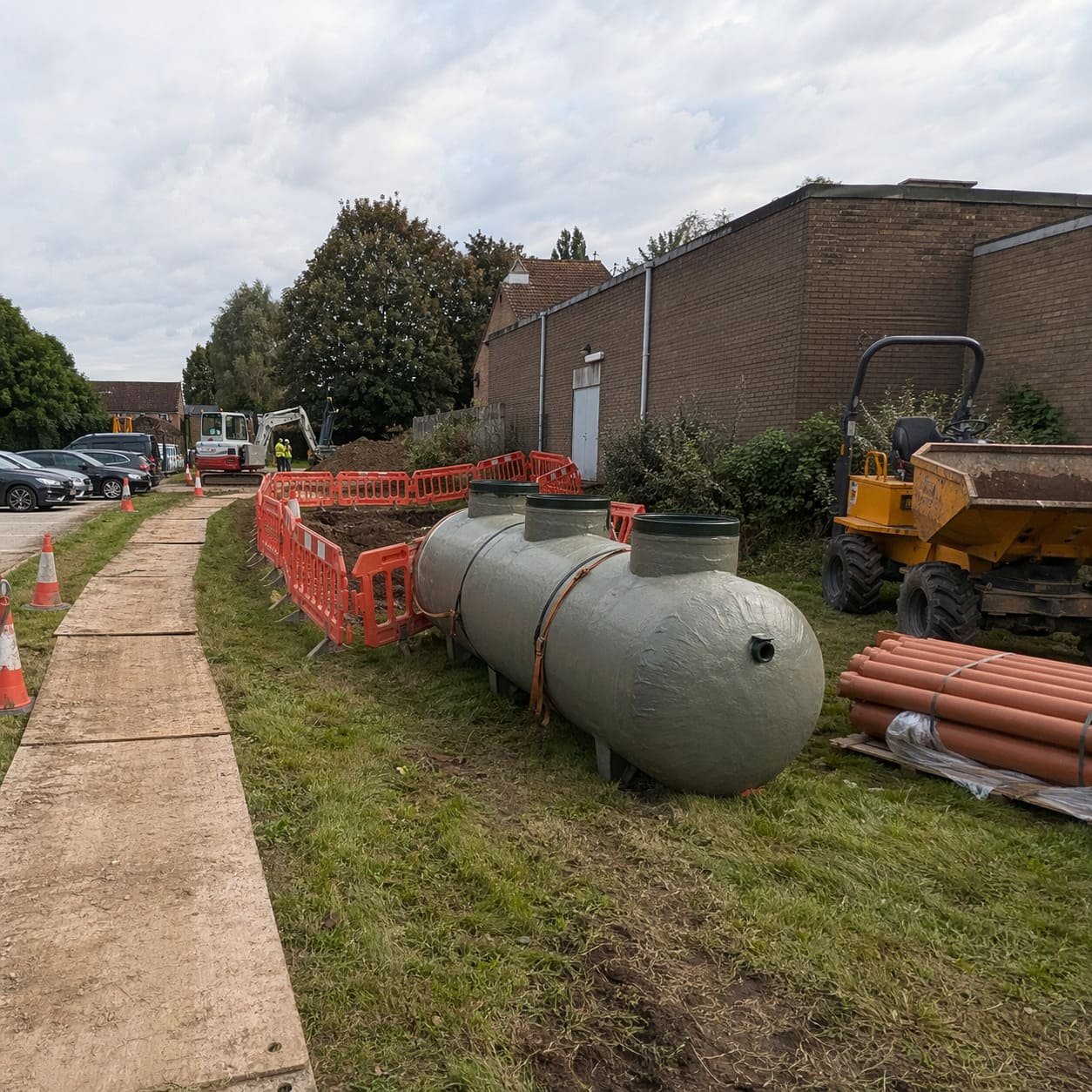
The sale turns on the discharge route first
The first thing we look at is where the treated waste water goes. A system discharging to ground through a drainage field is a different sale issue from a septic tank discharging straight to a ditch, stream, river or other watercourse.
The discharge route comes first
A drainage field is an infiltration system that takes treated waste water into the ground through perforated pipes in trenches. That is the route sellers commonly need to identify when the system is a septic tank or small sewage treatment plant discharging to ground.
Assumptions cause trouble here. A seller may know where the tank is, but not where the outlet runs. Another property may have old plans that show a system layout, yet the visible route on site is unclear. During conveyancing, that uncertainty becomes a solicitor enquiry rather than a drainage detail.
Direct watercourse discharge changes the sale conversation
A septic tank must not discharge directly to a watercourse. Where that direct discharge exists, the Environment Agency guidance points to three possible routes: connection to a public foul sewer, replacement with a small sewage treatment plant, or installation of a drainage field. The ground discharge rules then need to be checked.
That does not mean every seller must complete an upgrade before completion in every case. The key sale point is responsibility. The Environment Agency says that, when buying or selling a property with a septic tank discharging directly into a watercourse, buyer and seller should agree who is responsible for replacement or upgrade as a condition of sale.
That distinction matters in negotiation. A buyer may accept an agreed position if the issue is clear, cost responsibility is addressed, and the solicitor can record it. By contrast, an unclear discharge route gives everyone room to pause.
Current guidance is wider than “2020 rules”
Many people still talk about the “2020 septic tank rules”, but that phrase is too blunt for a live property sale. Current Environment Agency guidance was updated on 2 October 2023 and now needs to be read as the active guidance, especially where a newer discharge situation is in play.
We do not find it useful to argue over labels. For a seller, the practical question is simpler: can the sale file show where the system discharges and whether that route creates an issue that must be agreed before exchange? A known route gives the solicitor something concrete to deal with; a guess does not.
Installation, emptying, repair and compliance advice for off-mains drainage systems.
Speak to an EngineerThe exact private drainage system must be named correctly
A seller may call every underground tank a septic tank, but sale paperwork needs the right description. The wrong label can send buyer enquiries down the wrong track and make a manageable issue look less settled than it is.
Here is the practical distinction we use when reading private drainage information for a sale.
| Term | What it means for the sale | Common confusion to avoid |
|---|---|---|
| Septic tank | The discharge route matters, especially whether it goes to a drainage field or directly to a watercourse. | Do not assume every older tank is compliant because it has been in use for years. |
| Small sewage treatment plant | This is different from a septic tank and is also called a package treatment plant. | Do not use “septic tank” as a catch-all term if the installed system is different. |
| Drainage field | This is the ground infiltration route for waste water from the system. | Do not describe a rainwater soakaway as the septic tank drainage field. |
| Cesspool | If the property has one, the sale file should call it that instead of using septic tank wording. | Do not blur it with other private drainage terms. |
| Public foul sewer | A sewer connection changes the private drainage question. | Do not rely on old assumptions if the drainage route has changed. |
Standards also matter for newer systems. Environment Agency guidance refers to BS EN 12566 for septic tanks and small sewage treatment plants, and BS 6297:2007 for drainage fields. Sellers do not need to become drainage designers, but they do need enough accurate information to avoid giving the buyer a loose description.
Old wording is quick to copy into a form. Verified identification is safer for the sale file, especially where a buyer is cautious or the property is rural, older, or edge-of-town.
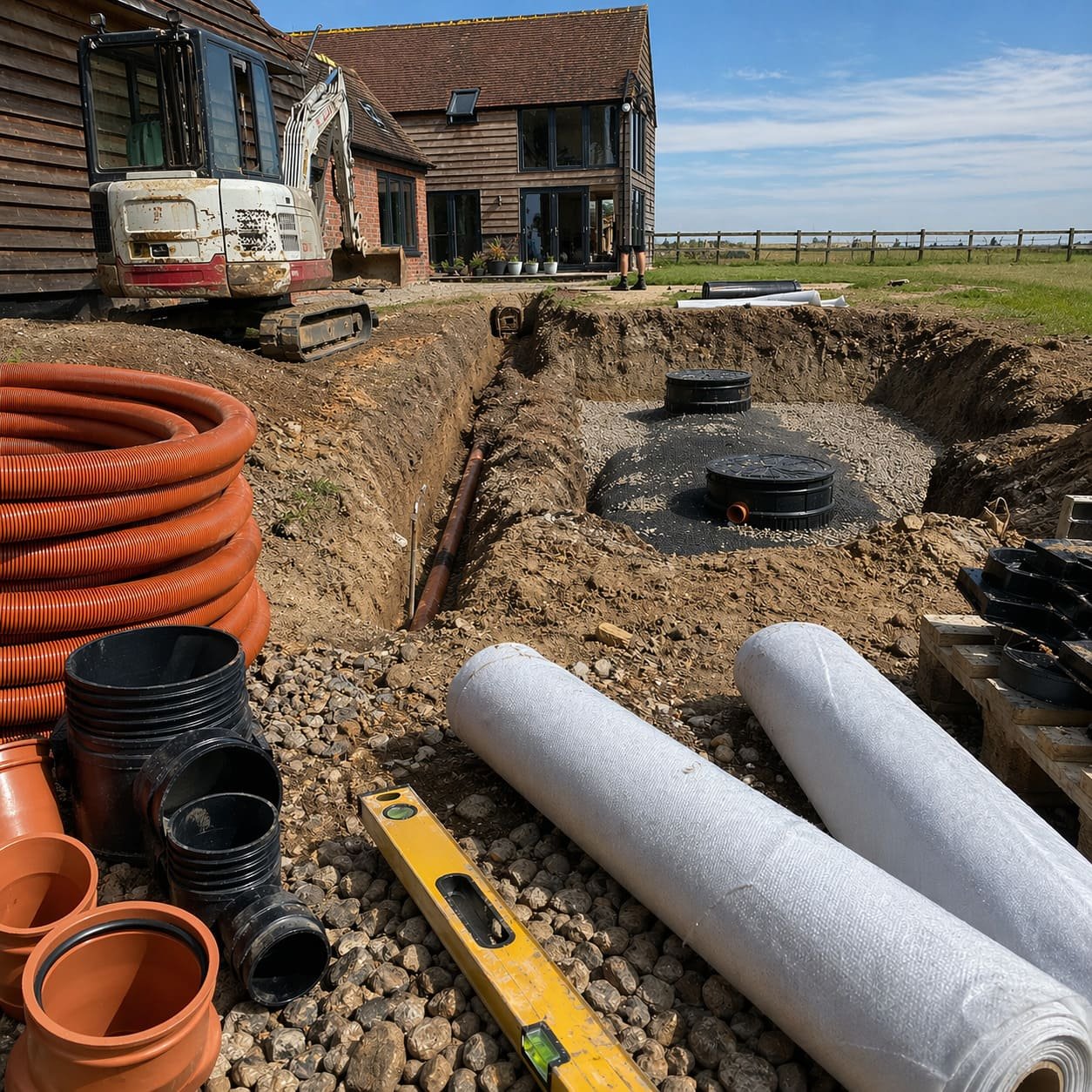
If the discharge route is unclear, the sale file usually needs more than older service notes. A clear drainage record can matter more than a long history of assumptions.

Written evidence keeps buyer enquiries under control
If the buyer’s solicitor asks about private drainage, vague answers tend to create more questions. Written disclosure is central because the seller must tell the new operator in writing that a sewage discharge is in place.
The TA6 Property Information Form is part of that picture. The Law Society describes the TA6 as the form used by the seller to give the prospective buyer detailed information about the property. In practice, the form works best when the supporting drainage detail is clear enough to stand up to follow-up questions.
Useful evidence usually covers:
- System description. State whether the property has a septic tank, a small sewage treatment plant, another private system, or a public foul sewer connection.
- Locations. Identify the main parts of the system and the discharge point as clearly as the seller’s information allows.
- Changes made. Record known alterations to the treatment or drainage system.
- Maintenance details and manuals. Include manuals if held, especially where the system is a small sewage treatment plant.
- Maintenance records. Provide records if held, because they help show the system has been looked after.
- Survey or report evidence where needed. A professional record can be useful when the system type, condition or discharge route is already causing concern.
Paperwork alone does not prove everything. A manual for a system that no one can locate properly leaves the solicitor with another question. A plan that does not show the discharge route may help with context but still leave the main compliance point open.
Where uncertainty is already slowing a Berkshire sale, a CCTV drainage survey or compliance-linked drainage report can turn guesswork into usable evidence. At 24hrs Drainage, we see this most often when a seller needs a clear record of the system and drainage route for conveyancing, insurance or buyer due diligence, rather than a general reassurance that “it seems fine”.
Evidence works best when it answers the exact question being asked. If the buyer’s solicitor wants to know where the discharge goes, a neat folder of old service notes will not answer that on its own.
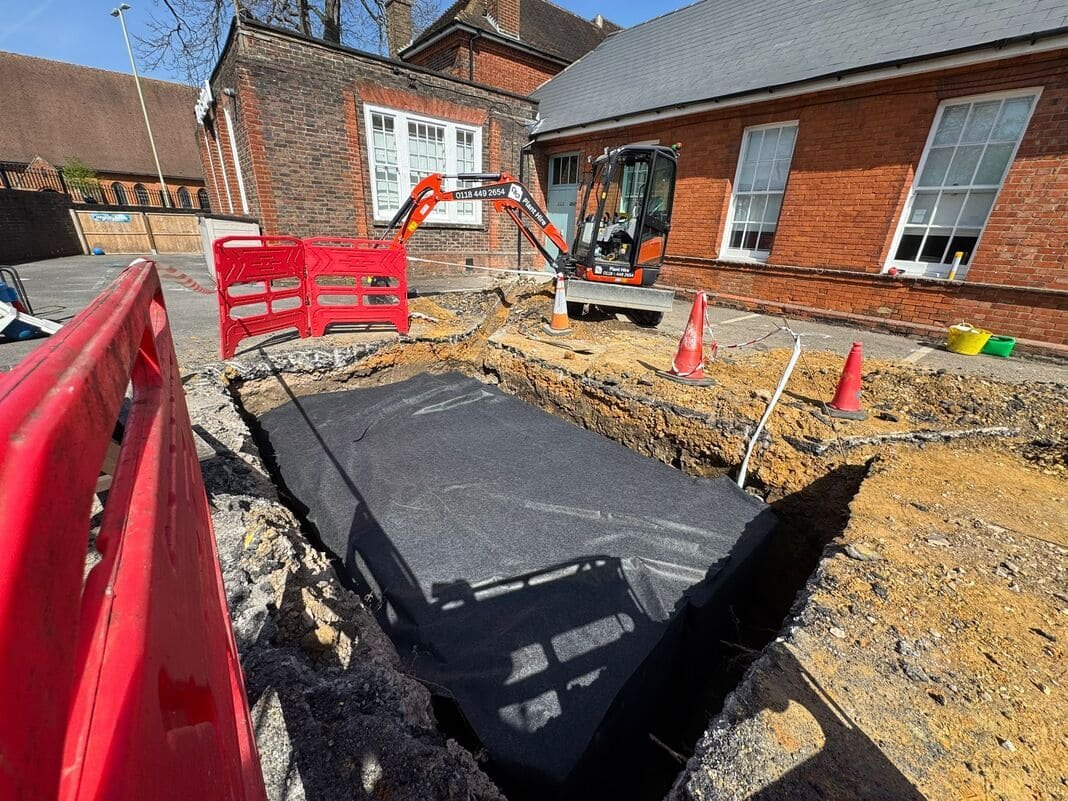
When the buyer is cautious, the wording on the TA6 form should match the actual system on site. A mismatch between description and discharge route often creates avoidable delay.

Proving the basics protects the sale better than guessing
Which approach gives the sale a better chance: hoping the septic tank issue stays quiet, or proving the key points before it becomes a negotiation problem? We favour proof, because it gives the buyer, solicitor and any other interested party something specific to assess.
Guessing feels quicker at the start. You can repeat what a previous owner said, copy old wording into the TA6, or assume a visible ditch has nothing to do with the tank. That approach works only until someone asks for the discharge route, the system description, or evidence that the written disclosure is accurate.
Proving the basics takes more discipline, but it puts the sale on firmer ground. The useful evidence is narrow: what the system is, where it is, where it discharges, and whether any responsibility for work needs to be agreed. Professional involvement makes most sense when one of those answers affects the buyer’s confidence or the timetable to exchange.
For Berkshire and Thames Valley sellers, the long-term trade-off is straightforward. Hopeful assumptions may keep the file moving for a few days, but clear drainage evidence gives the transaction a cleaner path through scrutiny and reduces the chance of a late septic tank dispute becoming the point that holds the sale up.

Free assessment and written quote for new installations or existing system upgrades.
Request a QuoteCommon questions about selling with a septic tank
Does the TA6 form prove my septic tank is compliant?
No. The TA6 helps structure the information you give the buyer, but the answers still need to be accurate and supported where necessary. Old paperwork can help, but it does not replace a clear view of the system and discharge route.
Can a buyer renegotiate because of a septic tank issue?
A buyer can raise concerns if the private drainage position is unclear or if work appears to be needed. Clear evidence gives the parties a better basis for deciding whether the issue is already handled, needs agreement, or affects the sale terms.
Is a septic tank survey always needed before selling?
No single rule says every seller needs a survey. We see professional evidence become sensible when the discharge route is unknown, the buyer is asking detailed questions, or the solicitor needs clearer information before exchange.
Is a small sewage treatment plant the same as a septic tank?
No. A small sewage treatment plant, also called a package treatment plant, is a different type of private drainage system. The distinction matters because the sale file should describe the installed system accurately.
Who is the new operator after completion?
The new operator is the person who becomes responsible for the sewage discharge after the sale. That is why the seller must pass written information about the discharge to the buyer.
This is general information, not professional advice.
