Your water company says you need a drain repair. Do you have to use their contractor, or can you choose your own?

If your water company says a drain needs repair, must you use the contractor they suggest?

Usually, no. In many cases, a property owner can appoint an independent contractor, provided the repair is the owner’s responsibility and the work meets the required standard. The detail that matters most is who owns the drain or sewer in question, because that determines who has authority, who pays, and whether any approval or sign-off is needed.

Table of Contents

Pro Tip: Request a detailed written report from your contractor to make future insurance claims or resale processes much smoother.

Understanding Your Water Company’s Role in Drain Repairs

A water company can identify a drainage problem, notify a property owner, and in some circumstances require remedial work. That does not mean it automatically controls every part of the repair. Much depends on whether the defect sits within a private drain or a public sewer.

In plain terms, ownership often follows the route of the pipe and the property boundary. A drain serving only one property within its boundary is often private. A shared sewer, or pipework adopted as part of the public network, usually falls under the water company’s responsibility. The Water Industry Act 1991 provides the wider legal framework, and Ofwat oversees water companies, but the practical question for a homeowner is simpler: whose asset is it?

  • Private drain: usually serves one property and sits within that property’s boundary
  • Public sewer: usually serves more than one property or has been adopted by the water company
  • Lateral drain: a section outside the property boundary may fall under water company responsibility, depending on the layout


Confusion often starts when a blockage, collapse, or defect appears close to a boundary. A householder may assume the water company must repair it because the issue affects drainage beyond the garden. A water company may instead say the defective section remains private and issue a repair notice or a formal instruction to act.

Local authorities can also become involved, especially where drainage defects create a nuisance or a public health concern. That does not transfer ownership, but it can increase the pressure to resolve the problem without delay.

Book a Drainage Assessment

Arrange a professional inspection to determine the exact cause of your drain issue and receive clear guidance on next steps.

Book Assessment

What Happens When You Receive a Drain Repair Notice?

A drain repair notice is usually a formal statement that a defect has been identified and that action is required within a stated timeframe. The notice may describe the location of the problem, the nature of the defect, and the consequences of failing to deal with it.

Some notices are straightforward and practical. Others are more technical, especially if they refer to survey findings, infiltration, structural failure, or unauthorised connections. Even where the wording feels formal, the immediate task is to understand three points clearly: what needs repairing, who is said to be responsible, and by when.

A typical sequence looks like this:

  1. The water company identifies a problem, often after a report, inspection, or recurring drainage issue.
  2. The property owner receives a written notice or formal communication.
  3. A deadline is set for investigation, repair, or confirmation that works have been arranged.
  4. If the owner does not act, further enforcement may follow, which can involve additional costs or intervention by the authority with jurisdiction.


Imagine a notice stating that a damaged private drain is allowing foul water to escape and must be repaired within a specified period. In that situation, the letter is not merely advisory. It may create a legal requirement to respond, and ignoring it can expose the owner to enforcement action or recovery of costs if another body steps in.

Environmental Health or the local council may appear in the background where drainage defects affect neighbouring land, public health, or habitability. That can matter in disputes between neighbours or in cases involving rented property, because liability and timing become more sensitive once a defect affects others.

Are You Legally Required to Use the Water Company’s Contractor?

In many cases, you can choose your own contractor.

That is the short answer, but there are limits. A water company may recommend a contractor, maintain an approved list, or explain what standard the repair must meet. That does not automatically remove your right to appoint an independent drainage specialist for private repair work.

The key distinction is between a legal requirement to complete the repair and a preference about who carries it out. Those are not the same thing. A notice may oblige you to fix the problem, yet still leave you free to select the company that does the work.

A few common points are worth clearing up.

A water company recommendation is not always compulsory. It may simply reflect the company’s preference for dealing with contractors whose work they already know.

A property owner’s freedom to choose is strongest where the defective drain is privately owned and no special restriction applies.

Choice can narrow where the work affects public assets, requires direct access to the public sewer network, or must be inspected and signed off under a specific process.

Disputes sometimes arise because the letter sounds more absolute than it is. If the notice says the repair must be completed to an approved standard, some readers take that to mean only one contractor can do it. In practice, the requirement is often about compliance, evidence, and final acceptance, not brand loyalty.

Where the position feels unclear, the most useful question is whether the notice requires a named contractor or simply requires compliant repair within a deadline. Those are very different instructions under the surface.

Pro Tip: Before starting any work, confirm with the water company what evidence and approvals are required for your specific repair.

Speak to a Drainage Specialist

Get personalised advice on your drain repair options from an independent expert who understands local regulations and requirements.

Request a Consultation

Factors to Consider When Choosing Your Own Drainage Contractor

Once you know independent appointment is possible, the next issue is whether the contractor can handle both the repair itself and the paperwork around it. A low quote can become expensive if the work is disputed later or lacks the evidence needed for approval or insurance.

Focus on these decision points:

  • Relevant drainage experience, especially with structural defects, shared drains, or urgent situations
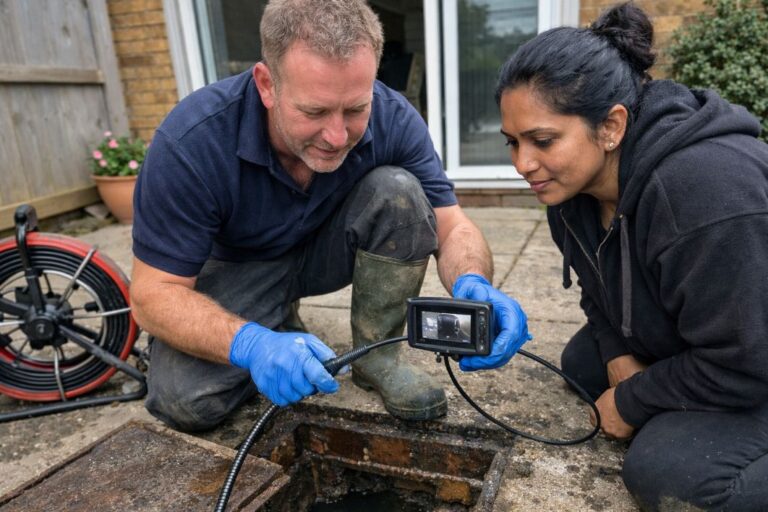
  • Ability to provide clear records, including reports, images, and confirmation of completed works
  • Familiarity with local authority expectations and water company sign-off requirements
  • Availability where delay could affect a sale, an insurance claim, or business operations
  • Clear accountability if further remedial work is needed


Documentation matters more than many people expect. If an insurer later asks what failed, when it was identified, and what remedial work was completed, a vague invoice may not be enough. The same applies if a water company wants proof that the repair meets the required standard.

Regional familiarity can also help. In Reading and Berkshire, for example, contractors such as 24hrs Drainage may already be used to dealing with urgent drainage cases that involve evidence, compliance pressure, and coordination with other parties. The useful point is not the name itself, but the type of experience needed when the repair carries wider consequences.

What to Expect if You Use an Independent Contractor

Choosing your own contractor gives you control, but it also puts more responsibility on you to keep the process organised. The repair must usually satisfy the water company or any relevant authority, and that means communication should stay clear from the start.

Most cases follow a recognisable pattern.

  1. The contractor reviews the notice and confirms the likely scope of the issue.
  2. The owner or contractor checks whether the water company requires prior notification, inspection access, or a particular form of evidence.
  3. The repair is completed with records that show what was found and what was put right.
  4. The relevant party reviews the work, which may involve documentary sign-off, an inspection, or further clarification.


Timing can become awkward if a contractor completes work without checking what level of proof is needed. A perfectly good repair may then need extra verification because the authority wants CCTV evidence, photographs, material details, or confirmation of location.

Insurance assessors and building control are not involved in every case, but they can matter where wider property damage, reinstatement, or structural work forms part of the picture. Shared drainage systems can also complicate matters if neighbouring ownership or access is disputed.

Independent appointment does not mean informal handling. The smoother cases are usually the ones where records are prepared properly and the standard of work can be demonstrated without argument.

Costs, Risks, and Liabilities: What’s at Stake?

The choice of contractor affects more than the invoice total. Cost, liability, delay, and evidential quality all sit in the same decision.

A cheaper repair may offer poor value if it fails inspection or leaves gaps in the record. By contrast, a higher initial cost may be easier to justify where the contractor provides reliable documentation, accepts responsibility for the work, and reduces the chance of repeated attendance.

Consider the main areas of risk:

  • Upfront price versus total cost if remedial work is later required
  • Liability for defective workmanship
  • Insurance acceptance of the evidence supporting the repair
  • Extra expense if deadlines are missed and enforcement follows
  • Delay to a property sale, tenancy issue, or commercial use of the premises


Liability usually sits with the party responsible for commissioning the repair, subject to the contractor’s own obligations for workmanship and any guarantee offered. That makes paperwork important again. If a defect reappears, the practical question becomes whether the failure arose from the original condition, the scope of the repair, or the standard of the work itself.

Insurance can add another layer. Some claims depend on proving the cause of damage and the remedial action taken. An insurer may take a close interest in whether the work was proportionate, evidenced, and completed by a competent contractor. A rushed repair with poor records can leave the property owner carrying more of the financial burden than expected.

Common Misconceptions and Forward Considerations

Several myths tend to make these situations harder than they need to be.

One common misunderstanding is that a water company can always insist on its own contractor. In many private drain cases, that is simply not the position. The real requirement is often compliant repair, completed within the stated timeframe.

Another mistaken belief is that all drainage contractors are interchangeable. Some can deal with routine issues perfectly well, but a case involving notices, liability, insurer scrutiny, or public sewer interfaces calls for a different level of organisation.

A third misconception is that once the drain is fixed, the matter is over. Records can remain important long after the repair, especially during a sale, an insurance claim, or a later dispute about recurrence.

Property owners also sometimes treat ownership boundaries as obvious when they are anything but. Shared lines, adopted sewers, and boundary crossings can produce uncertainty that affects both responsibility and choice of contractor.

The most useful way to approach a repair notice is to separate three issues that often get blurred together: who owns the drain, who has the right to choose the contractor, and what standard the finished work must satisfy. Once those points are clear, the decision becomes far less intimidating and much more practical.

Download Your Drainage Records Checklist

Ensure you keep the right documentation for future insurance or property matters with our simple, practical checklist.

Get the Checklist

24hrs Drainage Limited

33 Falmouth Rd, Reading RG2 8QR

0800 020 9198

https://24hrsdrainage.co.uk/

Opening Hours:
Monday – Sunday : Open and available 24 hours per day