CCTV Drain Survey for Commercial Sites: What Access and Prep Is Required

What factors must be considered before carrying out a CCTV drain survey on a commercial site?

Carrying out a CCTV drain survey on a commercial site requires careful planning around physical access, site readiness, and documentation needs. Surveys can be delayed or invalidated if access is restricted, preparation is incomplete, or reporting requirements are overlooked. Effective coordination ensures the survey delivers useful results without causing disruption.

Table of Contents

Pro Tip: Conduct a walkthrough of all access points before the survey date to identify any locked areas or hazards.

Why Commercial Drain Surveys Require Specific Access Considerations

Commercial drainage systems are often more extensive and built around infrastructure that limits direct access. Unlike residential settings, access points may be buried, obstructed, locked, or even located on neighbouring premises.

Several factors increase the challenge of drain survey access on commercial sites:

  • Manhole access may be limited by pavement coverings, heavy vehicle traffic, or safety restrictions.
  • Confined spaces and structural layouts can introduce risks that require specific safety plans.
  • Underground utilities often intersect, meaning access must respect utility mapping and planning constraints.
  • Access permissions are commonly required for areas shared across tenants or bordering public highways.


Larger sites, especially business parks, healthcare campuses, or industrial units, may include multiple buildings or sub-networks. Without clear, safe, and legal access to the relevant sections, the survey may be delayed or rendered incomplete.

If access constraints are not identified early, surveys can stall once surveyors are onsite. This wastes time, but may also affect tight deadlines related to sales, leasing, insurance, or compliance obligations.

Book a Commercial Drain Survey

Plan your drainage inspection with a professional team that understands commercial access and compliance.

Book Now

Internal and External Prep Required Before a Survey Can Begin

Preparation starts well before the survey team arrives. Being ready on the day avoids wasted visits and ensures meaningful outcomes.

Key preparation tasks typically include:

  1. Confirming a site contact who will be present and authorised to support the team.
  2. Arranging safe physical access by unlocking or exposing manholes or other entry points.
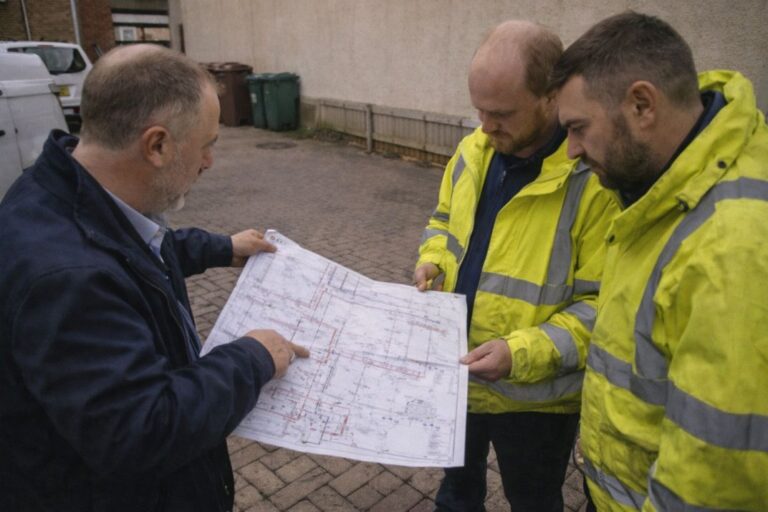
  3. Providing drainage plans or utility maps when known, especially for complex or legacy systems.
  4. Clearing blockages if recent flooding or debris could obstruct visual inspection.
  5. Issuing RAMS (Risk Assessments and Method Statements) ahead of time to satisfy on-site protocols.
  6. Scheduling within operational constraints, particularly on live commercial or high-traffic sites.


If the site requires induction, additional PPE, or pre-authorisation, those arrangements need to be made in advance. Where coordination with site managers or third parties is relevant, early communication is key.

When Access Issues Become a Liability or Compliance Risk

Access problems can have implications well beyond delay. On commercial sites, they can expose the asset holder or manager to legal, operational, or financial risk. This is especially true where documentation is required for regulatory or contractual reasons.

Insurance delays If drain access is limited, evidence for insurance investigations may be incomplete. This can affect claim outcomes or trigger premium disputes.

Compliance failures Some sectors are subject to environmental or safety audits. Failure to provide drainage survey data may raise compliance flags, especially in areas regulated by local authorities or the Environment Agency.

Disputes involving shared drainage When drainage runs across property lines or between multiple tenants, access denial from one party can stall resolution and expose others to fines or service disruption.

Lease or tenancy obligations Limited access can also contradict responsibilities outlined in lease agreements, particularly where tenants are required to keep drainage systems inspectable.

In each case, the inability to carry out a thorough survey can translate into reputational, financial, or operational consequences.

Pro Tip: Provide utility maps in advance to avoid excavation delays and reduce survey time on-site.

Get a Site Access Assessment

Ensure your property is ready for a CCTV drain survey by arranging a tailored site evaluation.

Request Assessment

What Survey Teams Typically Need On-Site

Although CCTV drainage teams arrive equipped for a range of scenarios, basic site readiness still matters. Several elements support a smooth and efficient visit:

  • Clear physical access to manholes or inspection chambers, with no obstructions or locked areas.
  • Safe working environment, including measures for traffic management, adequate lighting, and slip or trip prevention.
  • Local contact person who understands the layout and can authorise decisions as needed.
  • Capability or water supply, depending on the type and scale of equipment involved.
  • Awareness of business operations, so work can proceed without interrupting important activities.


Where these needs are not met, surveys may be postponed at cost to the client or carried out in a limited form that fails to meet documentation requirements.

How to Handle Sites with Limited or No Access Points

Some commercial sites were never designed with modern inspections in mind. Others have access that has been sealed off over time due to landscaping, surface modifications, or redevelopments.

Where access to the drainage network is limited or absent, options may include:

  • Excavation to expose concealed or buried entry points, either permanently or as a temporary measure.
  • Alternative entry routes, such as surveying from the nearest downstream or upstream inspection point.
  • Coordination with neighbouring occupiers where drains cross shared land or rear alleyways.
  • Negotiation of access rights where legal issues restrict entry, especially in managed estates or leasehold arrangements.


In complex or older facilities, access creation may involve planning consent or specialist engineering. When this level of effort becomes necessary, involving a drainage provider experienced in non-standard environments is advisable.

The Role of Documentation and Evidence in Commercial Surveys

In a commercial context, a CCTV drain survey is often carried out to generate documentation that informs decisions or satisfies external requirements.

The standard outputs typically include:

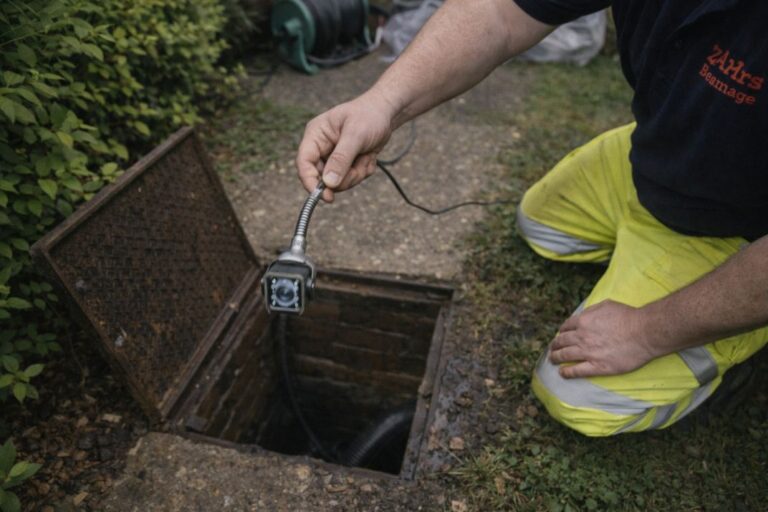
  • Survey footage, showing the internal condition of the drainage network.
  • Written reports, commenting on defects, scale, location, and recommendations.
  • Mapping or charting, where needed to clarify which sections were inspected.


These materials are used across a range of purposes, including:

  • Insurance claims where evidence of failure or cause is required.
  • Handover or sale processes where drainage status affects asset value or due diligence.
  • Health and safety or compliance files where inspection intervals are monitored.


Where the survey has direct legal or operational consequences, the quality and clarity of reporting matters. Some scenarios demand additional labelling, photographic stills, or commentary customised to regulatory or insurer expectations.

When to Involve a Specialist Drainage Provider

Not all survey providers are equipped to support commercial drainage environments. Whenever the situation involves time pressure, regulatory scrutiny, or structural challenge, it makes sense to engage a team that can handle those dimensions.

Some indicators that a specialist provider is appropriate:

  • The drainage infrastructure is unusually large or fragmented.
  • The survey will form part of evidence for insurance, planning, or legal proceedings.
  • The site poses health and safety challenges, such as confined spaces or traffic management.
  • Previous attempts at surveying failed due to access, reporting, or scope limitations.
  • Other contractors on-site require coordination, such as during refurbishments or developments.


Specialist teams bring camera equipment but also the ability to interpret drainage context, manage complex access safely, and deliver documentation that supports decision-making across commercial, operational, and legal domains.

For commercial clients in Reading and surrounding areas, including those facing access constraints or compliance deadlines, providers such as 24hrs Drainage offer the capability and readiness to address these challenges without delay.

Speak to a Drainage Specialist

Discuss the access and documentation requirements for your commercial site with an expert.

Contact a Specialist

24hrs Drainage Limited

33 Falmouth Rd, Reading RG2 8QR

0800 020 9198

https://24hrsdrainage.co.uk/

Opening Hours:
Monday – Sunday : Open and available 24 hours per day