
The right choice between jetting and rodding depends on blockage type, access, urgency, and system condition. Selecting the wrong method can escalate risk, cost, or delay resolution. A professional assessment often ensures the most appropriate response.

Pro Tip: If blockages keep returning, a CCTV inspection can reveal deeper structural issues that cleaning methods might overlook.
Choosing between jetting and mechanical rodding is not just a technical detail. It can influence resolution speed, disruption level, repair costs, and even liability. In time-sensitive or high-risk situations, selecting the wrong method may result in incomplete clearing, system damage, or the need for repeat visits.
Situations where the wrong method can complicate matters include:
In cases like these, the method chosen must fit the circumstances. A decision made on assumption or convenience may cost much more than the original blockage.
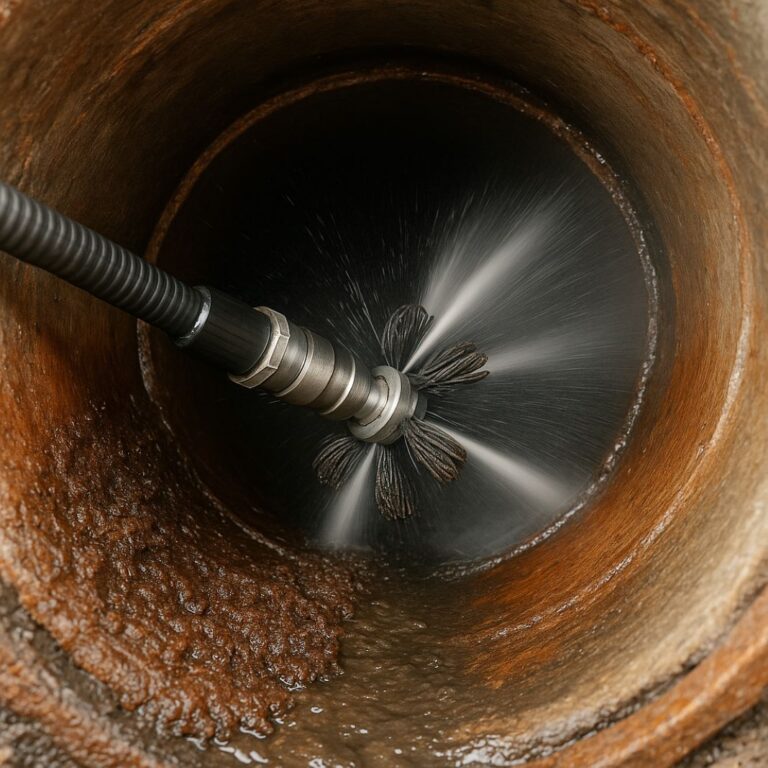
Jetting is a common method used for drain clearance because of its speed and effectiveness under the right conditions. It relies on high-pressure water to dislodge and wash away obstructions, making it particularly effective in certain scenarios.
Jetting is well suited to:
However, jetting is not a one-size-fits-all solution. In older properties or systems known to have fragile components, excessive pressure may pose a risk. Jetting can also be ineffective against hard obstructions such as settled concrete or intrusive roots. While it remains a powerful tool, jetting must be used with discernment.
Book a Drainage Assessment Today
Unsure whether jetting or rodding is right for your problem? Arrange an expert evaluation to get a clear answer and avoid unnecessary disruption.
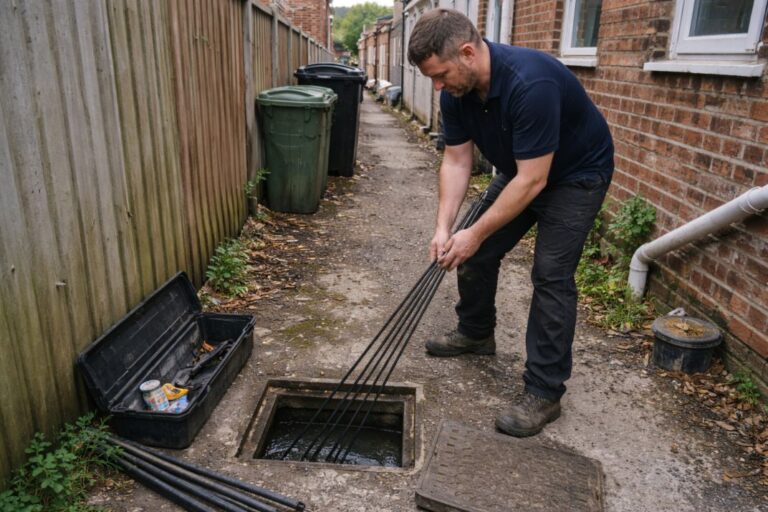
Mechanical rodding is a more targeted approach that uses flexible, rigid tools to manually cut through or dislodge a blockage. Despite being overlooked in favour of newer techniques, it continues to play an important role, particularly in specific operating environments.
Best for:
Not suited for:
Far from obsolete, rodding offers a level of control that makes it the preferred option in sensitive or localised situations.
Pro Tip: Choose rodding for fragile or older drainage systems where jetting pressure could cause damage or instability.
Get a CCTV Drain Survey
Identify blockage causes and system condition with a detailed CCTV inspection from a qualified drainage professional.
Understanding of how jetting and rodding differ helps clarify which is better suited to a specific problem.
This comparison is not about choosing one method over the other but deciding which suits the environment and urgency of the current issue.
Incorrectly selecting a drainage method often means more than just rebooking the job. The ripple effects can include:
For businesses or property sellers, even a 24-hour delay can have knock-on effects with financial and legal implications. Resolving a problem fully the first time avoids unnecessary rework, reputational friction, and escalated repair costs.
The right approach depends on a few key factors. These guide whether jetting, rodding, or a more involved assessment is appropriate.
If uncertainty remains, the situation likely justifies assessment before action, especially where cost or liability exposure is mounting.
In many cases, asking whether jetting or rodding is right may be premature. The correct first step is often assessment, not immediate clearance. An experienced drainage professional can carry out diagnostics, interpret findings, and apply the method that best addresses the root cause.
Benefits of expert assessment include:
For example, a commercial property in Reading experiencing a recurring kitchen drain blockage may assume jetting is needed. However, a CCTV inspection by a drainage contractor such as 24hrs Drainage could identify root ingress or system misalignment, making mechanical intervention more suitable and cost-effective in the long run.
The right method matters. But in high-impact situations, the right judgment often matters more.
Speak to a Drainage Expert
Discuss your drainage issue with a qualified technician to find the most suitable and cost-effective solution.
24hrs Drainage Limited
33 Falmouth Rd, Reading RG2 8QR
0800 020 9198
Opening Hours:
Monday – Sunday : Open and available 24 hours per day
Drain Services
We provide Drainage Services across Berkshire, Hampshire, Surrey, London, Oxfordshire, and the surrounding areas.
Contact Us
If You’re Dealing With Blocked Drains Or Require Drain Repairs, You’ve Come To The Right Destination. Contact Our Team Today At 0800 0209198 For Professional Guidance And A Complimentary, No-Obligation Quote!
We are the premier providers of comprehensive drainage solutions in Reading and throughout Berkshire. With years of experience and a dedicated team of experts, we are your trusted partners for all your domestic and commercial drainage needs.
By subscribing, I agree for my data to be stored and used to receive newsand offers from 24hrs Drainage.
👋 Need urgent drainage help?
We’re available 24/7 in Reading and surrounding areas.
Tap below to speak with our drainage expert now.
Chat on WhatsApp
Fast response | No call-out charges | Nearby
WhatsApp us 24/7