
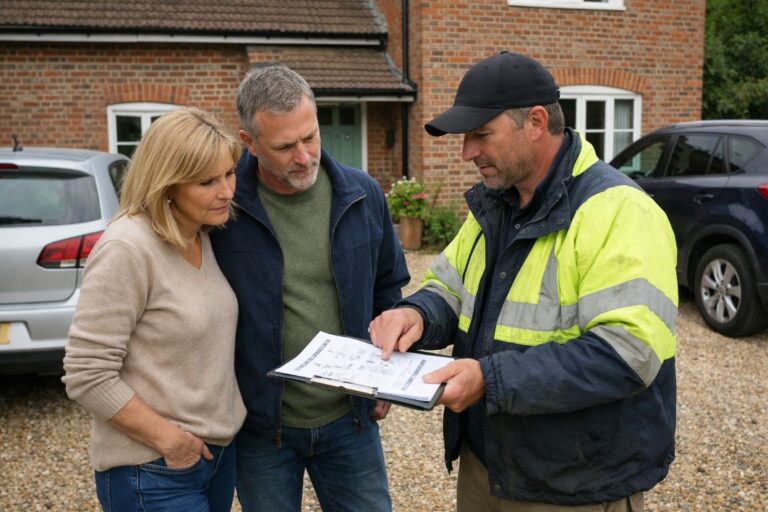
Surveyors often flag possible drain issues in property surveys because their inspections can only assess drainage condition to a limited extent. They highlight these points to alert buyers to risks that may not be visible, so protecting both parties by making any uncertainty explicit.
Typical triggers for drainage warnings in surveys include:
These flags usually refer to uncertainty rather than confirmed faults. Surveyors, especially those adhering to RICS standards, must use cautious language in HomeBuyer Reports and building surveys. This is done because their visual assessment cannot confirm all potential risks, and further investigation may be needed to clarify the situation. The appearance of a note such as “possible drain issues” means the surveyor cannot rule out a problem, but it does not confirm specific damage or failure. Buyers should see this as a cue to seek more detailed information, rather than as an immediate cause for alarm.

Pro Tip: A CCTV drain survey with a written report can speed up negotiations and satisfy most insurers or mortgage lenders.
A flagged drain issue during a house survey can be unsettling, especially in the midst of a property transaction. In reality, these notes point to a range of possibilities, from routine blockages to underlying structural concerns, but rarely indicate a crisis in themselves.
Minor causes often include:
Major risks, by contrast, may involve:
Minor Risks | Major Risks
|
|---|---|
Blocked gullies | Structural defects in drainage runs |
Light root ingress | Collapsed or jointed pipework |
Slow but unobstructed flow | Ongoing and unresolved flooding |
General age-related wear | Disputes over shared drainage boundaries |
Insurance requirements and local authority building control can become relevant if the issue is shown to be significant. Most flagged problems, however, simply reflect the surveyor’s cautious approach when evidence is lacking. The true extent can only be confirmed following a more detailed inspection, and not all flagged items will impact the transaction or require immediate action. Further assessment is almost always recommended to establish whether the issue is minor or more involved.
Book a Specialist Drain Survey
Arrange a CCTV drainage assessment before moving forward with your property purchase. Get detailed insights and peace of mind.
A flagged drain issue can influence how smoothly a sale proceeds. Buyers might worry about hidden repair costs or difficulty securing insurance, while sellers may face delays if buyers request further evidence or negotiation.
Key implications include:
For both parties, ignoring a flagged issue rarely leads to a positive resolution. Attempting to downplay the problem may introduce risk later in the process, whether through delayed approvals or claims disputes. Engaging with the issue at this stage, by seeking specialist reports or agreeing on next steps, often streamlines negotiations and reduces the likelihood of protracted disputes. Conveyancers and surveyors may advise evidence gathering but will typically avoid specific recommendations, keeping responsibility with the buyer and seller to pursue expert advice.
Pro Tip: Verify that your drainage specialist is accredited and familiar with local regulations before booking an assessment.
Speak to a Property Survey Expert
Discuss your survey report and possible drain issues with an experienced advisor for clear, practical guidance.
A house survey, even when thorough, cannot match a dedicated drainage assessment for accuracy. Surveyors are limited to visual indicators and accessible inspection points, so any flagged uncertainty about drains should prompt a professional opinion, especially in time-sensitive or high-value transactions.
Specialist assessments are necessary when:
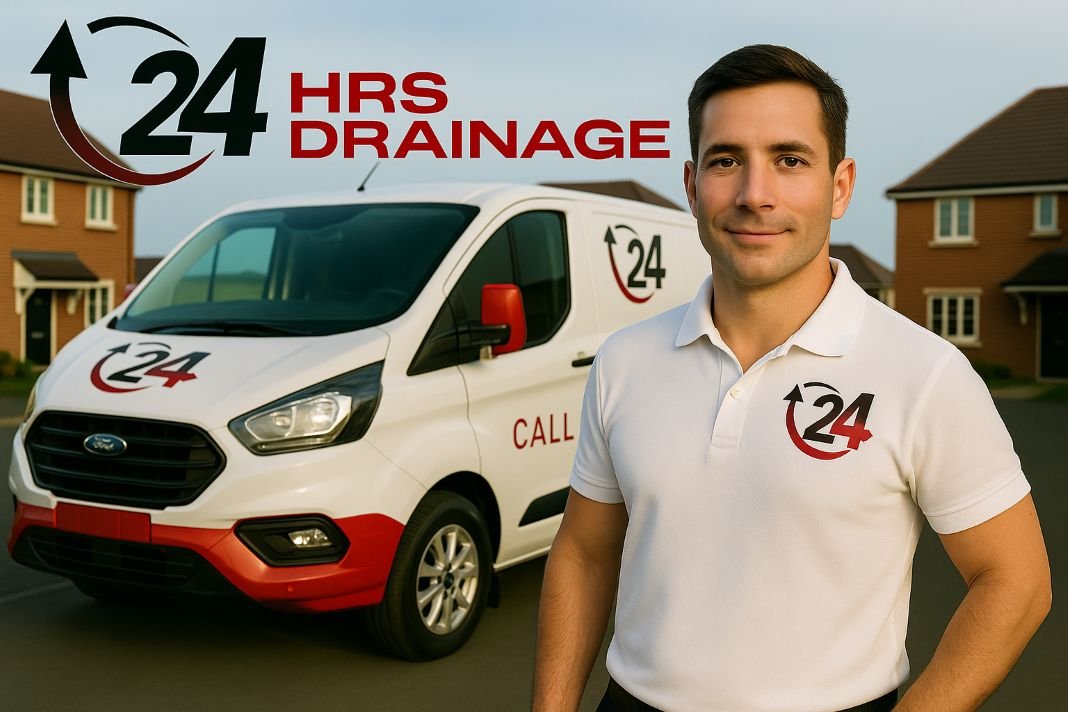
CCTV drain surveys, conducted by qualified professionals, can pinpoint blockages, identify damaged pipes, and produce objective evidence for insurance or sale. In Reading and Berkshire, firms such as 24hrs Drainage can provide prompt, regionally attuned assessments, which means that buyers and sellers can move forward with confidence grounded in clear, documented facts.
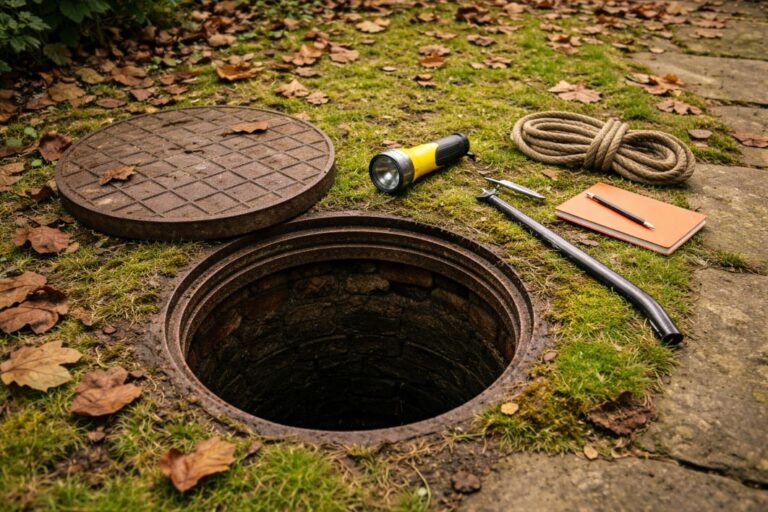
Once a flagged drain issue is identified and a specialist is called, the following process usually unfolds:
This approach ensures decisions are based on reliable facts rather than uncertainty. Clear reporting enables all parties to manage timelines and expectations, and whether securing mortgage approvals, completing a sale, or demonstrating compliance for an insurance claim. By progressing step by step, the process minimises surprises and supports realistic planning at what is often a pressured moment in the property transaction.
Download Our Drainage Checklist
Access a free checklist to help you navigate property surveys and flagged drain concerns with confidence.
24hrs Drainage Limited
33 Falmouth Rd, Reading RG2 8QR
0800 020 9198
Opening Hours:
Monday – Sunday : Open and available 24 hours per day
Drain Services
We provide Drainage Services across Berkshire, Hampshire, Surrey, London, Oxfordshire, and the surrounding areas.
Contact Us
If You’re Dealing With Blocked Drains Or Require Drain Repairs, You’ve Come To The Right Destination. Contact Our Team Today At 0800 0209198 For Professional Guidance And A Complimentary, No-Obligation Quote!
We are the premier providers of comprehensive drainage solutions in Reading and throughout Berkshire. With years of experience and a dedicated team of experts, we are your trusted partners for all your domestic and commercial drainage needs.
By subscribing, I agree for my data to be stored and used to receive newsand offers from 24hrs Drainage.
👋 Need urgent drainage help?
We’re available 24/7 in Reading and surrounding areas.
Tap below to speak with our drainage expert now.
Chat on WhatsApp
Fast response | No call-out charges | Nearby
WhatsApp us 24/7