
Frozen pipes and frozen drains are common winter plumbing issues that are often mistaken for one another. Pipes deliver clean water under pressure, while drains remove wastewater using gravity. When frozen, each system presents different symptoms. Understanding which one is affected is key to fixing the problem properly and preventing damage or delay.

During cold weather, domestic plumbing systems can react unpredictably. Water might stop coming from a tap or drains may begin to slow. These symptoms occur suddenly and can lead to confusion, especially when urgency takes over. It is easy to assume these issues come from the same source.
However, frozen pipes and frozen drains behave differently. A frozen pipe usually results in a complete stop in water flow. On the other hand, a frozen drain often causes slow drainage, unusual gurgling noises, or unpleasant odours. Misreading these signs can lead to wasted time and effort or, worse, inappropriate fixes that cause damage. Recognising early warning signs allows for a more accurate diagnosis and faster resolution.
Pipes and drains differ both in function and how they respond to freezing temperatures. Pipes are pressurised systems that carry clean water into the home. When a pipe freezes, the pressure inside quickly causes a complete halt in flow. Drains, however, rely solely on gravity to carry wastewater away from the home. If a drain freezes, the flow usually slows down or becomes partially blocked, but rarely stops altogether.
This difference explains the main symptom patterns. Frozen pipes tend to cause a sudden and complete loss of water supply. Frozen drains lead to sluggish flow, standing water, and unpleasant odours. A useful comparison is to think of a pipe like a blocked straw, where ice prevents anything from passing. A frozen drain is more like a sloped gutter partially filled with ice, which allows some water to pass, but not efficiently.
Recognising this distinction helps with accurate frozen plumbing diagnosis.
There are clear signs that indicate your water pipes may be frozen. These include:
No water comes out when you turn on a tap.
Water pressure suddenly drops.
Radiators or your heating system stop working, and the boiler shows an error code.
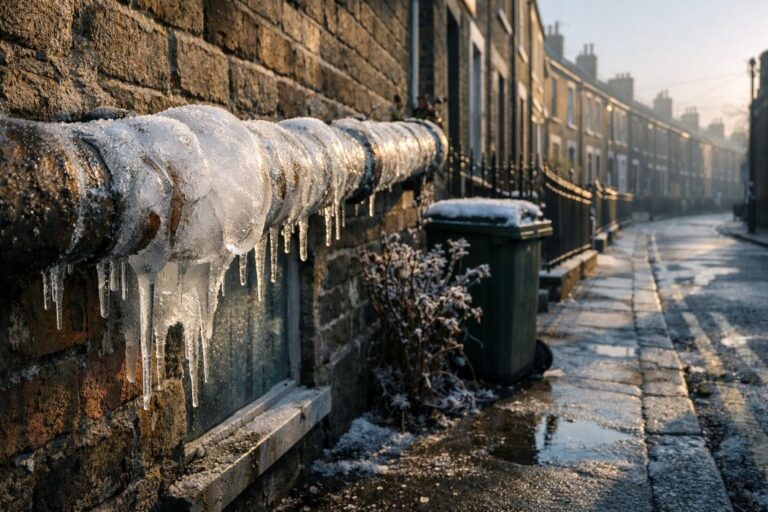
Exposed internal pipes feel extremely cold or have visible frost.
The external boiler condensate pipe appears frozen.
These symptoms usually point to freezing somewhere in the mains water supply or internal pipework.
Pro Tip: Never pour boiling water on frozen pipes or drains. It can crack plastic and make things worse.
Book an Emergency Callout
Not sure whether it’s your pipes or drains? Let a qualified expert check it out today.
Frozen drains tend to behave in more subtle ways. Signs to watch for include:
Water draining slowly from sinks, baths, or showers.
Gurgling or bubbling noises from plugholes.
Bad smells from drains or outdoor gullies.
Visible ice build up on external waste pipes or outlets.
Water backing up, then slowly clearing.
Drainage improving slightly during warmer hours of the day.
These clues often suggest the drainage system has frozen, rather than the supply side.
Yes, and this situation can create added confusion. For instance, your kitchen tap might stop running entirely, while the sink basin begins to fill or gurgle. This can happen when both the supply and waste systems freeze simultaneously, especially in exposed or poorly insulated areas. If the frozen water supply coincides with blocked drains, you are dealing with both sides of the domestic system at once. If you are experiencing issues that seem to affect both water flow into the home and waste flow out, observe each symptom carefully to understand whether the problem lies with the supply side, the drainage side, or both.
If you suspect your pipes are frozen, take the following steps:
Open the affected tap slightly to relieve pressure and observe thawing.
Apply gentle heat to exposed pipework using warm towels, hot water bottles, or a low heat hairdryer.
Focus attention on outdoor pipes and those near exterior walls.
Do not hit or bend frozen pipes.
If nothing improves or you see signs of damage, turn off the stopcock and call a professional.
Pro Tip: If the same drain freezes every winter, it might need rerouting or insulation.
Get a Winter Plumbing Health Check
Prevent future problems by catching cold weather issues early. One visit could save you thousands.
To deal with frozen drains safely, follow these steps:
Do not pour chemical cleaners into the drain, as they are ineffective on ice and can damage pipes.
Gently warm any exposed external waste pipes using a warm cloth or hot water bottle.
Avoid flushing toilets or running taps repeatedly to prevent water build up.
Watch for changes – if drainage improves later in the day, external ice is likely to blame.
If no improvement occurs, especially around gullies or inspection chambers, contact a drainage engineer such as 24hrs Drainage.
When dealing with frozen plumbing, avoid these common mistakes:
Pouring boiling water directly onto frozen pipes or drains, which can cause cracking.
Hitting pipes with tools to break ice.
Using chemical drain cleaners, which do not help and can corrode pipe linings.
Running appliances like dishwashers when drains are slow, risking leaks or backflow.
A condensate pipe is a narrow plastic pipe that carries condensation from your boiler to an external drain. Because of its small diameter and the fact that it often runs outside the house, it is highly prone to freezing during cold weather. When frozen, the boiler may shut down or display a fault code, leaving you without heating or hot water. If you suspect the condensate pipe is frozen, you can gently warm it using a hot water bottle or a towel soaked in warm water. Avoid using kettles or boiling water directly on the pipe, as this could cause it to split.
Sometimes, plumbing seems to return to normal. Water flows, and drains clear. This can lead many to believe the issue has resolved itself. However, this assumption can be misleading. Ice may have only partially thawed, with the underlying blockage or restriction still in place. The next cold snap could refreeze the system and cause worse damage. Repeated freeze thaw cycles also weaken pipe materials and joints, making leaks or cracks more likely. If you experience temporary relief from symptoms, remain cautious and continue monitoring the system until you are sure it is stable.
You should stop and seek help if:
No improvement occurs after careful thawing.
Leaks, damp spots, or stains become visible.
The issue keeps returning each night.
External systems like soil stacks or gullies are involved.
In these cases, a drainage expert is best placed to assess and solve the issue. Companies such as 24hrs Drainage handle frozen pipes and drains across the UK.
Can a frozen pipe thaw on its own?
Yes, it might during the day, particularly if temperatures rise. However, if it refreezes overnight or the same issue keeps recurring, you will need to take action to prevent long-term damage.
Is it safe to pour hot water down a frozen drain?
No. Pouring hot or boiling water onto frozen plastic pipes may cause them to crack. Instead, apply gentle, steady heat using a warm cloth or hot water bottle.
What happens if I ignore a frozen drain?
If left unresolved, a frozen drain can lead to backflow, leaks, standing water in basins, or even burst pipes due to freeze thaw expansion. It is best not to assume the issue will resolve itself permanently without intervention.
Speak to a Drainage Engineer
Still not sure what’s wrong? Our drainage specialists can diagnose and resolve the issue fast.
24hrs Drainage Limited
33 Falmouth Rd, Reading RG2 8QR
0800 020 9198
Opening Hours:
Monday – Sunday : Open and available 24 hours per day
Drain Services
We provide Drainage Services across Berkshire, Hampshire, Surrey, London, Oxfordshire, and the surrounding areas.
Contact Us
If You’re Dealing With Blocked Drains Or Require Drain Repairs, You’ve Come To The Right Destination. Contact Our Team Today At 0800 0209198 For Professional Guidance And A Complimentary, No-Obligation Quote!
We are the premier providers of comprehensive drainage solutions in Reading and throughout Berkshire. With years of experience and a dedicated team of experts, we are your trusted partners for all your domestic and commercial drainage needs.
By subscribing, I agree for my data to be stored and used to receive newsand offers from 24hrs Drainage.
👋 Need urgent drainage help?
We’re available 24/7 in Reading and surrounding areas.
Tap below to speak with our drainage expert now.
Chat on WhatsApp
Fast response | No call-out charges | Nearby
WhatsApp us 24/7