Yes, if your extension affects a public sewer or certain shared drains, you may need formal approval from the relevant water company before work begins. A build over agreement confirms that the proposed structure will not interfere with access, maintenance, or the safe operation of the drainage network, and it can become very important during Building Control checks, insurance issues, and future property sales.
Pro Tip: Arrange your drainage survey early in the planning process to avoid unexpected delays when applying for a build over agreement.
Many homeowners only hear about a build over agreement once drawings are prepared or work is close to starting. By that stage, any drainage issue under or near the extension footprint can cause delay, redesign, or extra cost.
In simple terms, a build over agreement is formal consent to build above or close to a public sewer. Water companies, including Thames Water in many parts of the South East, use these agreements to protect drainage systems that serve more than one property or fall within their responsibility. Building Regulations and local authority processes may interact with this, but planning permission and drainage consent are separate matters.
A few points usually matter most:
That legal and practical distinction catches people out, especially where older properties have drainage routes that do not appear clearly on basic plans.
Get Expert Drainage Advice
Discuss your extension plans with experienced drainage specialists to clarify your build over agreement needs from the start.
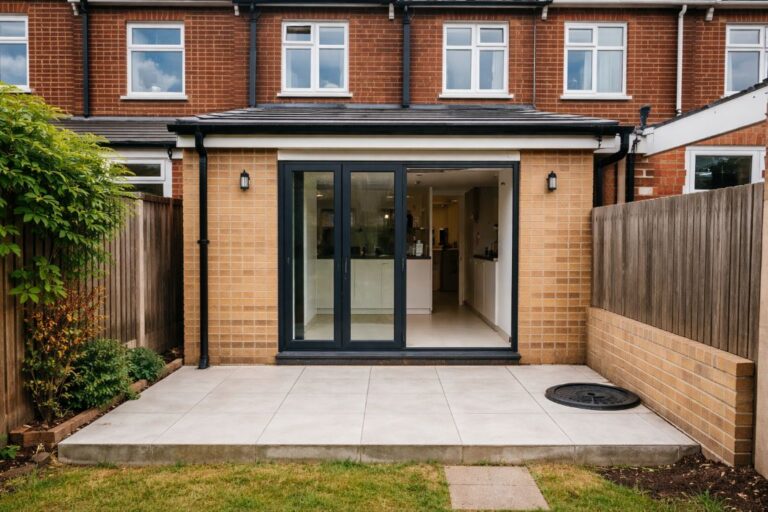
The answer depends on where the sewer runs and what the extension will cover. A rear kitchen extension, side return, conservatory, garden room, or other structure can all raise the issue if the footprint sits over or very close to a public sewer.
Smaller projects are often assumed to be exempt. That assumption can be wrong. Size alone does not decide the matter. Drain position, ownership, depth, access requirements, and the type of structure all come into play.
Common trigger points include the following:
Scenario | Likely concern
|
|---|---|
Extension over a sewer line | Formal consent is often needed |
New foundation close to a public sewer | Clearance and structural impact may need review |
Works near a shared drain serving more than one property | Ownership and responsibility may be wider than expected |
Conservatory or outbuilding above drainage runs | Minor appearance does not remove compliance duties |
Commercial alteration with drainage nearby | Extra scrutiny may apply because of use and risk |
Building Control may flag the issue during plan review or inspection, but that does not mean Building Control grants the drainage approval itself. Water utility companies assess whether the proposal protects their assets and future access.
If a house has been altered over time, the drainage layout may be less obvious than the site plan suggests. A drain that appears private can turn out to be adopted or shared, which changes the approval position entirely.
Pro Tip: Gather all existing property and drainage records before submitting an application, as missing information is a common cause of hold-ups.
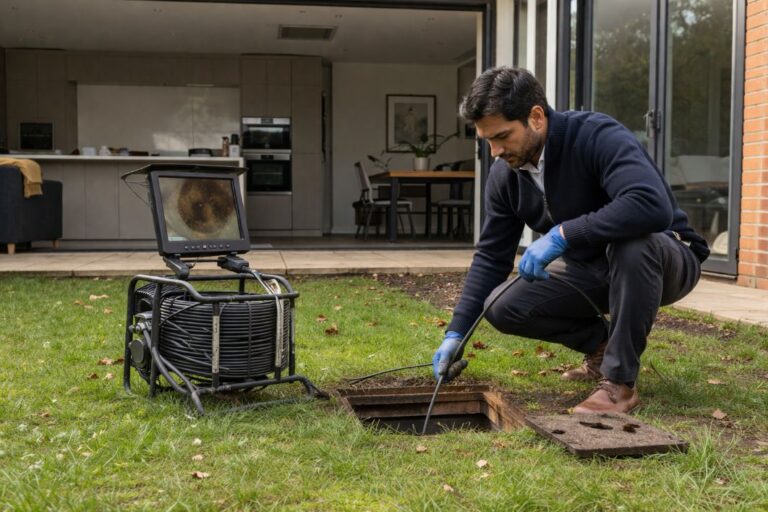
Arrange a CCTV Drain Survey
Secure a professional CCTV drain survey to accurately map your drainage before any construction.
Proceeding without the right agreement can create legal and financial problems long after the extension is finished. The immediate building work may seem fine, yet the real trouble often appears later, during a sale, an insurance claim, a drainage failure, or a request for records.
The main risks usually fall into four areas:
A typical escalation is easy to imagine. An owner completes a rear extension, sells years later, and then learns during conveyancing that nobody can produce evidence for the sewer beneath the slab. The buyer pauses, the lender asks for clarification, and a job that felt finished suddenly returns as a legal and practical obstacle.
Companies such as 24hrs Drainage are often brought into situations where the pressure has already increased, particularly when survey evidence or drainage records are needed quickly to keep a property matter moving.
Most people experience the process as a set of checks, documents, and waiting periods rather than a single form. The purpose is to show the water company what is being built, where the drains run, and whether the proposal leaves the sewer protected and accessible.
A typical process often includes:
Timeframes vary. Delays often arise when drainage records are incomplete, the survey evidence is unclear, or the proposed foundation arrangement raises concern. In some cases, a redesign is needed before approval can be considered.
Professional input tends to matter most where the layout is uncertain, the site is constrained, or the build schedule is already tight. A clear survey and accurate documentation can save far more time than they take to arrange, particularly when contractors, Building Control, and the water company all need the same basic facts.
An extension project can lose momentum very quickly once drainage uncertainty enters the picture. Delays rarely come from one dramatic problem. More often, they come from missing evidence, conflicting assumptions, or a late realisation that the sewer route is not what anyone thought.
Experienced drainage specialists reduce that risk by clarifying the facts early. That usually means confirming the line and condition of the drain, providing usable evidence, and helping the wider project team work from the same information. For homeowners, that can turn a vague concern into a manageable planning issue.
In Reading and Berkshire, older housing stock and piecemeal alterations can make drainage history harder to read from plans alone. A side extension on a mature residential plot may sit near a sewer route added or diverted years ago. A commercial unit may face a tighter programme where any hold-up affects access, tenants, or operating hours.
That is where competent survey work earns its place. 24hrs Drainage, for example, operates in situations where timing, records, and practical consequences matter as much as the drain itself. The benefit is not technical theatre. The benefit is having documentation that stands up when Building Control, surveyors, insurers, or water authorities need a clear answer.
Misunderstandings are common because the issue sits between property plans, drainage ownership, and approval routes. Several myths appear again and again.
Fact: A modest footprint can still affect a public sewer. The scale of the build does not cancel the need for consent.
Fact: Planning and drainage consent are different. One does not automatically replace the other.
Fact: Building Control may identify the issue, but the relevant water authority usually decides whether a build over agreement is needed.
Fact: Some drains within private land are shared or adopted, which means the approval position may be wider than expected.
Fact: Written records matter. That is especially true if questions arise during a sale, a claim, or later repair work.
Fact: It can be difficult, and it is not guaranteed. Once the structure is already in place, options may be narrower and evidence may be harder to assemble.
Surveyors and conveyancers see these misconceptions surface at awkward moments, often when a deadline is already close.
A build over agreement is easy to view as one more administrative hurdle in an already busy extension project. In practice, it does something much more useful. It protects the legal standing of the work, supports the value of the property, and reduces the chance that a hidden drainage issue will return at the worst possible time.
The long-term advantages are straightforward:
Property work tends to be judged twice: once when it is built, and again when someone needs proof years later. Getting the drainage position right before construction starts usually makes that second moment far easier to handle.
Ensure Compliance Before Building
Let us help you handle documentation and consent for hassle-free building and smooth property sales.
24hrs Drainage Limited
33 Falmouth Rd, Reading RG2 8QR
0800 020 9198
Opening Hours:
Monday – Sunday : Open and available 24 hours per day
Drain Services
We provide Drainage Services across Berkshire, Hampshire, Surrey, London, Oxfordshire, and the surrounding areas.
Contact Us
If You’re Dealing With Blocked Drains Or Require Drain Repairs, You’ve Come To The Right Destination. Contact Our Team Today At 0800 0209198 For Professional Guidance And A Complimentary, No-Obligation Quote!
We are the premier providers of comprehensive drainage solutions in Reading and throughout Berkshire. With years of experience and a dedicated team of experts, we are your trusted partners for all your domestic and commercial drainage needs.
By subscribing, I agree for my data to be stored and used to receive newsand offers from 24hrs Drainage.
👋 Need urgent drainage help?
We’re available 24/7 in Reading and surrounding areas.
Tap below to speak with our drainage expert now.
Chat on WhatsApp
Fast response | No call-out charges | Nearby
WhatsApp us 24/7