
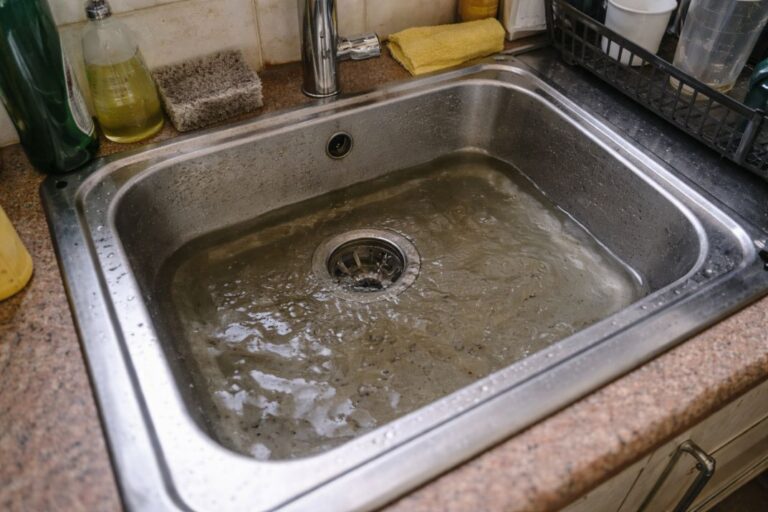
A drainage issue becomes urgent when it risks property damage, legal liability, operational disruption, or health concerns. Not all blockages warrant emergency action, but those involving flooding, shared systems, or contamination require immediate specialist intervention.

Pro Tip: In shared systems, notify affected neighbours or the property manager as soon as a drainage issue escalates to avoid disputes over responsibility.
Many drainage problems start off as minor irritants. A slow-draining sink or an odd gurgling sound might cause frustration, but they do not necessarily qualify as emergencies.
The situation becomes urgent when the blockage interrupts core functionality, causes damage, or introduces risk, especially in commercial or shared environments. Context is key.
Not urgent:
Urgent:
In homes, urgency often follows internal flooding, particularly where damage to flooring or walls becomes likely. In businesses, the bar is lower. One malfunctioning toilet in a public-facing environment could breach health regulations or force closure.
Insurance requirements, tenancy agreements, and Environmental Health standards can all increase the seriousness of a blocked system. Assuming a problem can wait may lead to consequences well beyond inconvenience.
Drainage issues seldom remain static. A blockage that only slows flow today can flood a premises tomorrow. Delays allow water ingress to damage structure, and make problems harder to locate and fix cleanly.
Consequences of waiting include:
A fast response is rarely more expensive than delay. Waiting increases the chance of operational downtime, compliance failures, or third-party claims.
Speak to a Drainage Specialist Near You
Our experienced team is ready to respond fast across Reading and the Thames Valley. Immediate support is available for urgent blockage issues.
Urgency does not look the same in every setting. The same issue can carry different weight depending on who it affects, what systems are involved, and what the knock-on effects might be.
In a domestic setting: A blocked shower might be inconvenient, but if other facilities are functional and risk is contained, it usually remains a manageable issue. However, standing water, odours, or escalating overflows move the bar quickly.
In a commercial setting: Even a single blocked toilet in a public or staff area may breach hygiene or accessibility expectations. The impact on customers, staff safety, or operational hours causes urgency that far exceeds a private household inconvenience.
Commercial landlords often have specific lease expectations around facilities, downtime limitations, and response accountability. From a regulatory perspective, businesses are often judged not just on outcome, but on how swiftly they act to mitigate risk.
Shared facilities, tenant obligations, or customer access raise stakes. In many cases, a business must act before visible damage even occurs, because operational interruption carries financial and reputational costs.
Some drainage problems require professional response without delay. These are not scenarios to monitor or isolate. They carry either escalating risk or require technical resolution from the outset.
Situations that merit immediate intervention include:
In these circumstances, delay risks escalation, but undermines the credibility and effectiveness of any eventual claim or repair process.
Pro Tip: Taking immediate photos of visible flooding or water ingress before professionals arrive helps support insurance claims and regulatory documentation.
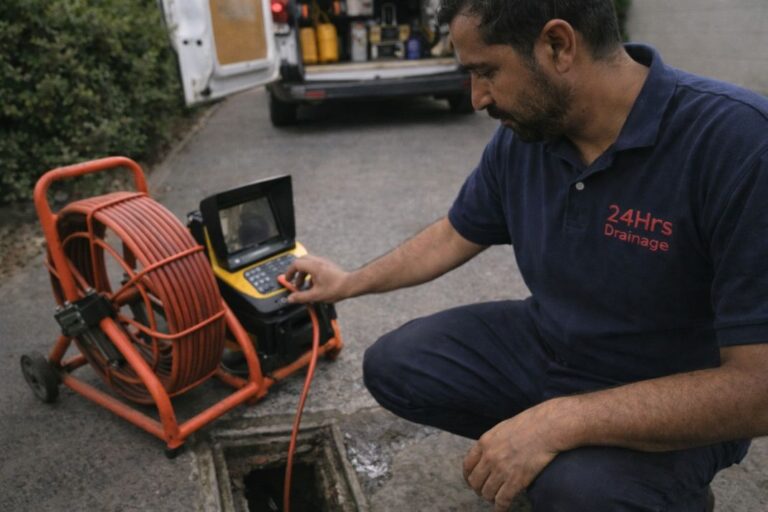
Book a Drain CCTV Survey
Identify and document the source of recurring or severe drainage issues with high-definition inspection tools approved by insurers and authorities.
A qualified drainage specialist does more than unblock a pipe. In an emergency, their role is about control, resolution, and risk mitigation.
Key contributions include:
An informed and complete intervention avoids repeating the cycle of minor fixes that lead to greater failure.
In time-sensitive scenarios, choosing a local and responsive specialist can prevent a manageable fault from turning into a serious incident. Geography matters for more than convenience.
Benefits of calling someone based near Reading, Berkshire, or the Thames Valley include:
In high-stakes situations, a response within the first hour can mean the difference between containment and uncontrolled spread.
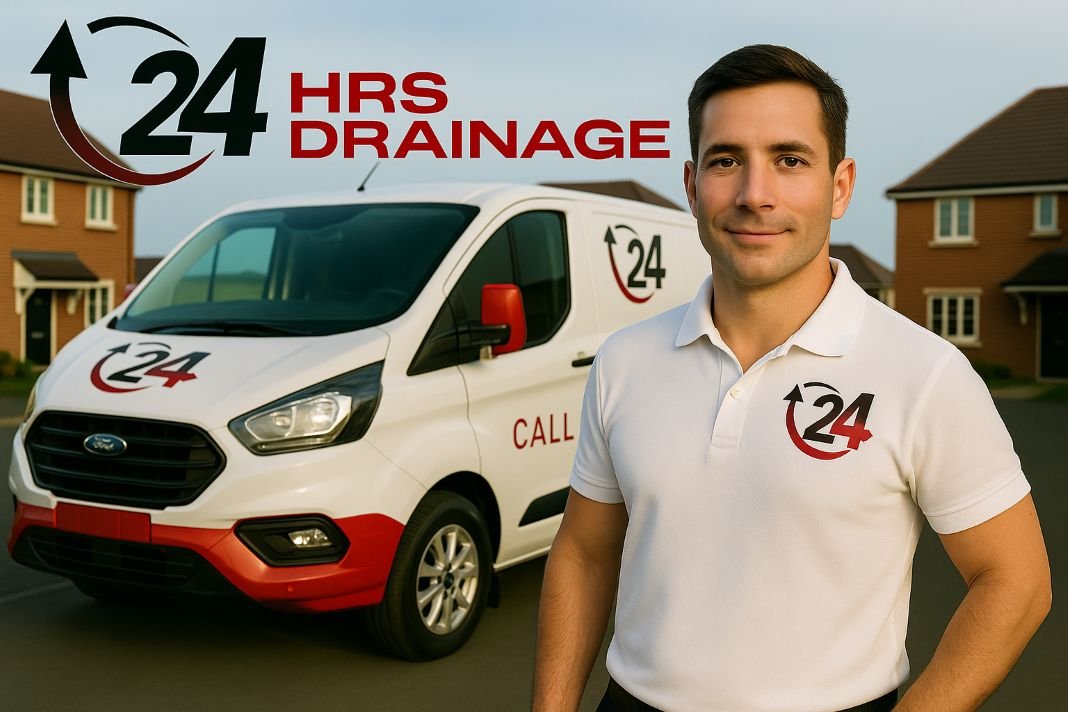
Reaching out to a qualified drainage specialist like 24Hrs Drainage, should feel like the first step toward regaining control, not stepping into confusion. The process is typically clear and outcome-focused.
Expect the following:
Acting early helps avoid uncertainty and spiralling consequences. A reputable specialist will prioritise both resolution and reassurance.
If a situation is escalating or already unmanageable, delay is rarely the safer route. Serious drain problems do not fix themselves, and 24Hrs Drainage involvement offers the clearest path to stability.
Get Help with Drain Insurance Claims
We can provide the reports and documentation your insurer needs, helping you avoid delays or disputes related to water damage or failure to act.
24hrs Drainage Limited
33 Falmouth Rd, Reading RG2 8QR
0800 020 9198
Opening Hours:
Monday – Sunday : Open and available 24 hours per day
Drain Services
We provide Drainage Services across Berkshire, Hampshire, Surrey, London, Oxfordshire, and the surrounding areas.
Contact Us
If You’re Dealing With Blocked Drains Or Require Drain Repairs, You’ve Come To The Right Destination. Contact Our Team Today At 0800 0209198 For Professional Guidance And A Complimentary, No-Obligation Quote!
We are the premier providers of comprehensive drainage solutions in Reading and throughout Berkshire. With years of experience and a dedicated team of experts, we are your trusted partners for all your domestic and commercial drainage needs.
By subscribing, I agree for my data to be stored and used to receive newsand offers from 24hrs Drainage.
👋 Need urgent drainage help?
We’re available 24/7 in Reading and surrounding areas.
Tap below to speak with our drainage expert now.
Chat on WhatsApp
Fast response | No call-out charges | Nearby
WhatsApp us 24/7