Drainage Problems Found During Conveyancing: Who Pays and How to Fix It Without Delays

Why do drainage issues frequently arise during conveyancing?

Drainage problems are commonly detected during conveyancing because this is the moment when thorough surveys and legal checks take place. These detailed assessments, often prompted by solicitors and surveyors, bring hidden defects and long-standing issues to light, just as paperwork and finances begin to move.

Conveyancing acts as a safety net for both buyers and sellers. Pre-purchase inspections and legal requirements ensure any problems with drains, sewers, or soakaways must be flagged before contracts exchange hands. Often, sellers are unaware of historical or boundary drainage faults because everyday use may not reveal underlying defects. In areas like Reading and Berkshire, where older properties share infrastructure and sit on variable ground, hidden drainage issues can be hard to spot until a surveyor inspects beneath the surface.

Several common triggers lead to discovery at this stage:

  • Pre-sale reports by chartered surveyors or via legal compliance checks
  • Positive findings from a specialist conveyancing drainage survey
  • Boundaries where shared responsibility or unclear ownership exposes defects
  • Requirements from mortgage lenders or local authorities for up-to-date evidence


These checks are thorough because undetected drainage faults can affect property value, insurability, and future compliance. As a result, buyers and sellers are often forced to address these issues mid-transaction, creating pressure and urgency to resolve them correctly.

Table of Contents

Pro Tip: Always request written evidence of completed drainage repairs for smooth handover during property exchange.

Who is responsible for paying when drainage problems are found?

Liability for drainage repairs during property sales depends on several factors including timing, contract terms, and outcomes of negotiation between buyer and seller. There is no single rule, but responsibility usually falls under these typical approaches:

  • Before exchange: If a drainage defect is discovered before contracts are exchanged, buyers can negotiate for the seller to fix it or reduce the purchase price accordingly.
  • After exchange but before completion: In this scenario, the contract terms govern who pays, but buyers are generally committed unless specific clauses protect them.
  • Insurance and warranties: Sometimes, an indemnity policy may cover unknown defects, but this rarely extends to visible or reported issues after inspection.
  • Negotiation: Costs are often settled through compensation in the completion statement, allowing both parties to share risk or settle out repair costs up front.


Conveyancing solicitors refer to Law Society protocols and regulatory guidance to allocate risk. Home insurance may cover certain problems, but buyers should not assume this, especially with defects highlighted in survey reports. Ultimately, clarity in documentation and open communication between all parties can simplify disputes and reduce the likelihood of post-completion claims.

What are the risks of delaying drainage resolution during conveyancing?

Delaying action on drainage issues poses several risks to a property sale or purchase. These consequences can be both immediate and far-reaching.

The primary risks include:

  • Transaction delays: Unresolved drainage questions often stall the process, affecting the entire chain and potentially causing the sale to fall through.
  • Escalating costs: Minor drainage problems can develop into significant faults if left unaddressed, increasing repair expenses and complicating legal responsibilities.
  • Compliance failures: Mortgage lenders, insurers, and local authorities may withdraw support or require new inspections if there is uncertainty about drain integrity.
  • Chain risk: One unresolved issue can disrupt multiple transactions in a property chain, creating stress and financial exposure for everyone involved.


Acting swiftly reduces the likelihood of costly complications. In property transactions, time lost often translates to additional expense, eroded confidence, and in some cases, legal liability.

Book a Drain Survey

Get a professional drain survey report from trusted specialists for your conveyancing process. Receive detailed documentation accepted by property solicitors.

Book Now

How can fast, compliant drainage resolution be secured?

Rapid, legally recognised resolution requires both speed and full compliance with regulatory and contractual standards. Specialist drainage contractors, such as 24hrs Drainage, play a important role in this process by providing evidence, repairs, and documentation accepted by conveyancers, insurers, and local authorities.

To achieve timely and compliant resolution, consider the following steps:

  1. Engage a recognised drainage specialist as soon as a problem is indicated.
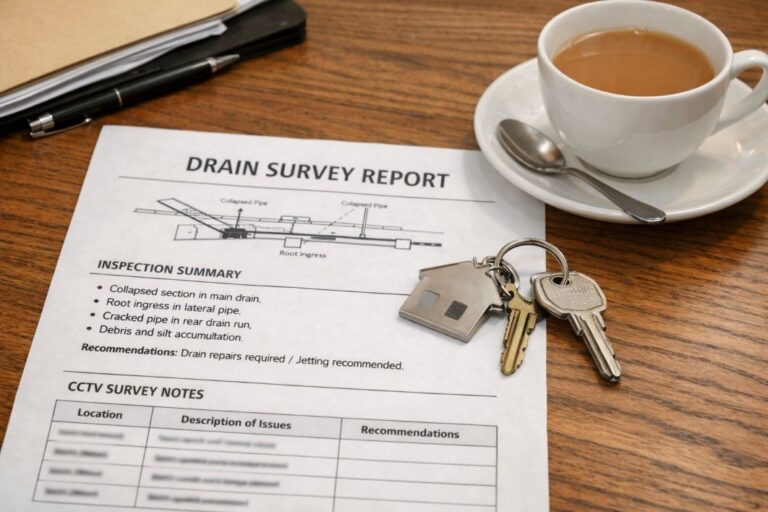
  2. Arrange a professional drain survey and obtain a written report suitable for legal and insurance purposes.
  3. Coordinate closely with solicitors and surveyors to ensure all evidence is properly documented.
  4. Insist on repair methods that meet building control, local authority, and insurance standards.
  5. Secure certification and confirmation for completed repairs to smooth the transition at exchange and completion.


This approach speeds up the transaction but also ensures there are no unresolved compliance or liability issues at the point of sale.

Pro Tip: Instruct a drainage specialist early if boundaries or shared drains are involved to avoid legal disputes.

Request a Free Consultation

Seek expert advice on resolving drainage issues during your property transaction. Our team provides clear, actionable guidance for buyers and sellers.

Request Consultation

When should a drainage specialist be involved and what will they do?

Bringing in a drainage expert is advised as soon as surveyors, solicitors, or report findings flag anything affecting drains, sewers, or shared pipework. Immediate professional input is necessary if:

  • The drainage issue may impact the completion timeline
  • Significant defects or blockages are uncovered during conveyancing checks
  • Evidence is required for insurance or legal documentation
  • Multiple parties or ambiguous boundaries are involved


A specialist will:

  • Conduct an in-depth diagnostic drain survey
  • Generate clear, detailed evidence for use in negotiations or compliance reports
  • Coordinate findings with legal, surveying, or property management teams
  • Recommend or carry out repairs to the standard required for transaction approval


A company such as 24hrs Drainage provides both rapid assessment and recognised documentation, allowing transactions to proceed smoothly and minimizing uncertainty for all involved.

Summary: Reducing uncertainty and progressing with confidence

Identifying who pays for drainage faults, acting swiftly to resolve them, and securing documented, compliant repairs allows property transactions to proceed with fewer complications. Timely involvement of specialist contractors supports risk reduction, reassurance, and transaction continuity.

By prioritising clarity in communication and documentation, buyers and sellers can move forward with confidence even when drainage issues surface unexpectedly. When uncertainty arises, seeking professional guidance provides the surest path to resolution.

Ensure Legal Compliance

Secure compliant drainage repairs with full certification for peace of mind during your property sale or purchase.

Get Certified Repairs

24hrs Drainage Limited

33 Falmouth Rd, Reading RG2 8QR

0800 020 9198

https://24hrsdrainage.co.uk/

Opening Hours:
Monday – Sunday : Open and available 24 hours per day